Figures
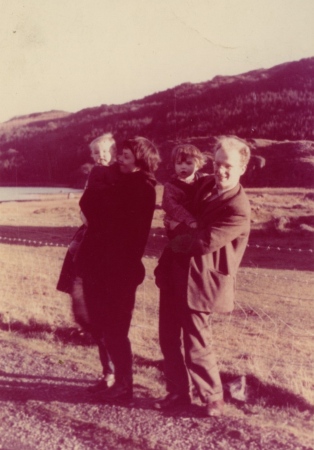
Peter Sedgwick
‘German capitalism did not need Auschwitz: but it needed the Nazis, who needed Auschwitz.’ So said Peter Sedgwick in ‘The Problem of Fascism’ (1970), one of the best short articles on the subject. Sedgwick’s major claim to fame are his brilliant translations of Victor Serge’s best known political writings, both Memoirs of a Revolutionary andYear One of the Russian Revolution. One of my most vivid memories from the late sixties is seeing Peter making a formidable intervention at an Oxford Labour Club meeting some time in 1967, one of the first political meetings I ever attended at university. I was so impressed by what I heard that that was probably the night I ‘joined the Left’. (It’s possible the issue that evening was Labour’s pro-American stance during the Vietnam War.)
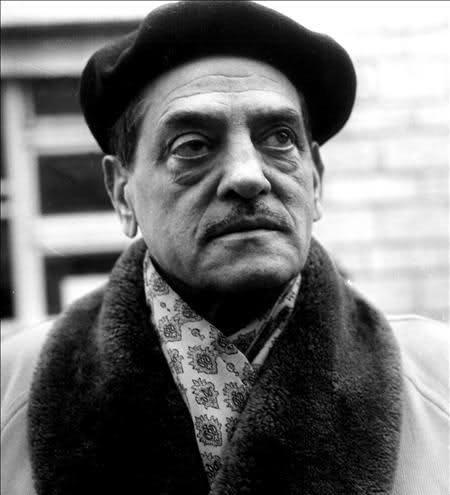
Luis Bunuel
“A writer or painter cannot change the world. But they can keep an essential margin of non-conformity alive. Thanks to them, the powerful can never affirm that everyone agrees with their acts. That small difference is very important. When power feels itself totally justified and approved, it immediately destroys whatever freedoms we have left, and that is fascism. My ideas have not changed since I was 20. Basically, I agree with Engels. An artist describes real social relationships with the purpose of destroying the conventional ideas about those relationships, undermining bourgeois optimism, and forcing the public to doubt the tenets of the established order.”
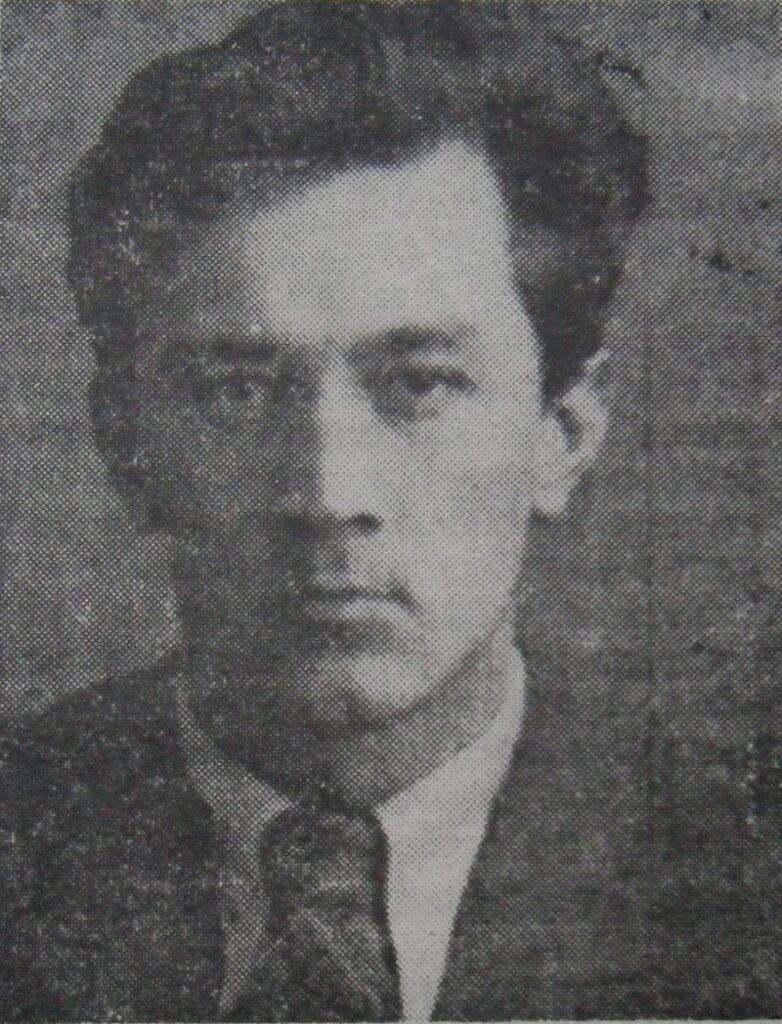
Dragan Ozren
Dragan Müller-Ozren is one of the more enigmatic forgotten communist party intellectuals. Originally from Yugoslavia, he was never a Yugoslav communist in the proper sense of the term, and spent most of his creative life abroad. Although a party intellectual, he was never formally a party member, although he had been active in the communist youth in four different countries. Born in the town of Travnik in present-day Bosnia to a mixed Czech-Croat family, he became a Marxist while attending a Jesuit Lyceum, and joined the League of Communist Youth of Yugoslavia (SKOJ) at the age of fifteen. In 1926, he moved to Prague to pursue studies of architecture. There, he was involved with the Czechoslovak avantgarde, writing extensively for the magazine Tvorba and the Communist Party newspaper Rudé právo. He again joined the Communist youth, organising both the locals and the Yugoslav émigré community. Dragan Müller was forced to leave Prague because of Communist activity, moving first to Berlin and then to Moscow in 1931, where he took up the name Dragan Antonovich Ozren (Драган Антонович Озрин). As a polyglot, he began working for the publishing department of the Comintern (he spoke eight languages by this time – Serbo-Croatian, Czech, German, Latin, Russian, English, French, and Spanish). In this period, he became friends and maintained correspondences with leading leftist intellectuals of the time, such as György Lukács, Andre Breton, Julius Fučík, Rustam Effendi, Mikhail Sholokhov, and Sergey Tretyakov. He worked as a propagandist during the Spanish Civil War and World War II.
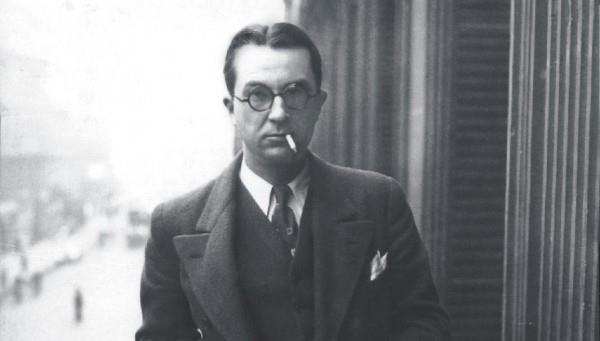
Paul Nizan
Paul Nizan (1905–1940), novelist and committed socialist, who left Europe for Aden in September 1926 when he was just 20, to spend six months there and write the philosophical memoir for which he is best known today. This brilliant piece of writing, called Aden, Arabie, published in 1931, was eventually reissued in 1960 with the proverbial Sartre preface. The book begins, famously, with the sentences “I was twenty. I will let no one say it is the best time of life”.
Pierre Naville
In 1926, Naville wrote a pamphlet seeking to steer the nascent movement of French Surrealists, with which he was associated as one of ‘19 founders’, beyond its spontaneous anarchism and hatred of bourgeois society towards what he saw as a more revolutionary politics grounded in historical materialism and in the “discipline” of working for a party committed, ostensibly (!), to a socialist revolution. Breton welcomed the pamphlet but replied, “All of us Surrealists want a social revolution… but at the same time we want to pursue our experiments in the life of the Mind without any external controls, including controls by Marxists”. The irony behind Naville trying to win the Surrealists to revolutionary politics (that is, to joining the Communist party in France) was, of course, that, just as Breton and Aragon did in fact join the Party, Naville himself was expelled from it for having sided with the Left (or Trotskyist) Opposition in Russia. He was expelled in 1928.
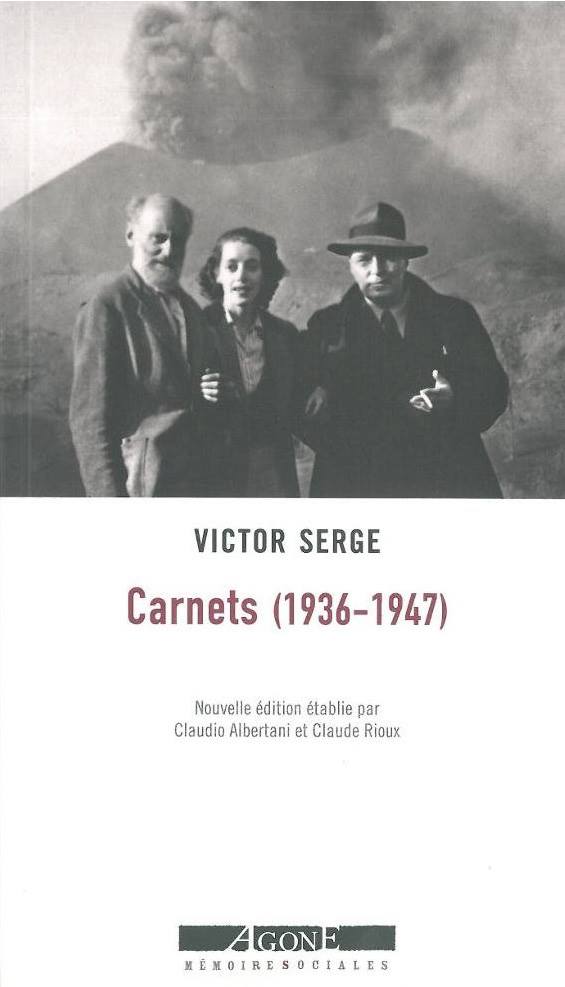
Victor Serge
Two excerpts from Victor Serge’s fascinating Notebooks (1936–1947), including a scathing but remarkably prescient forecast of the moribund future of the Fourth International. TheNotebooks are contained in a bundle of exercise books that were discovered in 2010, in a small town sixty kilometres south of Mexico City. They were published in full (836 pages) two years later by the Marseilles publisher Agone. Serge, who left Europe at the end of March 1941, in the same (last!) ship as luminaries like Lévi-Strauss and André Breton, arrived in Yucatán just over five months later, not long after Trotsky had been assassinated.
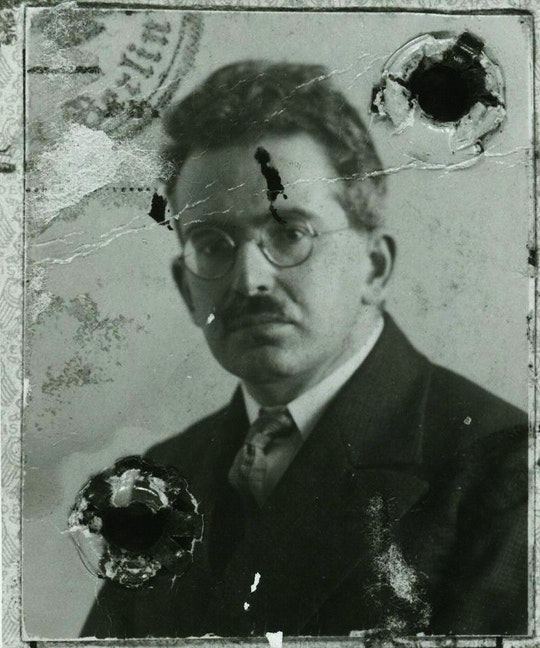
Civil-society-fascism & the death of Walter Benjamin
The cardinal fact to start from is that. if Walter Benjamin had committed suicide at Portbou, as we are told, how could he possibly have been buried in the local Catholic cemetery there? This, as a local resident pointed out to Mauas, the Argentinian photographer & filmmaker pictured here, was simply “unthinkable”, since suicides are never buried in Catholic cemeteries.
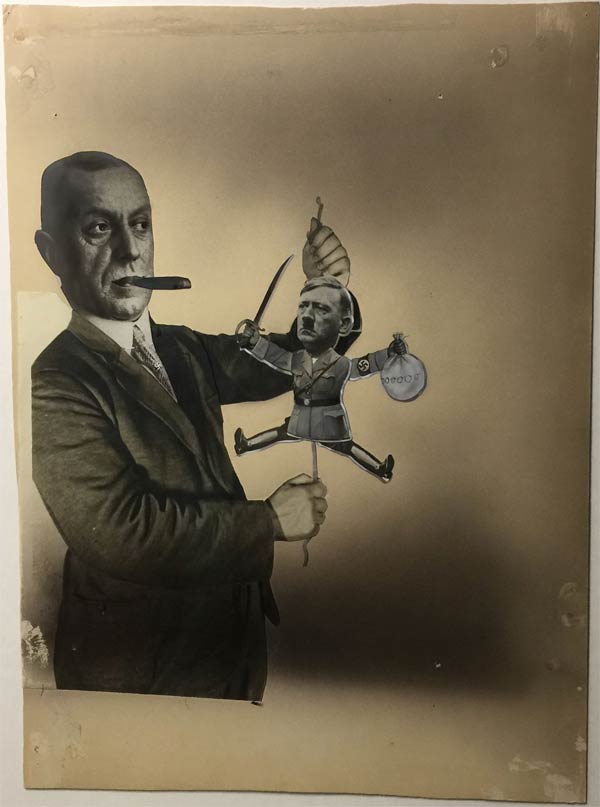
Abraham’s exile: the sad story of a young Marxist historian
Abraham’s exile: the sad story of a young Marxist historian
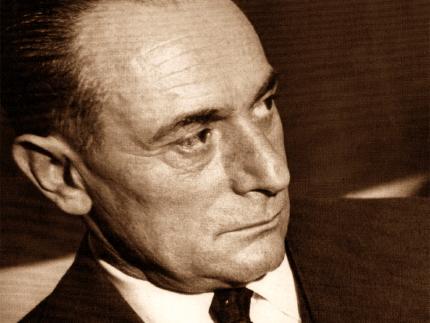
Pier Paolo Pasolini
Pasolini’s horrific murder on an Ostia beach at the beginning of November 1975 was a political crime camouflaged (and widely accepted) as a homophobic hate crime. It was part of a chain of murders that stretched back to the assassination of Enrico Mattei, head of the Italian oil giant ENI, in October 1962 and to the subsequent kidnapping and killing of investigative reporter Mauro de Mauro, whom the Mafia killed in a Palermo suburb in September 1970. At the 2006 trial of the journalist’s murder, ex-Mafia witnesses (the type calledpentito) testified that De Mauro was killed because he was about to go public about Mattei’s 1962 murder as a result of research he had done for Francesco Rosi’s movieThe Mattei Affair. He told colleagues he had a scoop that was going to “shake the whole of Italy”. Of course, he never lived to publish that.
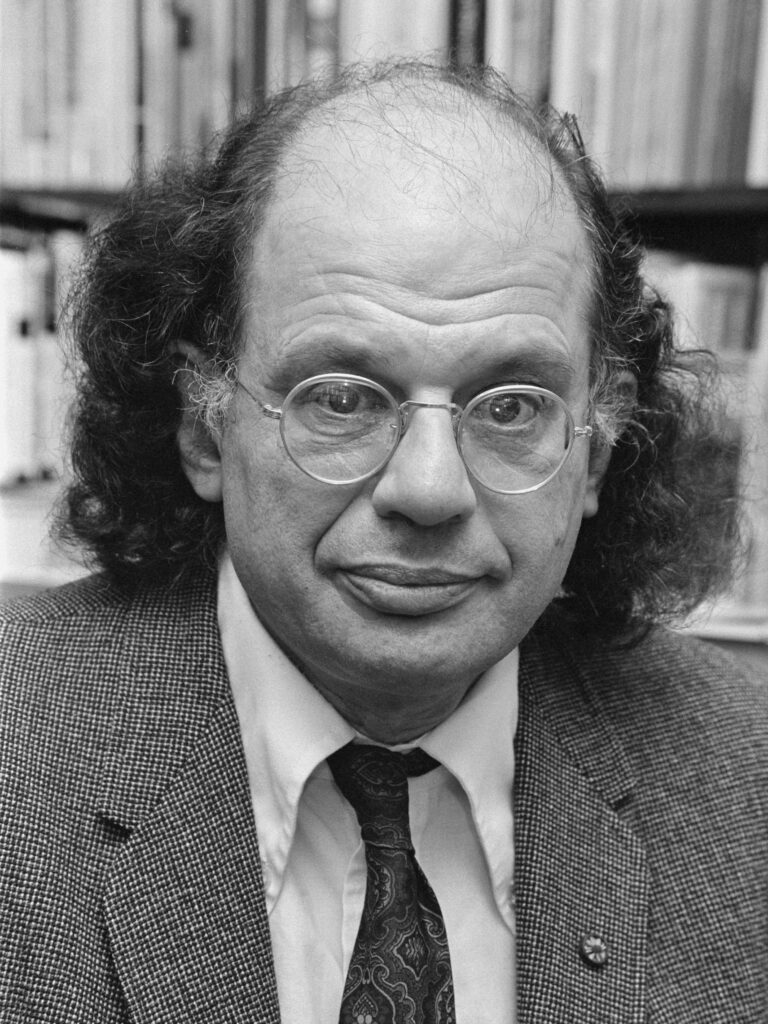
Allen Ginsberg
Marx drew the analogy between Moloch and capital at least once, in the economic manuscripts written between October and November 1862, which formed the last portions of Theories of Surplus Value. Here (in Notebook XV), he wrote, “The completeobjectification,inversion andderangement of capital as interest-bearing capital—in which, however, the inner nature of capitalist production, [its] derangement, merely appears in its most palpable form—is capital which yields ‘compound interest’. It appears as a Moloch demanding the whole world as a sacrifice belonging to it of right…”. Here it was finance capital that reminded Marx most immediately of the Canaanite god associated with child sacrifice.
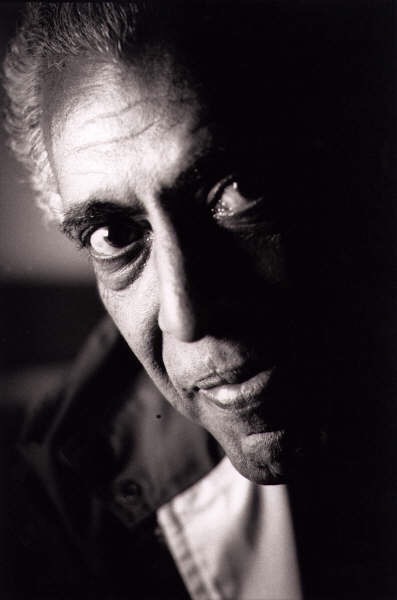
Abdelrahman Munif
When Abdelrahman Munif wrote his great work of fiction in the eighties, his name for the five novels as a whole was Cities of Salt (Mudun al-milh). Today, this title is usually (and of course wrongly) used for the powerful first novel of the quintet, which deals with the ravages caused by petro-capitalism to the lives of Saudi Arabia’s indigenous Bedouin communities. What is interesting is that Munif’s own title for the first novel was al-Tih (التيه ). The routine translation of this as “wilderness” misses the true purport of the word in this context. Like Eliot’s Wasteland, what Munif was driving at is that in the Saudi kingdom, indeed in the whole of the Middle East, given the form it took, the alliances it struck and the devastation it caused, capitalism engendered a wasteland. The first of the five novels built a powerful image of the way the entry of American oilmen brought this about.
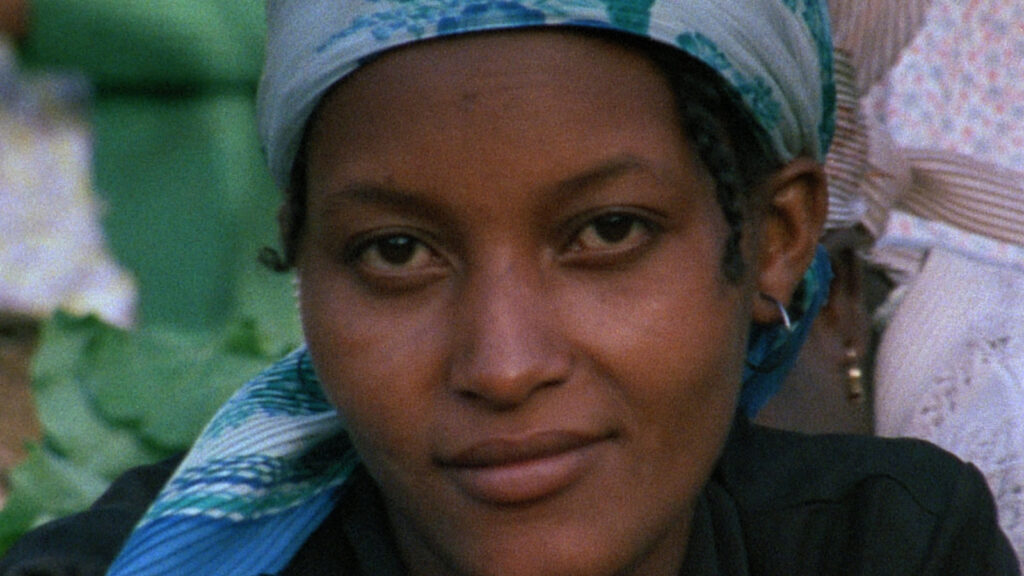
Chris Marker and Sans Soleil
“We do not remember. We rewrite memory much as history is rewritten. How can one remember thirst?” Chris Marker, Sans Soleil (1982).