
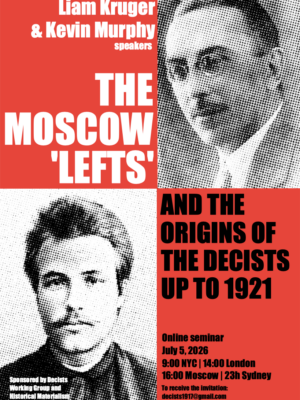
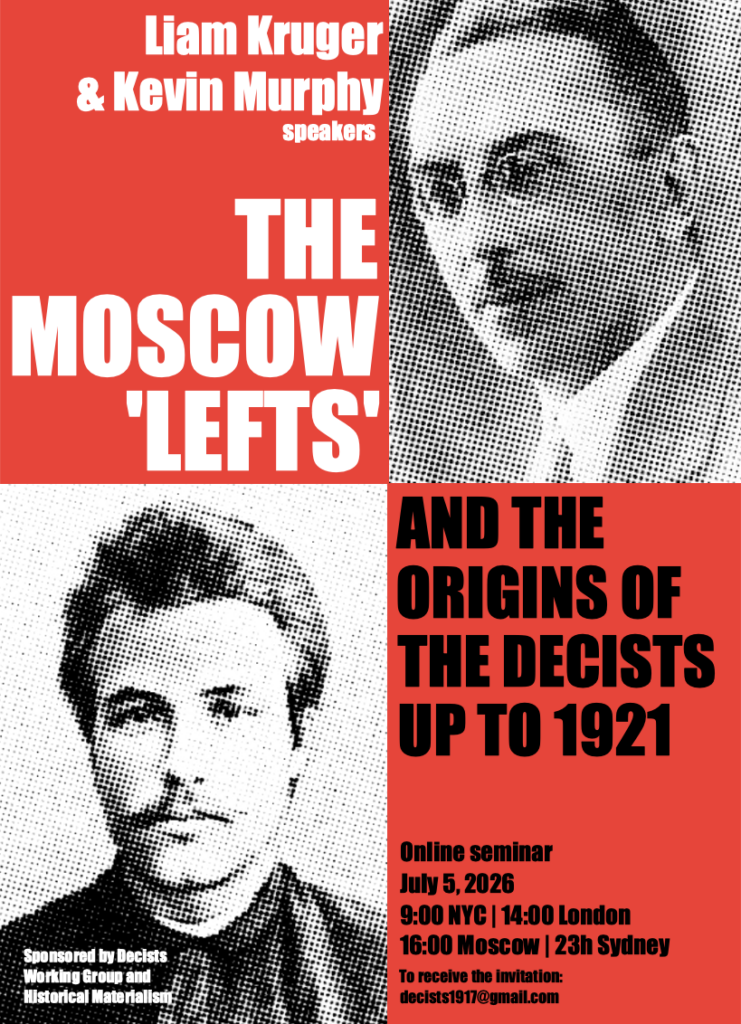
UPCOMING SEMINAR | The Moscow 'Lefts' and the Origins of the Decists up tp 1921 - with Deutscher Prize winner Kevin Murphy and Liam Kruger
Documents in English & Russian. More languages will be added.
LETTER FROM COMRADE SAPRONOV
Text in English, Russian LETTER FROM COMRADE SAPRONOV (to Pilipenko, 18 June 1928) Dear friend! You are right, the situation is now such that we must submit a petition to the Congress of the Comintern. Of course, it should have been a collective one from the “group of 15.” But it is not our fault,
Sapronov letter to Nechaev
Text in English, Russian (August 5, 1928 in postscript) Obtained by [agency] means Dear Comrade Nechaev, I really was not doing right by not having taken the time to reply to you until now. Finally, I have gathered my thoughts. You write: “If we could agree on a common position, there would be no further
After the XV Congress of the VKP(b).
Text in English, Russian (February 1928) After the XV Congress of the VKP(b). In addition to the crackdown on the left proletarian wing of the Party, as if to compensate for that repression, the XV Congress was not stingy with a number of “left-wing” resolutions and directives. A “forced” offensive against the kulak was proclaimed,
RESOLUTION AGAINST DEMOCRATIC CENTRALISM
Text in English, Russian RESOLUTION AGAINST DEMOCRATIC CENTRALISM The declaration of October 16 defines our position regarding the party and the line of our work within the Party. Anyone who disagrees with the declaration of October 16 has not understood the whole situation and has no right to claim any solidarity with us. The proposal
Letter to Sapronov
Text in English, Russian LETTER TO SAPRONOV Dear comrade, I very much wanted to have a comradely conversation with you. From your letter, I see that you are extremely irritated. I fear that, under these circumstances, a conversation might only aggravate the situation further. I will be leaving for the south for a few weeks.
APPEAL TO THE WORKERS OF THE ROGOZHSKO-SIMONOVSKY DISTRICT.
Text in English, Russian APPEAL TO THE WORKERS OF THE ROGOZHSKO-SIMONOVSKY DISTRICT. Early 1929 (undated) Comrades! New repressions have been unleashed on the workers of the USSR, and mass arrests have resumed in factories and plants. The number of revolutionaries arrested in the USSR has already surpassed the number in any fascist state. The GPU
FROM DESERTION TO TREASON
Text in English, Russian Early 1928 With their letter of January 27, 1928, Zinoviev and Kamenev completed their path of betrayal. At the 15th Congress they capitulated to the Thermidorian Stalinist apparatus, abandoning not only active struggle against it and the advocacy and defense of their views before the Party, but even their views themselves.
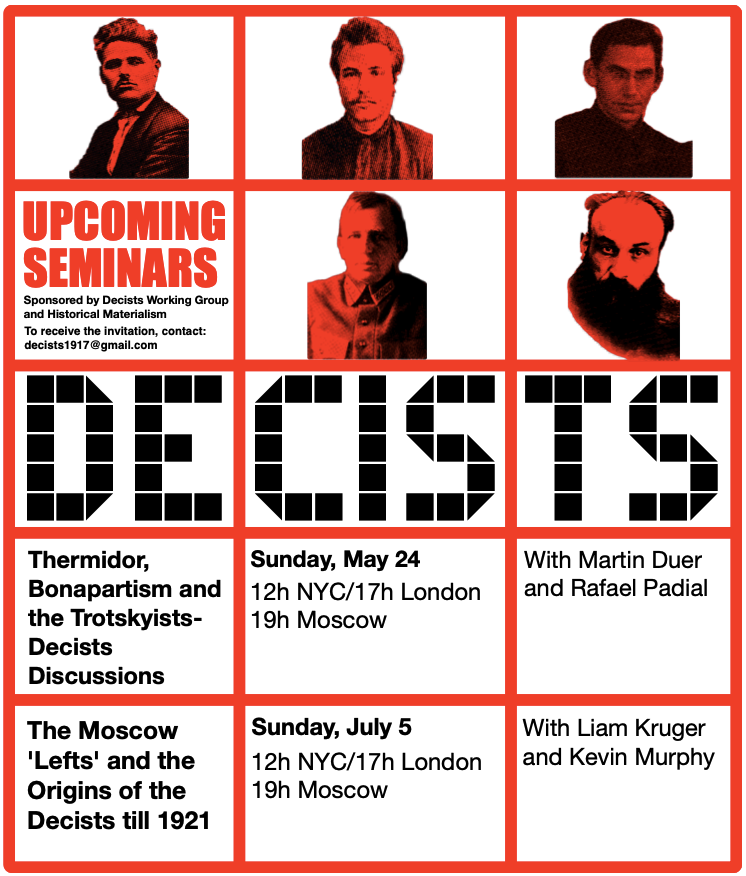
UPCOMING SEMINARS | Decists Working Group
Sunday, July 5 – 12h NYC / 17h London / 20h Moscow
The Moscow ‘Lefts’ and the Origins of the Decists till 1921
With Liam Kruger and Kevin Murphy
To receive and invitation, contact: decists1917@gmail.com
Sunday, February 22, 2026
Moscow Decists in the Party Discussion of 1923
With Valentin Panferov
Sunday, April 19, 2026
Bonapartism and the Trotskysts-Decists Discussions
With Martin Duer and Rafael Padial
Sunday, May 24, 2026
Thermidor, Bonapartism and the Trotskyists-Decists Discussions
With Martin Duer and Rafael Padial
Sunday, June 21, 2026
The Moscow ‘Lefts’ and the Origins of the Decists till 1921
With Liam Kruger and Kevin Murphy
Iamara Andrade is a Postdoctoral Researcher in the Postgraduate Program of the Center for Interdisciplinary Studies on Women (NEIM) at the Federal University of Bahia (UFBA), researching Soviet women’s magazines published in the 1920s and their contributions to women’s emancipation. She has a PhD from the Postgraduate Program in History at the Federal University of Rio Grande do Sul (UFRGS) with a sandwich doctorate at Saint Petersburg State University (SPbU).
- Andrade, Iamara. The Russian Revolution in the pages of the Brazilian workers’ press (October and November 1917): A thematic approach developed using NVivo software. FDC 2022, 8, 131-157. Available at: https://periodicos.ufjf.br/index.php/facesdeclio/article/view/36215
- Andrade, Iamara. The internationalization of news and the newspaper “O Correio Paulistano” in the coverage of the Russian Revolution. Temporalidades, Belo Horizonte, v. 13, n. 2, p. 639–669, 2022. Available at: https://periodicos.ufmg.br/index.php/temporalidades/article/view/36894
Alexandra Day recently completed a PhD in Trinity College Dublin focusing on the Soviet Supreme Tribunal and internationalism in the 1920s entitled, “A Socialist Sense of Justice: The Soviet Supreme Tribunal and International Legality, 1920-1928”. She is now beginning research on untranslated writings by Trotsky prior to 1917.
- Day, Alexandra. Larisa Reisner: Living the Revolution: https://rebelnews.ie/2026/02/28/larisa-reisner-living-the-revolution/
Martín Duer is a historian and holds a PhD in History from the University of Buenos Aires. His doctoral research focused on the origins of Late Soviet Socialism, analysing the relationship between the Bolshevik transitional programme to socialism and the role of industrial workers’ collectives, framed within a long-term historical perspective. He has published extensively and presented his work at various academic conferences. He currently teaches History of Russia at the University of Buenos Aires and serves as a tenured professor at the Universidad Nacional de Tres de Febrero (UNTREF), where he is responsible for the course Contemporary World Issues.
- Duer, Martín (2022). A negotiated characterization: Intertwining conceptions about bourgeois specialists during the Soviet New Economic Policy. 1991. Revista de Estudios Internacionales, 4(1), 64–82: https://revistas.unc.edu.ar/index.php/revesint/article/view/38567
Alexey Gusev is professor of history at Lomonosov Moscow State University. He recently published (name of isolator book here) and specializes in early Soviet history. Alexey is widely recognized as the foremost authority on opposition currents in the former Soviet Union.
- Gusev, Alexey. The Bolshevik Leninist opposition and the working class, 1928-1929 // A Dream Deferred: New Studies in Russian and Soviet Labour History. — Peter Lang Bern: 2008. — P. 153–169: https://www.academia.edu/26989453/The_Bolshevik_Leninist_Opposition_and_the_Working_Class_1928_1929_A_Dream_Deferred_New_Studies_in_Russian_and_Soviet_Labour_History_Bern_Peter_Lang_200
- Gusev, Alexey. Theses on economic policy: A document from the Verkhne-Uralsk political prison of 1933 // Historical Materialism. — 2022. — Vol. 30, no. 4. — P. 199–208: https://brill.com/view/journals/hima/30/4/article-p199_11.xml?srsltid=AfmBOorjQuzxBgxzR_rTlaiGS5s0sC0-Eg_oDzDq9SBQMnjvDwhxjmlQ
Tavish Hari is currently studying for an MSc in Russian and East European studies at the University of Glasgow, focusing on Russian and East European politics and society. Previously he completed his Bachelor’s degree in history from Ashoka University in India.
Isabel Jacobs is a Postdoctoral Fellow at the Institute of Philosophy, Czech Academy of Sciences. She works on Soviet philosophy, visual culture, and the history of science.
- Jacobs, Isabel. Proletarian tectonics, Radical Philosophy, May 2025. Available at: https://www.radicalphilosophy.com/wp-content/uploads/2025/04/rp218_jacobs_chehonadskih.pdf
- Jacobs, Isabel. Communism and Back Again: Andrei Platonov’s Chevengur, e-flux Notes, March 2024: https://www.e-flux.com/notes/596769/communism-and-back-again-andrei-platonov-s-chevengur
Liam Kruger is a socialist activist based in Australia. He has contributed articles to Marxist Left Review, with a current focus on the Bolshevik trade union debate of 1921.
- Kruger, Liam. Green growth, degrowth and a humanist Marxism: https://marxistleftreview.org/articles/green-growth-degrowth-and-a-humanist-marxism/
Tobias Vilhena de Moraes is a historian at the Historical Archive of the Lasar Segall Museum (Brazilian Institute of Museums). He is a master’s student at the Global and Regional Historical Department of the HSE-Saint Petersburg-Russia. He is a member of The Russian Association of Critics and Art Historians
Kevin Murphy teaches the Russian Revolution and the Vietnam War, 1945-1975 at the University of Massachusetts, Boston. His Revolution and Counterrevolution: Class Struggle in a Moscow Metal Factory won the Isaac and Tamara Deutscher Memorial Prize in 2005 “for a book which exemplifies the best and most innovative new writing in or about the Marxist tradition”.
- Murphy, Kevin. Lenin’s Revenge: Early Soviet Hidden Voices: https://newpol.org/lenins-revenge-early-soviet-hidden-voices/
- Murphy, Kevin. Trotsky and the Problem of the Soviet Bureaucracy: https://www.historicalmaterialism.org/trotsky-and-the-problem-of-soviet-bureaucracy/
Bogdan Ovcharuk is a PhD candidate in Political Science at York University (Canada), specializing in Political Theory and International Relations. He works on Marxist-Hegelian political and legal philosophy, debates around the role of law in Soviet socialism, and Frankfurt School critical theory.
- Ovcharuk, Bogdan. “Normative reconstructions of property rights in German classical philosophy: recognition and pluralism”: https://doi.org/10.1057/s41296-026-00798-9
- Ovcharuk, Bogdan. “Beauty of Labour: Hegel’s Ontology in Marcuse’s Early Theory of Art and Society”: https://doi.org/10.1080/0969725X.2026.2620309
Rafael de Almeida Padial holds a bachelor’s degree in Literature from the University of São Paulo (USP, Brazil) and a Master’s and PhD in Philosophy from the University of Campinas (UNICAMP, Brazil). He is the author of Sobre a Passagem de Marx ao Comunismo [On Marx’s Path to Communism] (Alameda Press, 2024), forthcoming in English from Brill as part of the New Scholarship in Political Economy series, and the author of Marx e o Estado [Marx and the State] (LF Press, 2025). In addition to Marx, his research also focuses on Isaak Ilyich Rubin.
- Padial, Rafael. Marx e o estado [Marx and the State] (2025): https://www.amazon.com.br/Marx-estado-Rafael-Padial/dp/6555636653/
- Padial, Rafael. Sobre a Passagem de Marx ao Comunismo [On Marx’s Path to Communism] (2024): https://www.amazon.com.br/Sobre-Passagem-Marx-ao-Comunismo/dp/6559662233
Valentin Panferov is a postgraduate student in the History Department of Lomonosov Moscow State University. Leading specialist at The Russian State Archive of Socio-Political History (RGASPI).
- Панферов, В.П., Сорокин А.К. “Тов. Рыков, может все же скажете, кто является в деревне кулаком!” // Родина. 2025. №4. С. 111-116.
Eng: Panferov, V. & Sorokin, A. “Com. Rykov, maybe you could tell who is a kulak in the village!” // Rodina. 2025. No. 4. Pp. 111-116.
Link: https://rodina-history.ru/2025/04/27/tov-rykov-mozhet-vse-zhe-skazhete-kto-iavliaetsia-v-derevne-kulakom.html?utm_referrer=https%3A%2F%2Fyandex.ru%2F - Панферов, В.П. «Барометр партии»: московское коммунистическое студенчество во внутрипартийной дискуссии 1923-1924 гг. // Клио. 2025. №8. С. 100-108.
Eng: Panferov, V. “Party Barometer”: Moscow Communist Students in the Intra-Party Discussion of 1923-1924 // Clio. 2025. No. 8. Pp. 100-108.
Link: https://cyberleninka.ru/article/n/barometr-partii-moskovskoe-kommunisticheskoe-studenchestvo-vo-vnutripartiynoy-diskussii-1923-1924-gg
Marija Zurnić is a translator and a researcher in politics, based in Serbia. Her interests lie in the economic history of Eastern Europe and the former-Yugoslav space in particular. She is actively involved in local self-organised political collectives. She also enjoys presenting her academic work in the form of political textile art. She is a translator and a researcher in politics, based in Serbia. Her interests lie in the economic history of Eastern Europe and the former-Yugoslav space in particular. She is also actively involved in local self-organised political collectives.
- Zurnić, Marija (2019) Corruption and Transition in East Europe: The Role of Political Scandals in Post-Milošević Serbia, Palgrave Macmillan: https://www.perlego.com/book/3491579/corruption-and-democratic-transition-in-eastern-europe-the-role-of-political-scandals-in-postmiloevi-serbia-pdf
- Zurnić, Marija (2017) Corruption in Transition: Political Scandals and Privatisation in Serbia, [chapter in] Legal Challenges of XX Century, Elena Gorriz (ed.), Valencia: Tirant lo Blanch: https://basconfer.com/internacional-y-comunitario/61047-legal-challenges-of-the-xxi-century-9788491690115-9788491690115.html
Talks from events
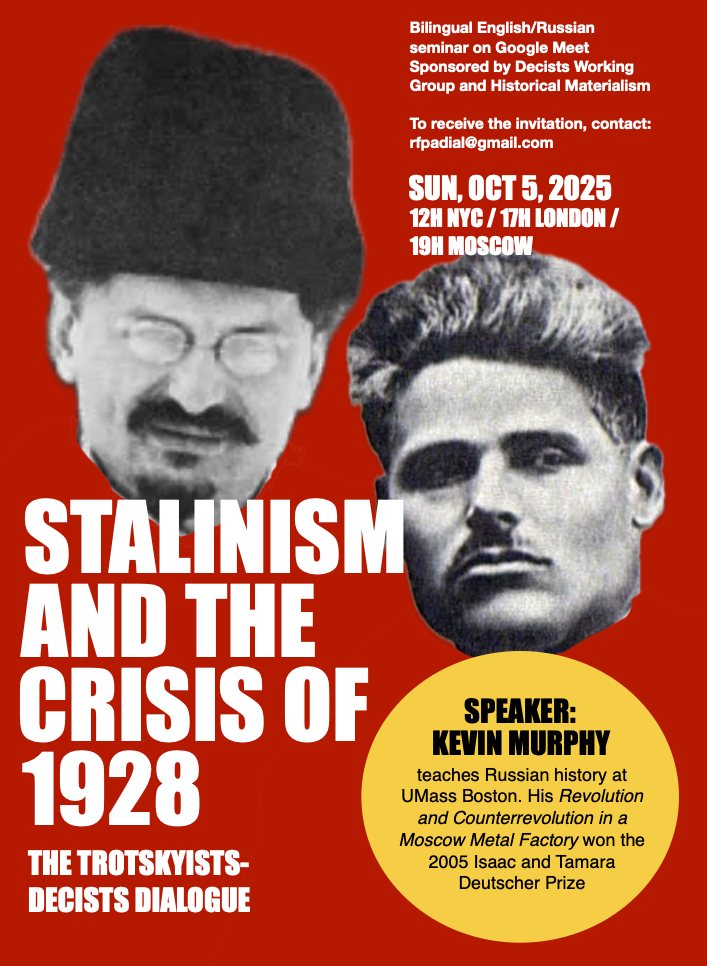
Stalinism and the Crisis of 1928: The Trotskyist-Decist Dialogue
Text in English, Russian and Portuguese Stalinism and the Crisis of 1928: The Trotskyist-Decist Dialogue Kevin Murphy 1928 was the pivotal year in the development of the Stalinist system. In a period of just fourteen months, Stalin and his lieutenants defeated two major oppositions—the United Opposition in late 1927, and then, a year later,
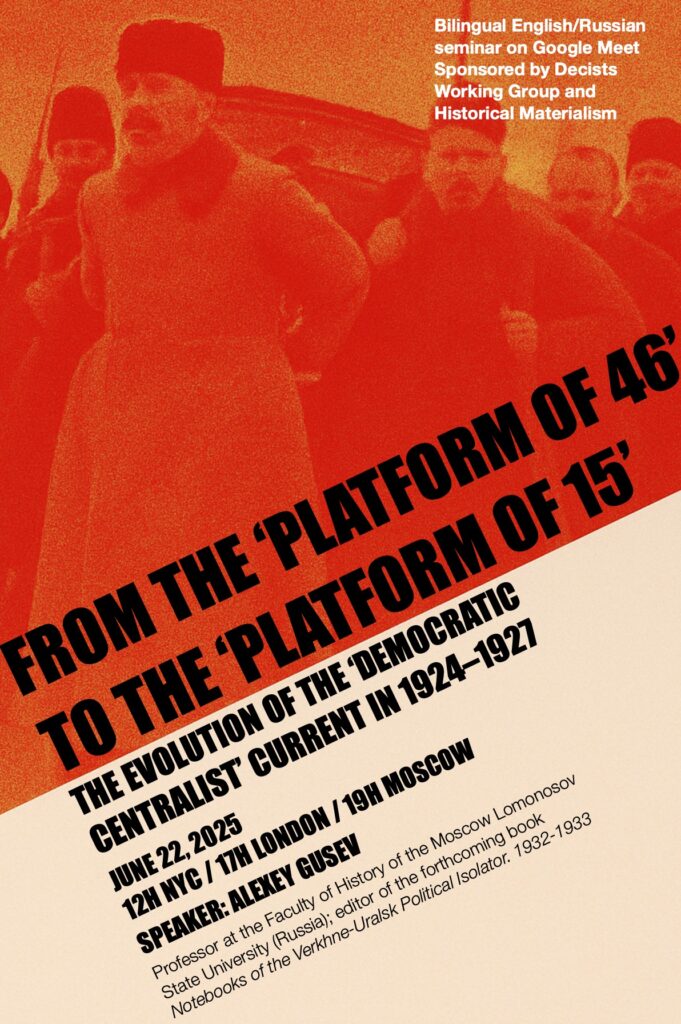
From the “Platform of 46” to the “Platform of 15”: The Evolution of the “Democratic Centralist” Current in 1924–1927
In 1921, after a heated party “Debate on the Trade Unions”, the Tenth Congress of the Russian Communist Party (Bolsheviks) decided to dissolve all intra-party factions and groups and prohibited their creation in the future. Among others, the “Democratic Centralism” group, which had been active since 1919 and had presented its platform on issues of party building at the Tenth Congress, had to cease to exist.
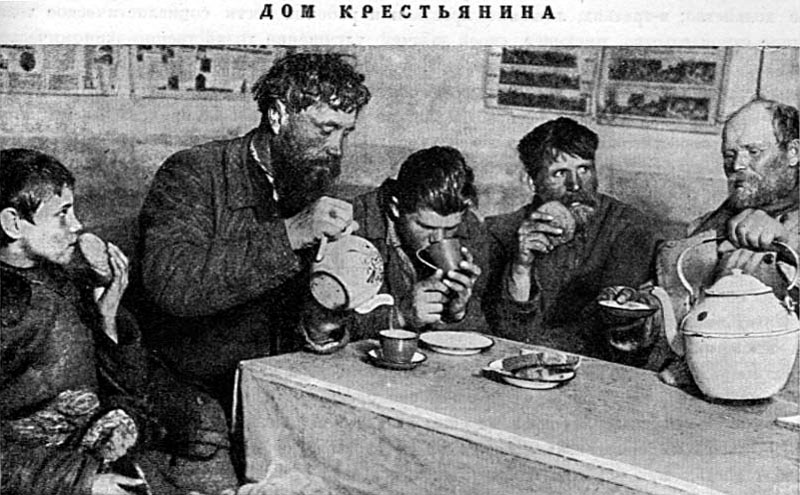
Dashkovsky’s Position in the Soviet Debate on the Scissors Crisis
In 1925, Isaak Dashkovsky published the book Market and Price in the Contemporary Economy, issued by the state publishing house Proletariat. The work constitutes a significant intervention in the debates surrounding the “scissors crisis”.
Articles, blog texts and other academic publications!
Stalinism and the Crisis of 1928: The Trotskyist-Decist Dialogue
Text in English, Russian and Portuguese Stalinism and the Crisis of 1928: The Trotskyist-Decist Dialogue Kevin Murphy 1928 was the pivotal year in the development of the Stalinist system. In a period of just fourteen months, Stalin and his lieutenants defeated two major oppositions—the United Opposition in late 1927, and then, a year later,
From the “Platform of 46” to the “Platform of 15”: The Evolution of the “Democratic Centralist” Current in 1924–1927
In 1921, after a heated party “Debate on the Trade Unions”, the Tenth Congress of the Russian Communist Party (Bolsheviks) decided to dissolve all intra-party factions and groups and prohibited their creation in the future. Among others, the “Democratic Centralism” group, which had been active since 1919 and had presented its platform on issues of party building at the Tenth Congress, had to cease to exist.
Dashkovsky’s Position in the Soviet Debate on the Scissors Crisis
In 1925, Isaak Dashkovsky published the book Market and Price in the Contemporary Economy, issued by the state publishing house Proletariat. The work constitutes a significant intervention in the debates surrounding the “scissors crisis”.
Isaak Konstantinovich Dashkovsky – Исаак Константинович Дашковский
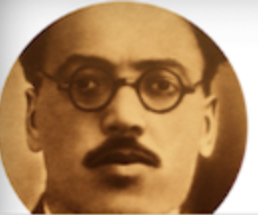
Isaac Kalmanovych Dashkovsky (1891–1972) was a Ukrainian-based Bolshevik political economist. Born on 7 February 1891 in Myzynivka (today Cherkasy region), he lived in poverty after his father’s death and worked a string of manual and clerical jobs while studying in Kyiv and Kharkiv. In late 1916 he began revolutionary agitation, joined the Bolsheviks in March 1917, and quickly became an energetic propagandist and organizer in Zhytomyr and Zvenyhorodka. During the Civil War he edited Party and military newspapers, served as a political worker in Red Army formations fighting Denikin, the Poles, and Wrangel, and wrote extensively on current politics and Soviet policy.
Dashkovsky’s political profile was shaped by internal Party struggles. At the Fourth Conference of the Communist Party (Bolsheviks) of Ukraine (1920), he advocated a fusion with Soviet Russia. In the union debate he leaned toward Trotsky’s platform and, in the Donbas, aligned with Pyatakov against regional Party leaders.
From 1922 he became rector of the Artem Communist University in Kharkiv, taught political economy, and authored influential textbooks—most notably Course of Political Economy (1923) and Market and Price in the Contemporary Economy (1925)—focusing on the NEP and price formation. Yet his insistence on intra-party democracy and his critique of “personal rule” brought him into direct conflict with the Ukrainian leadership. In 1927 he signed the “Platform of the 15” and, after refusing to recant key theses about bureaucratic degeneration and “Thermidor,” he was expelled as a hostile element—publicly cited by Stalin.
Thereafter he continued clandestine opposition work, wrote under pseudonyms, and endured arrests, exile, and decades of camps, with full judicial rehabilitation only in 1957. He died in Kharkiv in 1972, emblematic of a revolutionary intellectual crushed—yet not morally broken—by Stalinist repression.
Yakov Naumovich Drobnis – Яков Наумович Дробнис
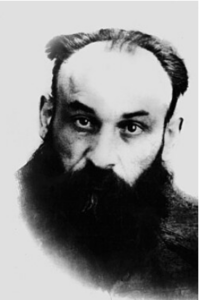
Yakov Naumovich Drobnis (1890-1937) was a Ukrainian Bolshevik who played a significant role in the early Democratic Centralist opposition. Drobnis was born in Hlukhiv, part of a Jewish settlement, to a family of shoemakers. He joined the Bund in 1904 and the RSDLP in 1906 as a Menshevik. Drobnis was arrested for political activity in 1907, 1908, served 5 years in prison before being released in 1913 and arrested again in 1915. He was sent to exile in Poltava and joined the Bolshevik Party in the same year before being amnestied in the February Revolution, helping to found the Poltava Soviet shortly after. However, Drobnis was again captured and threatened with execution by nationalist forces in 1918, on two separate occasions.
Between the two, Drobnis was a founding member of the Central Committee of the Bolshevik Party in Ukraine, and would retain this position until 1920. Despite being wounded and captured by White Guard Cossacks in 1919, and taken hostage by bandits in 1920. It was around this period that Drobnis was won to the arguments of the Democratic Centralists, and he spoke for their position in the trade-union debate at the Tenth Party Congress in 1921. Because of his support to the Decist opposition, Drobnis was recalled from Ukraine to work for the government of the Russian Federation in the Administrative and Financial Commission from 1923-27.
Drobnis continued to support the opposition, however, but from this point largely as a supporter of Trotsky. He signed the Declaration of the 46 in 1923 and backed Trotsky in the fight against the Triumvirate. He was also caught up in the Pilipenko Case in which he was sent a letter advocating splitting the Party. He was reprimanded, but remained a member until being expelled in 1927 for being a Trotskyist. He renounced his oppositionism in 1929 and was reinstated, but was blamed for an accidental mine explosion and arrested in 1936. Drobnis was tried in the second of the major Moscow show trials, in which he was coerced to admit the explosion was part of a Trotskyist sabotage plot. He was shot to death on February 1, 1937, but rehabilitated in 1988.
Eduard Dune – Эдуард Дюне
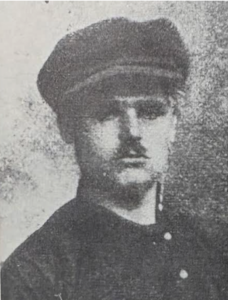
Eduard Dune was born in Riga in 1899 to a skilled working-class family. Dune moved to Tushino near Moscow in 1915 when his father’s factory was relocated due to the German military threat during World War I. The Provodnik factory had a strong Bolshevik presence where he met future Decist leader Timofei Sapronov in late 1916 when Dune joined the Bolsheviks. He was only seventeen when the 1917 Revolution began and volunteered for the Moscow Red Guard that fought for Soviet power in October. He served in the Red Army in the Don and Dagestan through 1921 and after WWII wrote about his experiences in Notes of a Red Guard.
https://files.libcom.org/files/notes_of_a_red_guard.pdf
Disillusioned with the increasingly bureaucratic rule of the regime in later NEP, Dune joined the United Opposition in 1926, siding with the extreme left Democratic Centralists who argued against the repeated retreats of the United Opposition. He signed all the major Decists documents of 1927, including The Platform of 15 (June) and the Declaration of 15 (December) that the Decists submitted to the 15th Party Congress.
Like Sapronov and all the Decists, Dune was a staunch Leninist, signing their June 1927 Under the Banner of Lenin–the Decists’ critique of Stalinism that declared, “Under the banner of the old Bolshevik Party, under the banner of Lenin – this is our cry.” Dune’s March 1947 article on Democratic Centralism, published in the Menshevik journal Sotsialisticheskii vestnik argued that “Lenin had more courage than the growing opposition…”. In the same article, he claimed that the Decists had “recruited around 2,000 people”, although this figure is likely exaggerated.
https://libcom.org/article/democratic-centralism-eduard-dune
After the expulsion of United Opposition supporters at the 15th Party Congress, Dune was arrested on January 19, 1928 for his involvement with the Democratic Centralist opposition. He was sentenced to three years of deportation to the Arkhangelsk region but was released early on April 15, 1929. After his release he did not again participate in opposition activity.
He was arrested again on April 27, 1936, and sentenced to five years imprisonment in the infamous Vorkuta gulag for “Counter-Revolutionary Trotskyist Activity.” He later detailed the spectacular 132-hunger hunger strike of Trotskyists and Decists in Vorkuta.Following his release in 1941, he lived in Vitebsk with his wife and child in Belorussia and then deported by the Germans to France during World War II, where he participated in the French Resistance. He spent his final years in exile near Paris, working in factories and writing articles in the Menshevik journal Sotsialisticheskii vestnik until his death in 1953.
Taras Ivanovich Kharchenko – Тарас Иванович Харченко
Taras Ivanovich Kharchenko (1893-1937) was a leading Bolshevik based in Ukraine. Kharchenko was born in the Donbass, and joined the Bolshevik Party in 1914. By 1917, he was the Chairman of the Military Revolutionary Committee of the Donetsk Basin as well as the Red Guard Chief of Staff for the same region. On March 6, 1919, Kharchenko was elected to the Central Committee of the Ukraine branch of the Party and made responsible for the Military Department as well as serving on the CC’s Organizational Bureau.
Kharchenko was re-elected to the CC the following year, but it was dissolved at the 9th Party Congress for containing too many supporters of the Democratic Centralist faction. Notably, prominent Decists of the time Drobnis and Rafail were joined by Sapronov. In the context of severe intra-party struggle over economic construction the Party leadership didn’t want an unreliable or oppositional CC in Ukraine.
Kharchenko returned to the Ukraine CC as a mere candidate member after the following election, indicating that he likely supported Sapronov and the Decists. Despite this, he was again appointed to the Organisational Bureau from 1921-22. Whilst not attending, Kharchenko was mentioned as a known and infamous oppositionist at the 13th Party Congress in 1924, and was a signatory of the ‘Group of 15’ platform at the 15th Congress, where he was expelled from the Party.
Following this, Kharchenko moved to Leningrad and worked as a teacher, until 1935 when he was arrested, sentenced to exile for 3 years in Siberia. He likely maintained some kind of oppositional activity, as Kharchenko was again arrested in 1936, and finally victimized by Stalin’s Great Purge – shot to death on November 27, 1937.
Vladimir Nikolaevich Maximovsky – Владимир Николаевич Максимовский
Vladimir Nikolaevich Maximovsky (1887-1941) was an old Bolshevik and one of the foremost supporters of the early Democratic Centralist opposition. Maximovsky was born in Moscow to a working-class family, but was shortly orphaned and taken in by his uncle in Kolomna. There, Maximovsky was schooled, joined the Bolshevik Party in 1903 and became the head of the Party’s city student organisation in 1905. Through this position he lead a student rally which supported striking industrial workers in the 1905 Revolution, but was forced to go deep underground and flee to Switzerland following its repression.
Maximovsky returned to Kolomna in 1907, and was the lead Party organiser in the city for some years before being arrested and exiled. Upon being amnestied after the February Revolution, Maximovsky returned to Moscow and became a leading Party member; he chaired meetings of the Moscow Regional Bureau that carried out the day-to-day operations of the Party in the lead-up to the October Revolution. He would become the Executive Secretary of the Moscow Regional Committee of the Party after the Revolution.
In 1918, Maximovsky was strongly aligned with the Left Communist opposition to the Brest-Litovsk Peace Treaty and continued to oppose official Party policy when he joined the Democratic Centralists in 1920-21. He was one of the group’s leading representatives at the Ninth and Tenth Party Congresses, arguing strongly for collegiality against one-man management. Maximovsky also signed the Declaration of 46 in 1923, and was involved with the Trotskyist opposition, but avoided being expelled at the 15th Party Congress with other oppositionists. Despite retreating to publishing work, Maximovsky was arrested and exiled from Moscow in 1938. He died in November 1941, but was rehabilitated in 1955.
Mark Ilyich Minkov – Марк Ильич Миньков
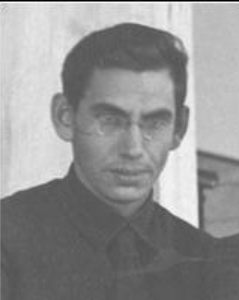
Mark Ilyich Minkov (1894-1938) was Bolshevik Party organiser born in Yekaterinoslav (Dnipro in modern Ukraine) to a Jewish working-class family. He emigrated and worked as a labourer in North America and joined the RSDLP in 1912 from the Russian section of the Canadian Social Democratic Party (Winnipeg). Minkov demonstrated his worth as a Party activist and served as the section’s Secretary from 1912-15 before travelling to the USA, being arrested for distributing literature and eventually joining a Bolshevik group in New York in 1917.
When he returned to Russia after the revolution, Minkov first worked with the Bolshevik organisation in his hometown, before joining the Civil War on the southern front. Minkov went on to hold various Party positions including Secretary of the Moscow Provincial Committee from 1918-21 and was appointed to the Central Control Commission from the 14th Party Congress.
Minkov had definitely become involved with the Democratic Centralists by the 15th Party Congress in 1927 and was a signatory of the Group of 15 platform. For this, he was expelled from the Party with the rest of the Decists, but was reinstated in 1931, presumably for recanting his oppositionism. However, Minkov was arrested in 1936 and sentenced to 5 years in a labor camp. In June 1937, Minkov organised a group of prisoners together to write a statement accusing their camp administration of illegal repression, fostering inhuman living conditions and using slave labour. The statement was sent to the Central Committee of the Communist Party and Executive Committee of the Comintern. Minkov was executed by firing squad on January 13, 1938.
M. N. Mino – М. Н. Минов
N. Mino was a signatory of the Democratic Centralist’s ‘Group of 15’ platform at the 15th Party Congress. Mino was a member of the Bolshevik Party from April 1917 and served in the organizational and agricultural sections of the 8th Party Congress before being elected as a full delegate to the 9th Congress, representing the Petrograd Provincial Conference. Following his uniting with the Decist oppositionists during the 15th Congress, Mino was expelled from the Bolshevik Party in 1927.
Valerian Valerianovich Obolensky (Osinsky) – Валериан Валерианович Оболенский (Осинский)
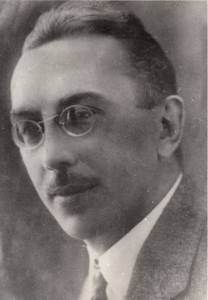
Valerian Obolensky (Osinsky) was born to a noble family in the Kursk province. As a Moscow University, Osinsky participated in the 1905 Russian Revolution and distributed revolutionary literature among students and was a reporter for Izvestiya. In 1907, he joined the Bolshevik and with Nikolai Bukharin organised a mass student demonstration. Bukharin, Osinsky and Vladimir Smirnov, became leaders of the young Moscow economists who conducted theoretical ‘raids’ in which they disrupted and challenged lectures. From 1914 to 1916 he worked for the Kharkiv Agricultural Society as a statistician. In 1916, Obelensky was mobilized in the Imperial Russian Army and served as a quartermaster officer. Joined later by Timofei Sapronov, Andrei Bubnov and other radicals, the Moscow “Lefts” would play a leading role in 1917 and several dissident Bolshevik party groups, particularly the Decists.
After the February 1917 Revolution, Osinsky was elected to the Moscow bureau of the Bolsheviks. By October 1 Lenin had become so incensed by the reluctance of conservative Petrograd Bolsheviks to start the insurrection, that he briefly implored the Moscow Soviet should take power: “The Petrograd Soviet can wait and campaign for the Moscow Soviet Government.”
Link: https://www.marxists.org/archive/lenin/works/1917/oct/01b.htm
During the dispute over the Treaty of Brest-Litovsk in 1918, Osinsky supported the Left Communists around the Kommunist journal who opposed the peace and also raised other issues related to centralization, specialists in the army and industry, and workers’ power. In 1918 Osinsky was the first Bolshevik to warn of the possibility of State Capitalism. He wrote that “Socialism and socialist organization must be built by the proletariat itself, otherwise it will not be built at all; something else will arise: State Capitalism”.
In 1919 Osinsky was one of the leaders of the Democratic Centralist opposition, which argued for greater democracy within the party and the soviets. In October 1923, he was one of the signatories of The Declaration of 46 calling for inner party democracy.
In 1924 was dispatched to Sweden and then the United States and broke with the oppositionists. In 1925 he was elected to the Central Committee.
In 1928 Osinsky was briefly reunited with Bukharin opposition against the Stalinist ruling faction. When his former Decist comrades Vladimir Smirnov and Timofei Sapronov were sent into exile in January 1928, Osinsky protested in vain to Stalin against their harsh treatment.
After he capitulated again, he worked for the Supreme Soviet of the National Economy (Vesenkha), State Planning Committee (Gosplan) and from December 1932 to March 1937, he was a member of the Special State Commission (TsGK) for determining gross harvest of grain crops, He was later forced to testify against Bukharin in 937. Osinsky was executed by orders from Stalin and Molotov on 1 September 1, 1938.
Vasily Pavlovich Oborin – Василий Павлович Оборин
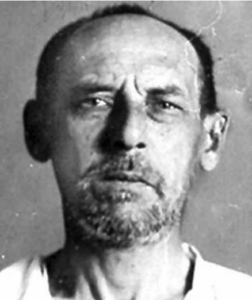
Vasily Pavlovich Oborin (1887–1939) was a Russian worker militant, an early member of the Russian Social Democratic Labor Party from 1904, and one of the many victims of Stalinist repression against revolutionary opposition within the communist movement. Coming from a modest social background — the son of salaried employees — and having completed higher education only partially, Oborin’s political trajectory was rooted in working-class militancy and trade-union activity.
After the October Revolution, he was actively involved in Party and trade-union work in Petrograd. In 1921, he served as secretary of the Collegium of the Electrical Department of the Petrograd Economic Council, a position that indicates his direct participation in Soviet economic administration during the period of post–Civil War reconstruction. During the 1920s, Oborin aligned himself with the Left Opposition and, more specifically, with the Democratic Centralism group.
At the Fifteenth Congress of the Communist Party (Bolsheviks) in 1927, Oborin was expelled from the Party for his participation in the opposition, marking his definitive exclusion from legal political life. In the years that followed, he lived under conditions of social marginalization, working as an artisan and residing in rural areas of the Kalinin region.
Arrested on August 16, 1938, Oborin was accused of participation in an alleged “counterrevolutionary organization.” Tried by the Military Collegium of the Supreme Court of the USSR, he was sentenced to the death penalty and executed by firing squad on March 19, 1939, in Moscow, where he was buried at the Donskoye Cemetery. He was officially rehabilitated in 1960, during the partial reckoning with the crimes of Stalinism. Oborin’s trajectory exemplifies the tragic fate of communist militants who politically resisted the bureaucratic consolidation of the Soviet regime.
Rafail (Farbman Rafail Borisovich) – Фарбман Рафаил Борисович
Farbman Rafail Borisovich (1893-1966) was an old Bolshevik who was a significant early Democratic Centralist. Rafail was born to a Jewish cab driver’s family in Kursk and had just a few years of education before beginning to work as a tailor and joining the Bolshevik Party in 1910. He conducted revolutionary activity in Kiev and became the Chairman of the Kiev Council of Trade Unions in 1917.
Rafail was elected to the Central Committee of the Bolshevik Party of Ukraine in 1918, and would continue to serve on the body and even its Organisational Bureau until it was joined by Sapronov and became strongly influenced by Democratic Centralist ideas in 1920. He was then sent to Moscow after the Ukraine Central Committee was dissolved by the 9th Party Congress. There, Rafail became the Head of the Department of Public Education of the Moscow Soviet and was one of the Decists’ principal speakers at the Tenth Party Congress in 1921 – attacking the Party’s CC directly for failing to combat the rising bureaucratism.
Following this, Rafail stepped back from opposition activity; his name failed to appear on the Declaration of 46 in 1923. But by 1925 he had joined the Trotskyist opposition, and was expelled from the Bolshevik Party at the 15th Party Congress in 1927. Rafail was further exiled to Siberia until 1930 when he declared that he had left the opposition and was reinstated as a Party member in 1932. He was, however, accused of being involved in an underground Trotskyist organisation and imprisoned from 1935 to 1956. Rafail died in 1966, having fought in the last decade of his life to be rehabilitated. This came on January 16, 1989.
Timofei Vladimirovich Sapronov – Тимофей Владимирович Сапронов
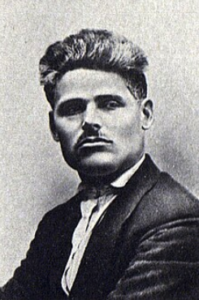
Timofei Vladimirovich Sapronov (1887-1937) was a founder and one of the main leaders of the Democratic Centralists from 1918 til his death. Sapronov was born into a poor peasant family in the Tula Governorate and was forced to work from a very young age. Following his experience of the defeat of the 1905 Revolution in Moscow Sapronov sought out organisation. He would join the Bolshevik Party in 1912, after some involvement with builder unions and a deportation for owning political literature.
After the War broke out, Sapronov was drafted but avoided service and instead went underground as a Bolshevik organiser. Despite constant hounding from the authorities, Sapronov saw great success as a worker militant and helped win the Moscow unions to Bolshevik influence. After the Revolution, he was made chairman of the Moscow Provincial Executive. In this position of influence, Sapronov joined the Left Communist campaign against the Treaty of Brest-Litovsk, but continued to oppose the official Party policy in economic matters.
At the 8th Party Congress in 1919, Sapronov and others waged a campaign against ‘one-man management’ and rising bureaucratism under the banner of Democratic Centralism. Following this, he was made to transfer from Moscow to a similar role in Kharkov, Ukraine. It was there that Sapronov won an insurgent election to the Central Committee of the Ukrainian Party branch on an economic platform opposed to that of the Bolshevik Party leadership.
Though the Decists were targeted as a faction following the 10th Party Congress and banned from organising as such, their arguments were heeded and Sapronov was made Deputy Chairman of the Supreme Council of the National Economy in 1921 and was elected to the Party Central Committee from the 12th Party Congress in 1922. Despite Sapronov’s high positions in the Party, he, along with other leading Decists, signed onto the Declaration of 46 and adhered to the Left Opposition of 1923 against the rising threat of bureaucratism and lack of Party democracy. As with other oppositionists, Sapronov gradually lost his influential positions following their defeat.
Sapronov continued to fight, and was a key figure in bringing together the United Opposition of 1926, although he and the Decists withdrew from the faction in 1927 to submit their own ‘Group of 15’ platform to the 15th Party Congress. This was the most serious attack on the degeneration of the Bolshevik Party penned from its old guard, and for it Sapronov and 23 of his followers were expelled from the Party in 1927.
Sapronov was additionally sent into exile to Arkhangelsk, but still continued to organise against and analyse the increasingly repressive regime. His most significant contribution to the latter was The Agony of the Petty-Bourgeios Dictatorship, a short essay he wrote in 1931 which scorned the idea that Soviet society was socialist, and attacked the Party leadership for abandoning international revolution. Sapronov and other Decists fought for these ideas against the more moderate Trotskyist oppositionists without, and within, the various prisons they were being confined to. Timofei Sapronov was shot and killed on September 28, 1937. He was one of many oppositionists murdered during Stalin’s Great Purge, but few maintained his commitment to revolutionary socialist politics combined with a serious analysis of the nature of their fight.
A.L Slidovker – А. Л. Слидовкер
A.L. Slidovker joined the Bolsheviks in April 1917 during the period of political radicalization following Lenin’s April Theses. He became a Bolshevik political organizer in Petrograd and then worked as a political instructor and commissar within the Red Army. After the Civil War, he became a party leader in the Urals, holding various administrative and party positions. It was here that he built a power base for the Democratic Centralist faction (the “Decists.” Slidovker was a key signatory and contributor to the Decists Platform of the Fifteen (June 1927). The platform criticized the “bureaucratic-centralist” shift of the Bolshevik Party under Stalin and Bukharin, arguing for a return to proletarian democracy.
Following his expulsion from the party on December 19, 1927, he was removed from all official state positions and spent the remainder of his life in exile or imprisonment. Immediately following his expulsion from the Party in late 1927, he was exiled to Tyumen in western Siberia as part of a mass deportation of Democratic Centralist leaders, then Verkhneuralsk Political Isolator and in the mid-1930s to Vorkuta Gulag in the Arctic Circle. Slidovker was one of the leaders in the famous 1936 Hunger Strike strike in Vorkuta. He was identified as one of the “irreconcilable” oppositionists who signed the protest declarations sent to the camp administration and the USSR Central Executive Committee. He was executed on March 8, 1938.
M. A. Smirnov – M. A. Смирнов
A. Smirnov joined the Bolshevik Party in April 1917. He was a signatory of the ‘Group of 15’ and at the 15th Party Congress. Smirnov was expelled from the Party at the same conference for being involved with the Democratic Centralist opposition.
Vladimir Mikhailovich Smirnov – Владимир Михайлович Смирнов
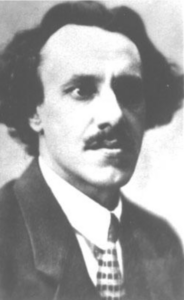
Vladimir Mikhailovich Smirnov (1887–1937) joined the Bolsheviks in 1907, after becoming politically active during the 1905 Revolution, and early on distinguished himself theoretically and politically. While studying law in Moscow, he became closely associated with Nikolai Bukharin and Valerian Osinsky.
During 1917 and the October Revolution, Smirnov played an important role in securing Bolshevik power in Moscow by organizing the heavy artillery that ensured victory. In the first years of Soviet rule, he held significant positions within the state economic apparatus, including posts in the Supreme Council of the National Economy, the Council of Labor and Defense, and the State Planning institutions. Despite this integration into the state, from 1918 onward Smirnov remained in permanent opposition. He sided with the Left Communists against the Treaty of Brest-Litovsk, arguing that socialism could not be built in an isolated, economically backward Russia.
During the Civil War, Smirnov emerged as a leader of the Military Opposition, advocating the politicization of the Red Army and stronger political control over former tsarist officers. In the 1920s, together with Timofei Sapronov and Osinsky, he became one of the main leaders of the Democratic Centralism group. Smirnov signed the Declaration of the 46 in 1923 and later the Platform of the 15 in 1926, aligning himself with the United Opposition.
Expelled from the Communist Party in 1927, Smirnov spent the rest of his life in exile and prison. Increasingly radical in his critique, he denounced Stalinism as a form of bureaucratic degeneration. Arrested repeatedly, he was executed in 1937 during the Great Purge. His later rehabilitation symbolized the tragic fate of the revolutionary communist opposition in the Soviet Union.
N. Zavaryan – H. Заварьян
Zavaryan was an old Bolshevik who joined the Party in 1906. He was a signatory of the ‘Group of 15’ platform at the 15th Party Congress in 1927 and was therefore expelled from the Party for associating with the Democratic Centralist opposition group.
Aleksei Gusev
The history of the 1920s Left anti-Stalinist opposition in the USSR is usually associated with names of Leon Trotsky, Grigory Zinoviev and political currents led by them. Much less attention has been paid to the third current – the Democratic Centralists, or the Group of 15, whose main leaders were Timofei Sapronov and Vladimir Smirnov. While the role of DC group in the factional struggle in the Bolshevik party in the early 1920s is more or less documented, this cannot be said about the period from 1923 onwards, especially about the second half of 1920s. Research on the political struggles in the RCP(b) usually refer to Sapronovites in passing as an “ultra-left” tendency in the Left Opposition, producing an impression of its marginal character. Thus, Robert Daniels discussing the events of 1926-1927 in his classical study of the communist opposition The Conscience of the Revolution (1960), mentions the Group of 15 only once – as a group that was expelled from the Communist Party, alongside with activists of Trotskyist-Zinovievist opposition, by the decision of the XVth Party congress.[1] Isaac Deutscher gives the Sapronovites a bit more space on the pages of his biography of Leon Trotsky’s, but produces a one-sided, almost caricatural picture of them as “Quixotic” extremists, lacking “realism” and “dialectic” of Trotskyists.[2]
Partial opening of archives in Russia and rise of researchers’ interest in the problems of anti-Stalinist resistance have given a new impetus to studies of Democratic Centralists (Decist) current. Many new and important documents by and on Decists were found in the Central Archive of the Russian Federal Security Service, Russian Archive of Social and Political History (former Central Archive of the CPSU) and in Hoover Institution and Harvard University’s archives in the USA. Some DC documents were included in seven volumes of The Trotsky Archive edited by Yuri Felshtinsky and published in Moscow and in Kharkov from 1990 to 2003. These sources provide an opportunity for a new look on Sapronovite current, which appears to have played a more important role in the anti-Stalinist opposition both in terms of activities and ideological impact.
It is known that the current of Democratic Centralism originated in the Russian Communist Party in 1919 and was one of earliest Bolshevik oppositions of the post-October period. Initially this tendency, that in 1920 developed into inner-party faction, had its base among personnel of local Soviet and party organs dissatisfied with bureaucratic authoritarianism of the central bodies of the party-state system. In their speeches at the party forums and in various documents Decists fiercely criticised the concentration of power in the hands of “party oligarchy” and the “tops” of Soviet apparatus. To the “vertical centralism” of bureaucracy they counterposed “democratic centralism”, meaning autonomy of local Soviets and party organisations, election of officials and control over them from below, and possibilities for criticism and discussion.[3] Valerian Osinsky, one of Decists’ leaders, wrote in 1920: “There can be no proletarian dictatorship without conflict of opinions, without struggle of currents and groups, without opposition”.[4] Among Bolsheviks, Democratic Centralists had the reputation of being “communist liberals”, defenders of rights and liberties allowed by the one-party regime.
Being far from a marginal group, Decists from time to time prevailed at Soviet and party forums (for instance, at the VIIth All-Russian Congress of Soviets in 1919 and IVth All-Ukrainian party conference in 1920).[5] However, Lenin’s Politbureau kept government system under tight control and was able to neutralize the Decists’ democratic initiatives in practice. Since the Bolshevik system evolved objectively in a direction opposite to those defended by Decists, their positions in the Party gradually weakened. In 1921, the Democratic Centralist group was dissolved, alongside other party factions, by the decision of the Xth Congress of the RCP(b)[6].
But, two years later, in 1923, a number of leading Decists took an active part in the another opposition, which demanded the democratisation of the party regime and changes in its economic policies. This opposition was not “Trotskyist” – this word had not been yet put into circulation. Leon Trotsky, though urging party to take a “new course” in his articles, did not participate personally in the open discussions at party meetings – partly for health reasons, partly because he tried to avoid an open break with the Politbureau’s majority. In the Soviet press of that time, oppositionists were called not Trotskyists, but “supporters of Sapronov and Preobrazhensky”.[7] Indeed, Timofei Sapronov and many other Decist leaders played a key role in formation and activities of the “1923 Opposition”. It was they who were considered by the party officials “initiators of struggle” and “core” of the group of 46 old Bolsheviks that authored the opposition’s platform – the “Declaration of 46”.[8] It is telling, that the opposition in Moscow organised its headquarters in the apartment of one of the leading Decists, Vladimir Maximovsky in the National hotel.[9] The same Maximovsky and Sapronov brought the Opposition its only serious electoral victory during the 1923-4 factional struggle in Moscow. In January 1924, Maximovsky was elected by an oppositionist majority of Hamovnichesky district party conference as secretary of the district party committee. But, in less than two months, he had to step down under the strong pressure from higher party authorities and Central Committee loyalists.[10]
After Stalin’s apparatus, using a whole series of administrative technologies and tricks, defeated the opposition in the party discussion of 1923-4, core cadres of Decists suspended public activities for a while. But they continued to maintain communication and correspondence and, from time to time, met in private apartments to discuss political questions. In November 1925, the Central Committee stated that a number of Decists were continuing their “factional work”; one of them, Boris Pilipenko, who worked for the Kharkov gubernia’s party committee, was expelled from the RCP(b).[11]
In the same year, Decists made and began to distribute clandestinely the type-written pamphlet The Workers’ Question, devoted to the real conditions of the working class in the Soviet “workers’ state”. This pamphlet described the state pressure on workers, who were forced to work more intensively without respective wage increases; it talked about worsening of legal conditions of workers and establishment of “total autocracy of administration in factories”. These problems – and not the scholastic debates about possibilities of “building socialism in a single country” – had, from the authors’ point of view, major significance for socialist perspectives in the USSR. And they concluded that the working class needed means of defence from the existing state, including the legalisation of strikes.[12]
So, as we can see, by the mid-1920s, a serious shift took place in the views of Democratic Centralists: from polemics on the questions of inner-party regime and economic policies, they moved to concentrate their attention on the problems directly linked to the social interests of the workers. Such a re-orientation brought as a consequence a change in social composition of Decists’ supporters: according OGPU’s data, in the second half of 1920s, these were mainly working-class.[13]
In Summer 1926, Decist leaders played a crucial role in formation of the United Left Opposition (“Bolshevik-Leninist”), which brought together oppositionists of 1923 and Leningrad group of Zinoviev. The first meetings, where fusion of opposition factions was discussed, were chaired by Sapronov.[14] In several regions, such as the Donbass, Bryansk, Sverdlovsk, Decists had a major influence among local United Opposition activists.[15]
However, unity of opposition forces proved to be short-lived: as early as Autumn 1926, the Sapronovites left the “Bolshevik-Leninist” bloc, protesting against Trotsky and Zinoviev’s line, which they considered inconsistent and conciliatory in relation to Stalin’s ruling group. Especially negative was their reaction to the Trotskyists’ and Zinovievists’ public declaration of 16 October 1926, where the Oрposition leaders, yielding to Politbureau’s demands, recanted their factional sins and promised to stop “violations of party discipline”.[16] The Decists saw such tactical manoeuvres as unacceptable and leading only to disorientation and discreditation of the Opposition. Another factor of the split could have been a certain distrust of the Decists towards Trotsky; having been his opponents in the party discussions in 1919-1921, they remembered his enthusiasm for war communism and feared his power ambitions. As Sapronov bluntly put it, “We are not going to shine Trotsky’s shoes!”[17]
Gradually, leaders of the Decists began to realise that the authoritarian bureaucratic system had become so entrenched in the USSR that it excluded possibilities to change situation in both socio-economic and political spheres by reformist means, through victory in inner-party discussions. According to the memoirs of Eduard Dune, an active member of this group, at that time some leading Decists, including Sapronov and Smirnov, came to the conclusion that proletarian revolution in Russia had been completely destroyed, and that the struggle had to be begin again from scratch.[18] But, initially, this conclusion was not been proclaimed openly and did not find a direct reflection in the new programmatic document of the group – the “Platform of 15” of 27 June 1927. The reason was twofold: first, not all members of the group at that time were ready to accept such radical idea, and, second, its open statement would have immediately cut Decists off from the existing Communist Party, closing off the last possibilities to work inside it. Though the Decists’ platform had generally more radical character than Trotskyist-Zinovievist “Platform of 13”, issued later in 1927, it did not say that “Thermidorian” forces in the USSR had won; it just stated cautiously that degenerated “ruling tops” in the RCP(b) had crossed “the line beyond which liquidation of the party and its transformation into auxiliary apparatus of the government begin”.[19]
But the new opposition organisation formed on the basis of “Platform of 15” had been built, from the beginning, not as an inner-party faction, but as a network of clandestine cells, designed for functioning in the underground. That differentiated the Sapronovites from the Trotskyist group, which focused on arguing at official party meetings, trying in vain to win the struggle with bureaucracy by “constitutional” means. The Decists had no such illusions. They saw their principal task as preparing cadres for a long future struggle in a context of state repression: they were sure that regime of bureaucratic dictatorship in the USSR would take a more and more oppressive character. The Sapronovites usually avoided public manifestations, they did not collect signatures under their documents, but preferred individual work with people and leaflets campaigns. For security reasons, their cells had no more than five members each. Serious attention was paid to the organisation of clandestine printshops and the acquisition of printing equipment. The Decistss also set up their Red Cross to help political prisoners.[20]
Because of the conspiratorial character of the Sapronovites’ activities, the GPU for a long time had no information about the number of their activists. As Yakov Agranov, one of the secret police chiefs, admitted, in 1927 the Chekists believed that “one room would have been enough” to embrace all the active Decists, whereas, in fact, they had about five hundred members in Moscow and Leningrad alone.[21] The Decists themselves estimated their membership as about two thousand people.[22] The advantages of the clandestine nature of their organisation became clear when the the Left Opposition was finally expelled from the Party and had to concentrate on entirely underground work. Under such conditions, the Sapronovites demonstrated their ability to perform quite well-coordinated and effective actions. Arrests and exile of several leaders (T. Sapronov, V. Smirnov, V. Oborin, T. Kharechko and some others) had not prevented them from the intensification of their activities in the situation of socio-economic crisis that began in the country. In 1928-9, underground centres of the group coordinated massive leaflets campaigns oriented mainly towards workers of industrial enterprises, where the Decists had a certain degree of support. In 1928, Agranov characterised the Sapronovites as “the most serious among existing underground factional organisations in terms of its activity”.[23]
In their leaflets, the Decists, who, by that time, began to call themselves the “Groups of the Proletarian Opposition”, used plain language: counterrevolution had triumphed in the USSR; the government, party and official “trade unions” were hostile to the proletariat, being means of its oppression and exploitation; workers were called on to prepare for the new revolution, build a new proletarian party and resist the ruling bureaucracy’s attacks on workers’ rights and interests.[24]
Isaac Deutscher writes in his biography of Trotsky that the Decists, at the end of 1920s, saw Stalin’s government as a representative of rich peasants (kulaks) and, accusing it of the restoration of capitalism in the middle of Stalin’s anti-NEP turn, “threw themselves on the windmills”.[25] But, in reality, the position of the Decists was quite different: they argued that although, before 1928, the government’s policy had favoured the kulaks and the NEPmen, after that, facing the crisis of the NEP, it turned against peasantry. Calling Stalin’s regime “a petty-bourgeois dictatorship”, most Decists meant by that the rule of a new bureaucratic social layer – the “urban petty bourgeoisie (from former workers and other elements) commanding the state apparatus”, as Taras Kharechko put it in one of his letters. The social group was hostile both to working and bourgeois classes and was trying to secure its dominance by “unleashing industrialisation in the forms of state capitalism”.[26] In 1931, this argument was developed by Timofei Sapronov in his 32-page work The Agony of the Petty-Bourgeois Dictatorship. Written in exile, this pamphlet was later used by Stalin’s judges as evidence of the Decist leader’s “counterrevolutionary activities” for which he was sentenced to death in 1937.[27] Sapronov characterised the economic system in the USSR as a “malformed state capitalism” that, by its bureaucratic mismanagement, necessitated the production of defective goods, chronic deficits and endemic disproportions. This system, stressed the author, was inferior to traditional capitalism and historically doomed.
On the political level, Sapronov made direct analogies between Stalinism, on the one hand, and fascism and Asiatic despotism, on the other. He described the declassing influence of bureaucratic dictatorship on society: by destroying all existing social collectivities, it transformed society into an amorphous mass, an easy object of manipulation from the top.[28] Here, we can see a direct anticipation of one of the central theses of the conception of totalitarianism, according to which the destruction of horizontal social interactions constitutes a basic feature of a totalitarian system.
Official party propaganda in the Soviet Union classified the Sapronovites’ views as a “mixture of Trotskyism, Menshevism and anarchism”.[29] Trotsky wrote that they were “approaching old Menshevik positions from the ‘left’”.[30] The Decists themselves believed that they were continuing the authentic Bolshevik tradition. But their views gradually evolved towards more and more critical evaluation of Leninism. As early as 1928, Sapronov admitted that Stalin’s regime had grown out of practices of the Lenin period.[31] Yugoslav oppositionist Ante Ciliga, who, in the early 1930s, served time in Verhneuralsk political prison together with supporters of the “Group of 15”, recollected their “critical, not to say hostile attitude towards the practice and the theories of the post-October Lenin”.[32] We can only guess how their views would have evolved had they survived the Stalinist terror of 1930s. But one example is telling: Eduard Dune, one of 15 signatories of the Decists’ platform, who managed to leave Russia for Western Europe during WW2, joined the Menshevik émigré organisation and, after the War, became representative of its journal Socialist Messenger in Paris; at the same time, he continued to maintain some ideas of early Bolshevism with a certain syndicalist inclination.[33]
Activities of the underground “Groups of the Proletarian Opposition” at the end of 1920s, their links to industrial workers and agitation for political and economic strikes were taken by the party leaders as a serious threat. In March 1928, the Presidium of the party Central Control Commission held a special meeting devoted to the question of the struggle against the Sapronovites. Yakov Agranov reported to the meeting: “The Decists are extremely embittered, some of them rebellious when being arrested, they call Soviet regime fascist”. They, continued GPU chief, even discussed possibilities of workers taking up arms against the party leaders.[34] Having received party directives, the GPU intensified its operations against the Sapronovite underground, and, by the beginning of 1930s, succeeded in generally destroying it. Activities of “proletarian opposition groups” ceased, and many of them were arrested. Thus, traditional methods of conspiratorial work, successfully used by revolutionaries in the times of czarist autocracy, proved to be ineffective under a totalitarian regime with its all-penetrating structures of party and police control and surveillance.
The final chapter of the history of the “Group of 15” is linked to the struggle for political prisoners’ rights in the Vorkuta and Kolyma GULAG camps in 1936-7. Such representatives of the Decists as Nikolay Baskakov, Alexander Slitinsky and others, were among leaders of hunger strikes and protests of imprisoned oppositionists.[35] Almost all of them were shot – but not a single Decist was used in show trial, as none agreed to publicly “confess” fabricated crimes.
In 1960, Robert Daniels remarked in his book that the leaders of the Democratic Centralists, such as Timofei Sapronov, “deserve much more recognition by history for sustaining as long as they did the courage of their antiauthoritarian convictions”.[36] When these words were written, only limited sources on the history of this most radical and intransigent current in the left anti-Stalinist opposition were available. Now, on the basis of new archival materials in our disposal, we can certainly confirm this conclusion.
I am text block. Click edit button to change this text. Lorem ipsum dolor sit amet, consectetur adipiscing elit. Ut elit tellus, luctus nec ullamcorper mattis, pulvinar dapibus leo.
[1] Daniels R.V. The Conscience of the Revolution: Communist Opposition in Soviet Russia. Cambridge (MA), 1960, p. 310.
[2] Deutscher I. The Prophet Unarmed. Trotsky: 1921-1929. Oxford, 1987, pp. 431-432.
[3] See Decists’s speeches at the VIII-Xth congresses of the RCP(b); Из платформы “По вопросу об очередных задачах партии» (сентябрь 1920 г.) // Политические партии и движения России: Документы и материалы. Т. II: Коммунистическая партия (1917-1985). Кн. 1. М., 2008. С. 154-157.
[4] Осинский Н. Что нужно для осуществления пролетарской демократии // Правда. 1920. 26 декабря.
[5] Daniels R.V. Op. cit., pp. 101-102; Власть и оппозиция: Российский политический процесс ХХ столетия. М., 1995. С. 94.
[6] Десятый съезд РКП(б): Стенографический отчет. М., 1963. С. 573.
[7] Правда. 1923. 14 декабря.
[8] РКП(б): Внутрипартийная борьба в двадцатые годы: Документы и материалы. 1923 г. М., 2004. С. 311; Правда. 1923. 18 декабря.
[9] ДунэЭ. ИзисторииДЦ // HooverInstitutionArchives. Boris I. Nikolaevsky collection. Box 237. Folder 5.
[10] Гарнюк С.Д. Московская власть: Очерки истории партийных и советских органов. Март 1917 – октябрь 1993. М., 2014. С. 169-171.
[11] Российский государственный архив социально-политической истории (РГАСПИ). Ф. 17. Оп. 3. Лл. 6, 10-18.
[12] ДунэЭ. Впоискахплатформы // Hoover Institution Archives. Boris I. Nikolaevsky collection. Box 237. Folder 3.
[13] Доклад Я.С. Агранова «О работе сапроновской оппозиции» на заседании Президиума ЦКК ВКП(б) 15 марта 1928 г. // РГАСПИ. Ф. 589. Оп. 3. Д. 9685. Т. 1. Л. 214.
[14] Троцкий Л.Д. Письма из ссылки. 1928. М., 1995. С. 228.
[15] Дунэ Э. В поисках платформы.
[16] Стенограммы заседаний Политбюро ЦК РКП(б)-ВКП(б). 1923-1938 гг. Т. 2: 1926-1927. М., 2007. С. 451-453.
[17] РГАСПИ. Ф. 589. Оп. 3. Д. 9685. Т. 1. Л. 121.
[18] Hoover Institution Archives. Boris I. Nikolaevsky collection. Box 237. Folder 3.
[19] РГАСПИ. Ф. 589. Оп. 3. Д. 9685. Т. 1. Л. 49.
[20] Дунэ (Иванов) Э. Демократический централизм // Архив Троцкого. Т. 2. Харьков, 2001. С. 392-394.
[21] Доклад Я.С. Агранова «О работе сапроновской оппозиции». Т. 1. Л. 207; Т. 2. Л. 176.
[22] Дунэ (Иванов) Э. Демократический централизм. С. 392.
[23] Доклад Я.С. Агранова «О работе сапроновской оппозиции». Т. 2. Л. 176.
[24] Центральный архив Федеральной службы безопасности РФ (ЦА ФСБ РФ). Ф. 2. Оп. 7. Ед. хр. 353. Лл. 171-173; РГАСПИ. Ф. 589. Оп. 3. Д. 9685. Т. 2. Лл. 88-91, 177-182.
[25] Deutscher I. Op. cit. P. 432.
[26]ЦАФСБРФ. Ф. 2. Оп. 7. Ед. хр. 7. Л. 152.
[27] Там же. Уголовное дело Р-37963. Т. 2. Лл. 37-38.
[28] Там же. Лл. 8-31.
[29] Из истории борьбы ленинской партии против оппортунизма. М., 1966. С. 389.
[30] Л.Т. Еще о советской секции Четвертого Интернационала // Бюллетень оппозиции (большевиков-ленинцев). № 49. Апрель 1936 г. С. 6.
[31] ЦА ФСБ РФ. Ф. 2. Оп. 7. Ед. хр. 384. Л. 24.
[32] Ciliga A. The Russian Enigma. L., 1979, p. 277.
[33] Р.А. Памяти Э.М. Дунэ // Социалистический вестник. 1953. № 2/3.
[34] Доклад Я.С. Агранова «О работе сапроновской оппозиции». Т. 1. Л. 173; Т. 2. Л. 166.
[35] Рогачев М.Б. «Мы вынуждены прибегнуть к борьбе»: голодовка политзаключенных в Воркуте в 1936 году // Покаяние: Коми республиканский мартиролог жертв политических репрессий. Т.7. Сыктывкар, 2005. С.95–120; Неразоружившиеся троцкисты на Колыме. 1936-1937 гг. (по материалам дела № 309 и другим документам).// Архив Московского историко-литературного общества «Возвращение».
[36] Daniels R.V. Op. cit., p. 390.