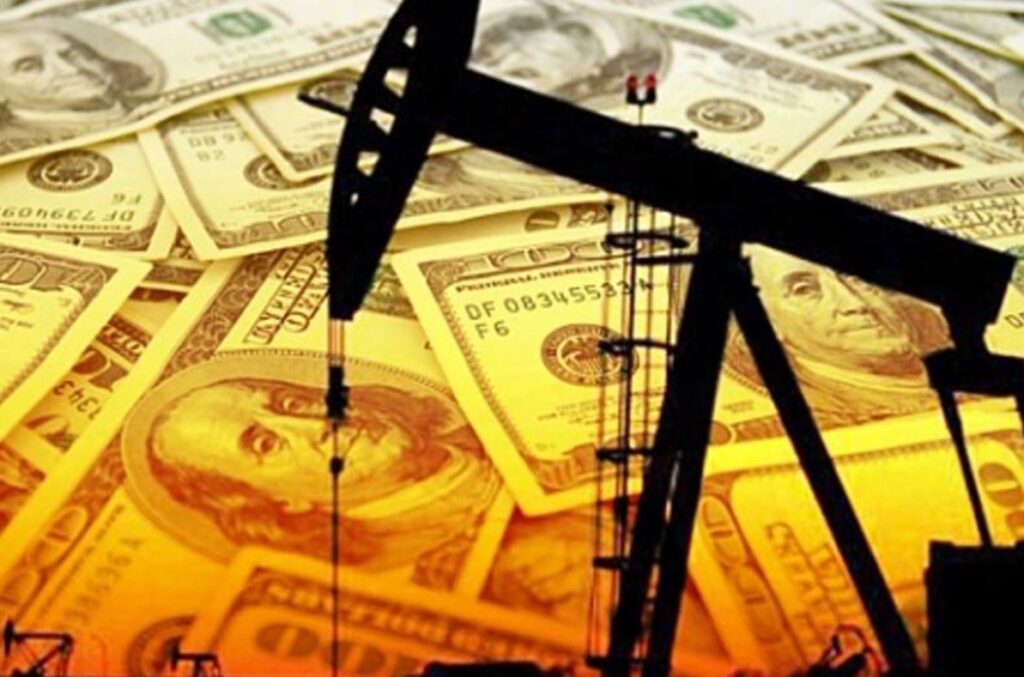
Recent patterns of US aggression, particularly in regions endowed with strategic resources such as oil and its byproducts, have revived debates on the relationship between oil and the dollar. Two broad strands of scholarship offer competing interpretations in this context. One perspective holds that the dollar’s status as a global safe haven and reserve currency precedes and explains its use in oil transactions. In this view, oil is denominated in dollars because the dollar is world money. An alternative perspective reverses this causal sequence, arguing that the pricing of oil in dollars plays a significant role in sustaining its position as world money. This article seeks to foreground key aspects of the latter interpretation.
The persistence of the dollar’s role as world money after the collapse of the Bretton Woods system raises a puzzle: how does a currency continue to function as world money even when the issuing country loses its economic competitiveness and, over time, becomes the world’s largest trade-deficit economy? To answer this puzzle, Strange argues that what sustains dollar dominance is the structural power of the United States in four (security, production, finance, and knowledge) interlinked domains.[1] She argued that the United States’ commanding position within these structures compels other states and actors to organise their transactions around the dollar. An associated argument, advanced by Kindleberger,[2] emphasises the absence of viable alternatives, which compels other countries to hold and transact in dollars. More recently, scholars have identified additional dimensions of dollar dominance, including the invoicing and settlement of an overwhelming fraction of international trade in dollars[3] and the dollar’s entrenchment through the offshore Eurodollar market and Federal Reserve swap lines that function as a global lender-of-last-resort infrastructure.[4]
Across these traditions (quite surprisingly, even in many Marxist circles), there is an implicit consensus that all meaningful commodity links have been abandoned and, more importantly, that such links are no longer necessary for a currency to function as world money. I argue that this view is fundamentally mistaken. It cannot, for instance, explain why the US has repeatedly intervened militarily in major oil-producing countries (Iraq, Libya, Venezuela, and Iran). An important explanation in this context is provided by Panitch and Gindin,[5] who argue that the US state acts as the superintendent of global capitalism, creating conditions at the global scale conducive to its reproduction and diffusion. But this explanation needs to be taken further: the production, supply, and control of oil under US leadership is not merely one among several conditions for capitalist reproduction at the global scale but its most indispensable material foundation. While it may appear that the post-Bretton Woods world economy has dispensed with commodity-backed money altogether, and that the dollar has thereby become a purely fiat currency, this conclusion does not withstand closer scrutiny. It calls for a more careful examination of the underlying mechanisms that reproduce the dollar’s role as world money, and it is precisely this examination that the present paper undertakes.
I
The dollar continues to function as world money because, in the perception of global wealth holders, it is as good as gold. In other words, it is regarded as a relatively stable store of value vis-à-vis other commodities. This perception rests on the expectation that the US will not experience persistently high inflation for a time long enough to produce significant danger to the value of dollar. This constitutes a primary condition for sustaining the dollar’s role as world money. I argue that this belief is not merely psychological, but, rather, underpinned by concrete conditions. The first of these conditions was engineered by the US-backed international institutions (IMF, World Bank, and WTO) within global capitalism in the form of justification or imposition of the widespread neoliberal reforms. It has played an important role in weakening the bargaining power of the working class at the global level, and particularly within the US and other advanced capitalist economies. This has ensured that the dollar price of labour power does not rise significantly in the US. One important mechanism through which this is achieved is the maintenance of a persistent reserve army of labour, in the US as well as other advanced capitalist countries, and at the global level, creating a buffer stock of surplus labour. This exerts downward pressure on wages, restrains the demand of the working class, and sustains the profit share. In mainstream terminology, this is captured by the concept of the non-accelerating inflation rate of unemployment (NAIRU).
Second, the US has evolved a global arrangement of international exchange, secured through a combination of consent and coercion, in which the structure of world trade systematically insulates its domestic economy from the kinds of supply constraints that would otherwise generate sustained inflationary pressures and undermine the value of the dollar. Crucially, there is no primary or mass consumption commodity, heavily embedded in the US consumption basket, whose supply is both externally dependent and structurally constrained in a manner that could result in a very high inflation. This is historically produced by the global division of labour. In the post-Second World War period, the terms of trade remained overwhelmingly against tropical and sub-tropical products (such as coffee, cocoa, edible oils, and other wage goods) of the Global South because these are produced in a competitive environment with weak bargaining power and limited technological use.[6] Countries dependent on exports of these goods, to earn foreign exchange for developmental needs or to access high-value manufacturing imports produced under monopolistic and technologically restricted conditions in advanced economies, are compelled to supply them at relatively low and stable prices. The result is a persistent terms of trade structure that dampens wage goods prices and input cost pressures in the US economy. This relative insulation from supply-side inflation in key consumption goods not only stabilises domestic price levels but also reinforces, at the global level, the perception of the dollar as a reliable store of value, thereby contributing to sustaining its role as world money.
Third and most important, after the dismantling of the gold backing of the dollar by Nixon, the most significant threat to the stability of the US dollar as world money arises from oil. This is because oil in the post-World War II world economy has occupied a uniquely central position in the reproduction of the global capitalist system. It constitutes a foundational input into production, circulation, and consumption on a world scale. To illustrate, fossil fuels as a whole (oil, coal, and natural gas) still account for roughly 80 percent of global energy use, with oil alone contributing around 30-32 percent, making it the single largest source of primary energy (US Energy Information Administration, 2026). Its centrality is even more pronounced in the transport sector, where oil provides about 90-95 percent of total energy consumption, underpinning the movement of goods and people across sea, air, and land. Moreover, oil’s significance extends well beyond its role as an energy source. It functions as a basic feedstock for a wide range of industrial and chemical commodities that have increasingly supplanted natural materials, including plastics, synthetic fibres, detergents, and fertilisers, which are essential for global industrial and food production.[7] Any disruption in access to oil, or a sustained increase in oil prices, can generate widespread inflationary pressures and undermine confidence in the dollar’s value. Thus, the threat posed by oil has been the most serious challenge to the stability of the dollar as world money.
The containment of this threat to the value of the US dollar required control over the production, distribution, and, most importantly, the pricing of oil, such that it remained denominated in US dollars. This was not merely a question of invoicing currency but of constructing an institutional and geopolitical arrangement that bound the circulation of the most indispensable global commodity to the dollar. The arrangement that the US forged with Saudi Arabia, and which was subsequently generalised across Organization of the Petroleum Exporting Countries (OPEC) member countries, of pricing and selling oil exclusively in dollars, constituted one of the most consequential reorganisations of the world economy after the collapse of the gold standard (Singh, 2026). It ensured that all oil-importing countries, irrespective of their bilateral trade relations with the US, were compelled to acquire dollars to meet their energy needs, thereby generating a continuous and relatively inelastic global demand for the currency. At the same time, the recycling of oil revenues through dollar-denominated financial assets and institutions anchored surplus capital within the US-centred financial system, reinforcing its depth and liquidity. This arrangement thus acts as a critical linchpin not only for the stability of the world capitalist system but also for the centrality of the US within it, ensuring its dominance in international transactions. In this sense, it became the modus operandi through which the dollar sustained its role as world money in the post-Bretton Woods period.
II
In this context, three related possibilities are particularly significant to understand the oil-dollar nexus. First and avoidable, when oil prices rise (for a short period, or one time), the destabilising effect on the dollar can be contained if oil-producing countries (the immediate beneficiaries of such increases) continue to accumulate and recycle their surpluses in dollar-denominated assets.[8] In this case, higher oil revenues would not translate into a shift away from the dollar. Rather, they would reinforce its role by sustaining demand for dollar assets.
The second, and more challenging, situation arises in the case of a supply-side oil shock. Here, the problem is not merely one of price increase but of physical constraint in the availability of oil, which directly disrupts production, transportation, and trade across the world economy. Under such conditions, the cost of production rises sharply and persistently, feeding into generalised inflationary pressures. Unlike the first case, where financial recycling can stabilise the system, a supply-side oil shock cannot be offset through financial mechanisms alone. In such a case, neither monetary contraction nor fiscal intervention is sufficient to resolve the inflationary situation, since both address the demand side of the economy while leaving the underlying supply constraint intact. Expansionary policies may ease liquidity constraints or sustain demand, but they simultaneously risk intensifying inflation without resolving the underlying shortage. This places a structural limit on the ability of the US to manage the contradiction between maintaining domestic price stability and therefore sustaining the dollar’s value. Moreover, since oil imports must still be financed in dollars, a supply disruption can generate pressures on the US balance of payments while also weakening confidence in the dollar as a stable store of value. In other words, the external reproductive mechanism itself comes under strain: the very commodity that anchors global demand for the dollar becomes a source of instability. It is precisely for this reason that the US has historically sought not only to secure dollar pricing of oil but also to ensure relative stability in its supply conditions through geopolitical, strategic, and institutional means.
The third and more challenging situation is that the dollar’s position would be jeopardised if oil-producing countries move away from exclusive dollar pricing and adopt alternative invoicing arrangements. This arrangement could be in the currencies of major trading partners, emerging economies, or through bilateral currency agreements. This is not merely a hypothetical possibility. It can arise under specific material and geopolitical conditions. For instance, when oil-producing countries face economic sanctions, financial restrictions, or political pressures from the US, they would be prompted to seek alternative channels of trade and reserve accumulation. Similarly, if competing powers offer more favourable terms, whether in the form of higher prices, technological cooperation, and investment, oil exporters may have incentives to diversify both their trade invoicing and asset holdings. In such cases, the global demand for dollars can be directly weakened. Such a shift would strike at the very mechanism that generates a continuous and inelastic demand for the dollar. It is precisely this possibility that has increasingly informed US strategic responses in recent years.
To briefly reflect on a related point widely accepted in the literature about the oil-dollar nexus. There is a common understanding among scholars that any episode of international disturbance leads to a flight towards the US dollar, since it is perceived as a safe haven by global wealth holders. I argue that this holds under certain conditions and should not be generalized to all forms of instability. This tendency is most evident when disturbances originate in financial markets or currency crises elsewhere, prompting a shift into dollar-denominated assets. However, when the disturbance is oil-related or arises from sanctions on major oil-producing countries, the outcome may be different. A more appropriate indicator to test the safe haven hypothesis would be the relative movement of the value of the dollar vis-à-vis the value of gold. Moreover, an appreciation of the dollar under such conditions should not be interpreted solely as an increase in its intrinsic demand as a safe asset. It may also reflect the relative depreciation of other currencies as countries attempt to maintain export competitiveness. The recent increase in oil-related sanctions has, in fact, encouraged central banks to diversify towards alternative safe assets such as gold, a shift that is clearly reflected in recent movements in global gold prices.
To reiterate the argument so far. The conditions that underpin the persistence of the US dollar as world money should be understood along three interrelated dimensions. First, oil must be priced in dollars so as to sustain a continuous and inelastic demand for dollars in the world market. This compels other countries to export goods and services in order to earn dollars, thereby enabling the US to access a wide range of commodities at relatively favourable terms. This arrangement helps contain inflationary pressures within the US, contributing to the relative stability of the dollar’s value vis-à-vis other currencies and reinforcing its position as the preferred asset for global wealth holders. Second, oil prices must not rise persistently. A sustained increase in oil prices would exert downward pressure on the value of the dollar by raising global inflation and inducing portfolio shifts among wealth holders and central banks toward alternative safe assets. In such a scenario, the share of dollar-denominated assets in global reserves would tend to decline, thereby weakening the structural demand that underpins the dollar’s international role. Third, a persistent rise in oil prices would increase the cost of production across the world economy, generating cost-push inflation. This, in turn, would compress profit margins and intensify distributional conflicts, potentially increasing the wage share at the expense of profits. Such pressures would destabilise the prevailing mechanics of capitalist accumulation, within which the dollar-centred monetary order is embedded.
III
US interventions in oil-producing regions must also be understood in this light among others. The objective is not merely access to oil as a resource but the preservation of a system in which major oil producers continue to denominate oil in US dollars. Any deviation from this arrangement (most consequentially, the growing tendency among some producers to price oil in Chinese renminbi or other currencies) poses a direct challenge to the dollar’s international role. Once the most strategically indispensable commodity in the world economy begins to be traded outside the dollar circuit, the structural demand for the dollar weakens, and, with it, the US capacity to command real resources from the rest of the world. Countries that must export goods and services to earn dollars lose that compulsion the moment oil can be settled in alternative currencies. This is the systemic threat that US statecraft has consistently treated as non-negotiable.
It is in this context that recent US interventions (the reassertion of control over Venezuela’s proven oil reserves, regime change attempts in Iran, and the reconfiguration of control over the circuits of extraction, trade, and financial settlement of oil across the Middle East) are better understood not as isolated acts of geopolitical aggression but as efforts to stabilise the material foundations of the dollar’s role as world money. The interpretation of these developments as driven by security concerns or ideological rivalry is important, but not present a complete picture and often obscures their central and consistent objective, which is the preservation of dollar-denominated oil pricing.
To conclude, this article provided an alternative to the conventional view that oil is priced in dollars because the dollar is a safe asset. The analysis highlighted that the causation runs in the opposite direction: it is the pricing of oil in dollars that reproduces the dollar’s status as world money. Thus, the world economy has not, in any substantive sense, moved away from the commodity-backed foundations of world money. Commodity linkages persist (though implicitly) in a transformed and mediated form, with oil performing the structural function that gold once performed. The dollar’s privileged position in the world economy rests on this foundation, and it is a foundation that the United States has shown it will defend by any means available.
References
Gopinath, Gita, Emine Boz, Camila Casas, Federico J. Díez, Pierre-Olivier Gourinchas and Mikkel Plagborg-Møller 2020, ‘Dominant Currency Paradigm’, American Economic Review, 110, 3: 677–719.
Hanieh, Adam 2024, Crude Capitalism: Oil, Corporate Power, and the Making of the World Market, London: Verso.
Kindleberger, Charles 1973, The World in Depression, 1929–1939, Berkeley: University of California Press.
Mehrling, Perry 2015, ‘Elasticity and Discipline in the Global Swap Network’, International Journal of Political Economy, 44, 4: 311–24.
Panitch, Leo and Sam Gindin 2012, The Making of Global Capitalism: The Political Economy of American Empire, London: Verso.
Patnaik, Prabhat 2009, The Value of Money, New York: Columbia University Press.
Patnaik, Utsa and Prabhat Patnaik 2021, Capital and Imperialism: Theory, History, and the Present, New York: Monthly Review Press.
Singh, Paramjit 2026, ‘From Dollar Dominance to De-dollarization’, in Greg Albo and Steve Maher, eds, Socialist Register 2026: Late-Stage Capitalism? Accumulation in the Ruins, London: Merlin Press.
Strange, Susan 1988, States and Markets, London: Pinter Publishers.
US Energy Information Administration 2026, ‘Monthly Energy Review’, available at: https://www.eia.gov/totalenergy/data/monthly/.
[1] Strange 1988.
[2] Kindleberger 2013.
[3] Gopinath et al. 2020.
[4] Mehrling, 2015.
[5] Panitch and Gindin 2012.
[6] Patnaik and Patnaik. 2021.
[7] Hanieh 2024.
[8] Patnaik 2009.