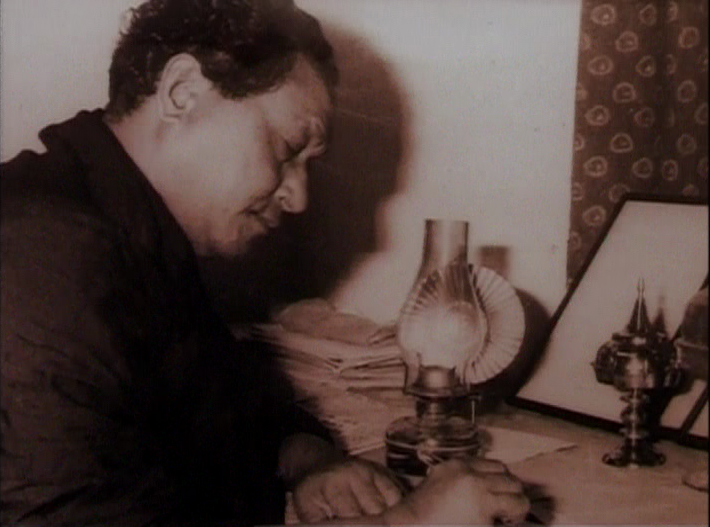
When Jawaharlal Nehru was delivering his now cult ‘Tryst with Destiny’ speech in Delhi,[1] a small group of communist activists in Dighelia (Assam) associated with the Krishak Banua Panchayat (KBP) [Farmers and Workers’ Soviets] – which was the farmers and workers’ wing of the Revolutionary Communist Party of India (RCPI)[2] – had rallied with black flags sloganeering ‘Yeh Azadi Jhoota Hai, Sirf Chamra ka Badal’ [This Independence is Fake. It is merely a change of the colour of skin].[3] The group was being led by the Communist activist, Bishnu Prasad Rabha.[4] Following this incident, Rabha was arrested, and, after his release, Rabha joined the RCPI’s armed insurrection against the Indian government. During the 1950s, the then Chief Minister of Assam, Bishnuram Medhi declared a bounty of INR 10,000 – approximately one million in today’s time – on Rabha’s head. He was eventually arrested from Ghilaguri village in Goalpara, only to be released in 1955.
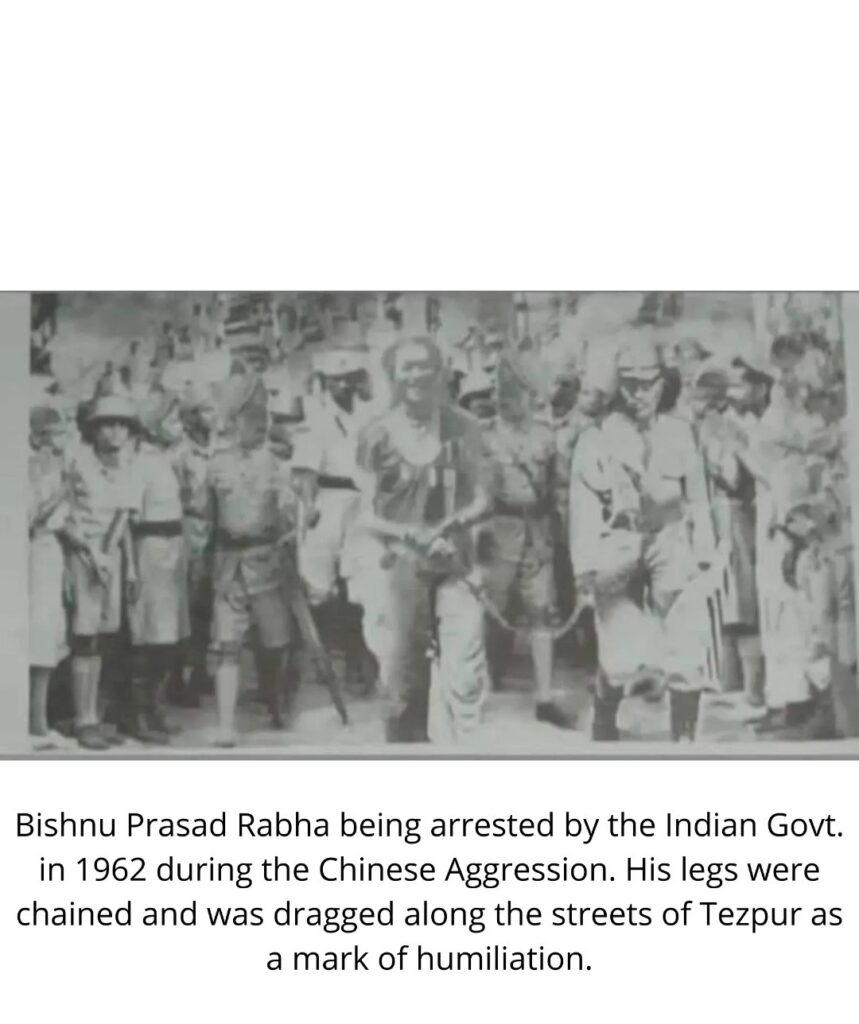
Upon his release, Rabha joined the CPI and embraced parliamentary democracy. He contested the 1957 Assam Legislative Assembly elections from Barpeta as a CPI candidate and narrowly lost. In 1962, during the India-China war, Rabha was again arrested for his communist beliefs, when he was dragged through the streets of Tezpur as a mark of humiliation. After his release, he contested the Assam Legislative Assembly elections again in 1967 and won as an independent. He finally succumbed to cancer in 1969. Bishnu Rabha’s contributions to revolutionary Marxism in India’s North-east cannot be analysed solely through his work as a cultural activist or a mainstream politician, but, rather, one must delve into his undated (and mostly) ‘underground’ writings meticulously collected by his wife, Mohini Rabha.[5] During his years as an underground Marxist guerilla, Rabha produced an impressive and original analyses of the potential Indian revolution from a Marxist perspective, which often remains unappreciated not only globally, but also in India.
Born in 1909 in Dhaka (then Dacca) to Gethi Mech and Rai Bahadur Gopal Chandra Rabha, Bishnu Rabha was one of the most versatile Marxist and anti-Stalinist scholar-activists to have graced the Indian subcontinent. Relatively little known to global audiences, Rabha was simultaneously a scholar, a painter, a lyricist, a poet and an actor.[6] However, the most important facet of his personality that remains of critical importance to Marxists and left-wing activists is his vision of a socialism informed by the lived experiences of the ‘marginalised’ among the marginalised, and his ecosocialist outlook. During the 1940s and 1950s, Rabha produced an impressive number of explanatory and analytical writings on Marxist political economy, Lenin and Trotsky’s theory of revolution, and global events such as the French Revolution, the Paris Commune and the Russian Revolution which continue to evade global attention. Rabha was one of the first indigenous Marxists – i.e. Marxist activists in colonial India who had no foreign education or no experience of foreign travels – to protest against the bureaucratic degeneration of the Soviet Union under Stalin through his writings. Notably, he also developed a compilation of 51 key terms for revolutionary activists in the Third World, including notes on concepts such as autocracy, diplomacy and even the Ku-Klux Clan, Anti-Semitism and (an entire book-length work on) Bonapartism.
Bishnu Rabha was educated initially at the Tezpur Government High School and then pursued a Bachelor of Science degree, first at St. Paul’s Cathedral College and then at Ripon College (now Surendranath College) at the University of Calcutta. Due to his involvement in the Civil Disobedience Movement, he was forced to withdraw from Ripon College and had to get himself enrolled in Victoria College in Cooch Behar (now known as the Acharya Brojendra Nath Seal College). During his days as a student in Ripon College, he became interested in the Gandhian model of anti-colonial resistance, whereby he endorsed – for a brief time – the non-violent model of anticolonial resistance. He became a participant of the Civil Disobedience Movement, and then, subsequently, moved away from it during the late 1930s, when he gravitated towards radical Marxist politics. His radical activities as an anticolonial activist ended up with him getting expelled from the university, and he had to move to Tezpur.
During the late 1930s,[7] Rabha made his way to the Kashi University (now the Banaras Hindu University) where he performed traditional Indian classical music and dance, which led him to be bestowed upon with the title of ‘Kalaguru’ [The Master of the Arts].[8] This term has become one of the major deterrents for Marxists to reclaim his revolutionary legacy, because the term has been appropriated by the state to paint Bishnu Rabha as only a cultural figure. The attempt by the state to celebrate Rabha as a culturalist, relegating his tryst with communist politics, armed struggle, and his endorsement of a Marxist view of the society to his youthful adventurism. Even reputed scholars have failed to give adequate attention to Rabha’s revolutionary scholarship, focusing more on his cultural contributions, especially those writings which were written before he became a Marxist. The marginalisation of his radical writings finds its source in the manner in which Rabha’s early writings – when he was an idealist and a practising Vaishnavite Hindu – were used by the Assamese far Right in stirring up anti-immigrant sentiments in the state transforming Rabha from a communist icon to a nationalist ideologue.[9]
Rabha’s songs have long been a part of the popular cultural imagination of the North-East India, where he has been celebrated by both the right- and left-wing political forces. The right wing has tried to appropriate Rabha for the nationalist underpinnings that one can find in his songs and plays (including the one which was incomplete). Bishnu Rabha, however, was not a jingoistic nationalist. He was, on the contrary, a revolutionary anticolonial thinker, who believed that a nation is ‘truly’ constituted by the most destituted section of the populace, which, to him, were tribals and Dalits.
ধনতন্ত্ৰবাদৰ এটা ঘাই অংশ হৈছে জাতীয়তাবাদ। জাতীয়তাবাদৰ মূল মন্ত্ৰ হৈছে — এক দেশ, এক জাতি, এক প্ৰাণ। যেতিয়া ভাৰতবৰ্ষৰ কংগ্ৰেছৰ জাতীয় আন্দোলনত এক দেশ, এক প্ৰাণ, এক জাতি মন্ত্ৰ লৈ ‘বন্দে-মাতৰম’ ধ্বনি উচ্চাৰণ কৰি ভাৰতবৰ্ষৰ ভাৰতবাসীসকলে জাগি উঠিল, — ভাৰতৰ এনে জাগ্ৰত ধৰ্মনিৰ্বিশেষে জাতীয়তাবাদক দেখি বৃটিছ সিংহাসন কঁপি উঠিল। (Bishnu Prasad Rabha Rachana Sambhar: Volume 2, p. 847)[10]
[Nationalism is a main part of Capitalism. Nationalism is primarily based on – one country, one race, one life. … When the entirety of India was rallying behind the Congress in its national movement with the ideas of one country, one life, one tribe with slogans of ‘Vande Mataram’ – seeing such a secular nationalist upheaval, the British rulers tremble in fear.]
The kind of nationalism that Rabha had endorsed through these lines was an anticolonial one, not one that endorsed regionalist chauvinism or ethnocentrism. This became evident in the ways in which Rabha analysed the demerits of the then mainstream tribal organisations. Rabha envisaged the tribals emerging as a vanguard section of the society, taking up the task of an armed revolution against the bourgeoisie. However, the vanguard that Rabha had imagined was a united and progressive tribal front, that was not divided into multiple identity-based organisations, as was the case under the British and then, subsequently, under the national bourgeois formations such as the Indian National Congress (INC). Rabha had declared:
আজি ট্ৰাইবেল সংঘৰ নেতাসকলে ট্ৰাইবেল হালোৱা, হজুৱা, বনুৱা, দুখীয়া ৰাইজক নানা ৰকমে সুখ, শান্তি আৰু মুক্তিৰ আশা দেখুৱাই নিজৰ ফালে টানি আনি নিজৰেই নেতৃত্ব ট্ৰাইবেল ৰাইজৰ ওপৰত প্ৰতিষ্ঠিত কৰে, আৰু নিজৰ দৃঢ় নেতৃত্বৰ গুণত ধনীক ৰক্ষা কৰা, গৰিবক মৰা ধনিক-শ্ৰেণীৰে আইনৰ পেৰা যন্ত্ৰত ট্ৰাইবেল দুখীয়া ৰাইজৰ ঠেলি-হেঁচি চেপে পেৰে। কাৰণ আন আন দলৰ দৰে —- যেনে কংগ্ৰেছ, মুছলিম্ লীগ, ছোচিয়েলিষ্ট পাৰ্টি, ফৰৱাৰ্ড ব্লক আদিৰ দৰে ট্ৰাইবেল লীগ বা সংঘইও এই পেৰা, হেঁচা, চেপা আইন-যন্ত্ৰটোক মানে। তদুপৰি বিশেষকৈ মন কৰিবলগীয়া যে — ধনতন্ত্ৰবাদ তথা সাম্ৰাজ্যবাদক ৰক্ষা কৰিবৰ কাৰণেহে ট্ৰাইবেল জাতিৰ জন্ম। এই ট্ৰাইবেল জাতিৰ পৰাই ট্ৰাইবেল-সংঘৰ জন্ম। ট্ৰাইবেল সংঘৰ দ্বাৰা দুখীয়া অনুন্নত ট্ৰাইবেল জাতিৰ কেতিয়াও কল্যাণ বা মঙ্গল হ’ব নোৱাৰে বৰং ধনী শ্ৰেণীৰহে স্বাৰ্থ আৰু মঙ্গল হ’ব পাৰে। (Bishnu Prasad Rabha Rachana Sambhar: Volume 2, p. 847)
[The leaders of the tribal organisations entice the poverty-stricken, forest-dwelling, and impoverished people with promises of happiness, and freedom, drawing them towards these identity organisations. In reality, they protect the rich and, and use the laws devised by the elite to further suppress the tribal people. Like other parties – such as the Congress, the Muslim League, the Socialist Party, the Forward Bloc—the tribal association also accepts the bourgeois and capitalist legal apparatus. The very reason for the creation of the tribal association and the community as such is to protect capitalism and imperialism. Through the tribal organisation, the tribal communities can never gain power or peace, rather, it is only the interests and wellbeing of the wealthy classes that are served by these organisations.]
The divisions that develop among tribals because of their identities was seen by Rabha as being the results of colonialism and its tacit support by the national bourgeoisie. These insights provide a unique insight into how a tribal communist leader from one of British India’s most underdeveloped regions had begun to theorise internal contradictions among marginalised communities in terms of colonial and statist bureaucracy. These ideas subsequently found space in his songs and plays. His cultural creations were deeply intertwined with his political vision and were meant to inspire the peasants and tribals to join the socialist anti-colonial struggle against the British and then subsequently against the Indian national bourgeoisie. Rabha wrote:
ৰাজ্যে আছে দুটি পাঁঠা, এটা ক’লা, এটা সাদা।
ৰাজ্যেৰ যদি মংগল চাও, দু টি পাঁঠাৰ বলি দিও। (Bishnu Prasad Rabha Rachana Sambhar: Volume 1, p. 9)[11]
[In the country, there are two goats, one black and one white, if you want the good of the country, sacrifice both.]
The antagonism showed towards the national bourgeoisie placed him in opposition to prominent influential figures within the mainstream Left, who often viewed the national bourgeoisie as having potentially revolutionary character. This was confirmed in the Dutt-Bradley thesis which argued about the progressive role of the then Indian National Congress.[12] The resistance to the dominance of the national bourgeoisie – akin to Bhagat Singh’s declaration of the ‘Brown Sahib’ – constructed a critical part of Rabha’s anticolonial Marxism. This also shows the alternative vision of modernity that Rabha constructed, one which did not depend upon the colonial administration’s destruction of tribal social order but one which used the tribal society to envision a new egalitarian order.
Amalendu Guha, noted Marxist thinker from Assam, argued that Rabha’s life could be seen as the incomplete modernity that came to characterise Assam under colonialism and capitalism. A similar view has been held by others such as Hiren Gohain.[13] They often emphasise the national bourgeoisie being progressive and reformist, as both Guha and Gohain have largely been adherents of, or sympathetic to, the mainstream Stalinist Left in India that was forged in a time when, as Hussain and Chetia wrote in their obituary of Amalendu Guha, ‘India meant something completely different from what it means today. […] The only alternative could be an alternative to bourgeois India –a socialist one’.[14] A similar strand was noted in Gohain by recent commentators such as Suraj Gogoi.[15] Rabha’s analysis of the society in India did not project colonialism as a foundation for the development of capitalism but was, rather, viewed as being a system of domination that further consolidated the feudal system in the country. This was contradictory to the dominant Stalinist conception of colonialism held by the Communist Party of India (CPI) which subordinated spontaneous anti-colonial revolutionary politics to a politics focused on the Stalinist conception of ‘socialism in one country’ which often sought to build stable relationships with the national bourgeoisie.[16] It is believed that Rabha had sympathies for the Communist Party of India (CPI) until around 1945, after which he got disillusioned with the CPI because of the CPI’s uncritical positioning of the Union of Soviet Socialist Republics (USSR) as a model of revolutionary insurrection, the CPI’s emphasis on being only a section of the Communist International rather than developing a revolutionary politics suited particularly to Indian conditions, and the change in positions regarding the involvement of Indian soldiers in the second world war.
Rabha’s analysis of the Indian independence movement was influenced by Saumyendranath Tagore’s views – the then leader of the RCPI – who argued that, even though the Quit India Movement laid the groundwork for the eventual independence of India, it also accelerated communal polarisation, contributing to the rise of radical Hindu fundamentalism, the Muslim League and the partition of India. Tagore criticised the then Congress leadership – notably Gandhi, Patel and Nehru – and the movement’s failure to address the deeper class contradictions in Indian society and develop the potential for a wider revolutionary socialist upsurge. This position placed him in opposition not just to the Congress but also to the CPI, which, after 1941, supported the Allied war effort and opposed the Quit India movement entirely.[17] Following Tagore, Rabha argued that ‘localised mob violence’ had to be converted into a concerted socialist revolutionary movement while keeping ‘its spontaneous, atomised and non-centralised character’ intact.[18]
The CPI’s tail ending the Soviet Union during the Second World War did not fit in with Rabha’s anticolonial activism. The CPI during the Second World War, following the Soviet Union’s alliance with the British, called for a temporary suspension of anti-British activities in the country in order to demonstrate support for the Allied forces. In this regard, the then CPI opposed the Quit India Movement.[19] For Rabha, this tactic adopted by the CPI did not pay attention to the material reality of the Indian society, which, to him, was ready for a revolutionary upheaval against the British. Among the most prominent left-wing factions to oppose the CPI during that time was the RCPI, who supported the Quit India Movement (following the call by Saumyendranath Tagore)[20] and analysed it as being an essential element in the anticolonial movement. Rabha joined the RCPI in 1945[21] and subsequently joined its armed resistance – beginning in 1948 led by the RCPI (Pannalal Dasgupta) – against the British and then, subsequently, against the Indian state. It was during this time that he had begun to be popularly referred to as the ‘Xoinik Xilpi’ [Hoi–nick Heel-pee] (The Soldier Artist).
One of Rabha’s first written accounts after joining the RCPI was his essay on the Indian Navel Mutiny of 1945 – often known as the last nail in the coffin of the British Empire in South Asia – where he openly criticised the then CPI leadership for downplaying the revolutionary role of the mutiny. He attacked the CPI labelling them as being ‘Nokoli Communist, Stalin Ponthi’ [Fake Communists, Stalinist], and arguing that the activities of the CPI were leading the path towards the dissolution of the revolutionary spirits of the people. Rabha wrote:
বোম্বাইৰ আকাশ-বতাহ চঞ্চল হৈ উঠে এই নৱ বিপ্লৱৰ সূচনাত। শ্ৰমিকসকল বাটে বাটে ওলাই চাহেব হওক, পালেই কোবায়, বেৰিকেড কৰি বাটে-ঘাটে, কাষৰে-পাঁজৰে পুলিচৰ লগত যুঁজে, মাৰে, প্ৰাণ দিয়ে। ক্যাছেল্ বেৰেকত তেতিয়া নাৱিকসকলৰ সম্পূৰ্ণ বিদ্ৰোহ —– অস্ত্ৰাগাৰ তেওঁলোকৰ হাতত, সকলো জাহাজ তেওঁলোকৰ কবলত […] চহৰৰ যেই কোনো বাধা ক্ষান্ত কৰিবলৈ সক্ষম, গোৰাহঁতৰ শিবিৰ সহজে উৰাই দিবলৈ পাৰগ। ইফালে মাৰাঠী সৈন্য বাহিনীয়ে জনতাৰ বিদ্ৰোহক দমন কৰিবলৈ অস্বীকাৰ কৰে। গোটেই চহৰ ‘জয়হিন্দ’ শব্দেৰে মুখৰিত, বিপ্লৱ ধ্বনিত দলদোপ্-হেন্দোলদোপ্, চাহেব আৰু ধনীহঁত ভয়ত অথিৰ, পেপুৱা লাগে —– বাটত নোলায়। গোটেই ভাৰতত বিদ্ৰোহৰ ধোঁৱা দেখা যায়।(Bishnu Prasad Rabha Rachana Sambhar: Volume 2, p. 835)
[The air and land of Bombay was ripe with new revolutionary beginnings. Workers are coming out and confronting every British administrative personnel that they can find. The workers have barricaded the city in different places, and are engaging in clashes with the British police, beating some police personnel and often getting martyred themselves. The naval mutineers have declared a full control of the harbour. They have control over the weapons, the armoury, the ships […] and are capable of overcoming any opposition to their movement. Even the Marathi army has refused to subdue the revolution. The entire city is reverberating with slogans of ‘Jay Hind’ [Victory to India], and the society is full of revolutionary potential. The capitalists and colonial administration are full of fear, and the entire country is witnessing the flames of a revolution.]
This was in opposition to the then CPI’s peaceful strategy, which had argued that the support for the mutineers should be shown in the form of peaceful strikes.[22] Rabha argued that the CPI’s position enabled a gradual dampening of the revolutionary spirit of the movement, a position that he endorsed during the tumultuous decades of the 1940s and 1950s. As against the then ‘gradualism’ of Dange and others, Rabha adopted a more ruptural attitude towards revolutionary change in the society:
বিপ্লৱ মানে পৰিৱৰ্ত্তন, —– আমূল পৰিৱৰ্ত্তন। এই বিপ্লৱ প্ৰথমে ক্ৰমিক ধাৰাত আৰম্ভ হয়, শেহত তাৰ আকস্মিক পৰিৱৰ্ত্তন হয়। (Bishnu Prasad Rabha Rachana Sambhar: Volume 2, p. 851)
[A Revolution means Change – a Total Change. This change begins in a gradual manner and then assumes a ruptural character]
The idea of a ruptural change in the society made Rabha a much greater Leninist than others of his generation, including those who went on to become stalwarts in mainstream left-wing parties such as the CPI and the RCPI. Such views were also evident in his writings on organisation and party building, where he advocated in favour of a democratic party that was quite different from the Stalinist form of bureaucratic party as had developed in the Soviet Union. This stemmed from his emphasis on socialist politics being developed from within the highly marginalised populace, as was evident in his activities during his underground days, where he came to organise a diverse array of tribes across the then undivided Assam. This included – in addition to his own tribe, the Rabhas – Bodos, Dimasas and Kacharis. It is important to note here that the experiences that Rabha gained during that time had been an important part of his writings on tribal societies such as ‘Dimasa Kachari Buronji’, ‘Rabha Jatir Itihas’, ‘Otit Asom’, ‘Bodo Somaj’, ‘Raghob Moran’, ‘Moamoria Bidroho’, ‘Mising Kabang’, ‘Narakashur’, ‘A Short History of the Tribes’, and other such writings, which contained a strong Marxist influence.[23]
Bishnu Rabha himself was also a highly efficient organiser. He showed great organisational prowess during his engagement with the IPTA, as had been noted by Bhupen Hazarika – awarded the Bharat Ratna posthumously in 2019 – in his ‘Bishnu Kokaideo’.[24] Hazarika had spoken in detail about how Rabha was insistent on IPTA activists becoming, not only acquainted with but active participants in promoting and preserving tribal culture and the immense diversity in the society. His major desire being that activists begin taking note of the invisibilised masses in the society, i.e. the tribals and Dalits. Though he became a member of the IPTA sometime around 1945,[25] his rise within the IPTA occurred slowly. IPTA, during those days, was a common platform used by various left-wing formations, including both the CPI and the RCPI even though they were distinct ideologically. After the death of Jyoti Prasad Agarwala in 1951, Bishnu Rabha assumed the role of the President of the IPTA’s Assam branch. It is important to mention here that it was under the organisational and ideological set-up that Bishnu Rabha had established that prominent figures such as Bhupen Hazarika and Hemanga Biswas – Bengali left-wing cultural icon – could be nurtured. Biswas brought forth the ways in which Rabha blended political activism with cultural performances by giving political speeches after his performance, as well as publicly stating the anticapitalist politics of his plays and songs.[26]
Hazarika and Biswas were able to rise above communal tensions and speak about Assamese-Bengali brotherhood even in the aftermath of the anti-Bengali riots of July 1960. This owes much to the legacy that Bishnu Rabha built within IPTA.[27] The IPTA grew into a democratic organisation that could accommodate a diverse range of cultural figures, including in recent times, the late Zubeen Garg.[28] However, after his appropriation by the state, and more so by the present far-right government, the legacy of Bishnu Rabha is facing a serious danger of being eroded. Along with news reports of his home at Tezpur being in shambles,[29] there have been claims made by one of his sons, Prithviraj Rabha – a politician from the right-leaning Asom Gana Parishad (AGP) – that Bishnu Rabha had encouraged him to get engaged with the activities of the far-right cultural organisation, the Rashtriya Swayamsevak Sangh (RSS).[30] This statement from the son of someone who wrote about the necessity of an Indian revolution spear-headed by tribals and Dalits, has been criticised by many, including Rabha’s own organisation, the IPTA.[31] Rabha’s allegiance was not towards Hindu nationalism or reformist social democracy, but, rather, towards the workers and peasants, which was visible in the ways in which he actively voiced his opposition to reformism:
ধ্বংস কৰ ধ্বংস কৰ ধনীৰ অহংকাৰ, দয়া মায়া নকৰিবি ক্ষমাৰ দিন যে গল, হাল, কোৰ, দা, হাতুৰী লৈ ৰণলৈ যাওঁ বল| (Bishnu Prasad Rabha Rachana Sambhar: Volume 1. p. 134)
[Destroy the Pride of the Elite, Do not show any Mercy as the Time for Forgiveness is Over, Take your Plough, your Axe, Machete, and Your Hammer, and Let us go for the War]
The attitude that Rabha showed towards the ‘class enemies’ was guided by his reading of Marx’s writings on the Paris Commune – although it is unclear to what literature he had access to – where he advocated, quite like Fidel Castro of the later years, that ‘class enemies’ need to be dealt with strictly. Lyrics such as the ones presented above have become part of the popular cultural imagination of the left in the state, but Rabha’s philosophical contributions continue to remain underappreciated. It is rarely acknowledged that Bishnu Rabha was one of the most astute Marxist thinkers to have graced the country during those formative years of the communist movement in the country. He not only played a role in popularising Marxist ideas through his songs and plays but also made Marxist ideas available in non-English languages such as Assamese.[32] His short notes on the history and dynamics of the Chinese Revolution – including an analysis of the role of the intellectuals in it – or the Paris Commune are important markers for analysing the ways in which the left-wing politics has developed in India’s most diversely populated tribal region.
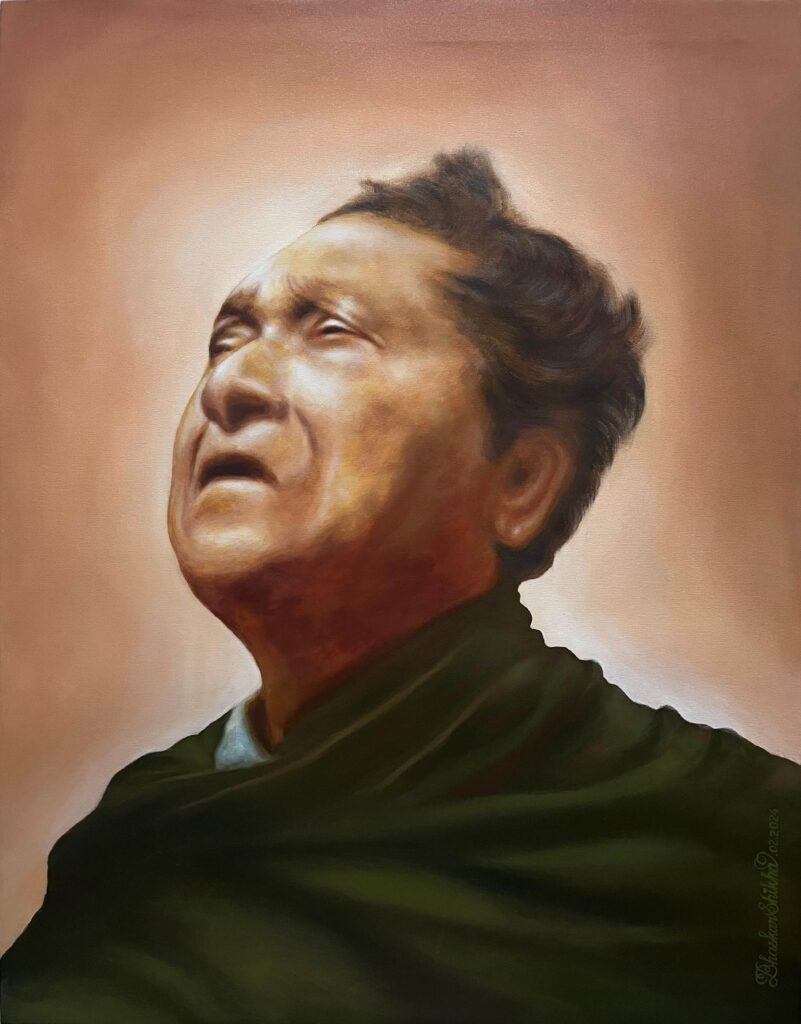
Rabha was someone who went beyond the traditional left-wing ideas of ‘marginality’ in the country. While most of his peers in the mainstream left-wing movement of the country emphasised the industrial workers – in places such as Bombay and Calcutta – as being vanguards of a potential ‘Indian revolution’, Rabha argued that, in India, this role was to be taken up by the Tribals and Dalits, who constituted the ‘proletariat’ in the truest sense of the term in India. His songs and writings repeatedly emphasised a core humanist attitude towards the issues faced by the masses, especially by the people who were placed at a lower social position than the industrial working class. Bishnu Rabha was one of the first Marxists of his time to speak about the plight of the Dalits and Tribals and integrated them into his songs:
কলিজা নিঙাৰি তেজৰ টুপিৰে মথি গঢ়ি যাম চিৰ সুখৰ সৰগ তুলি, গঢ়ি যাম চিৰ সুখৰ সৰগ তুলি জেউতিৰ নৱ জিলিকণি দিম মেলি মেলি , গাম পীড়িতৰ চিৰ বিজয়ৰ গান ফিৰাই আনিম দলিতৰ সন্মান[33]
[Squeezing the blood out my heart, I shall mould an eternal heaven of happiness for the oppressed. I shall create an everlasting heaven of joy, spreading light and happiness. I shall sing the song of eternal victory, and restore honour of the Dalit]
Rabha continued to speak about caste oppression and tribal emancipation until his death.[34] Most of Rabha’s writings continue to remain untranslated into English and, as such, he remains a relatively unknown figure at the global level. A key reason for this has been the control of the literary space in Assam by organisations such as the Asom Sahitya Sabha, has continued to use Rabha to advance their regional sentiments and right-leaning politics, thereby isolating a highly versatile Marxist thinker from his global counterparts. In cases where he has found some space, it has mostly been focused on his life as a cultural figure, with little reference to either his days as an underground armed guerilla or even his days as an elected representative from Tezpur. These accounts have been important ones to establish the literary legacy of Rabha but have rarely spoken about his Marxist and communist ideas regarding social change. In places where they have emphasised – such as in a work by Manjeet Baruah –[35] the idea of Marxism has often been taken in the spirit of a biographer that has not paid adequate attention to the original theoretical contributions of Bishnu Rabha. One such example can be seen in the following lines from Rabha, where he disassociates from a mechanical understanding of social progress and presents a highly sophisticated analysis of social change which align with the recent studies on late Marx:[36]
বিপ্লৱৰ জয় আৰু জনসাধাৰণৰ গৰিষ্ঠ সংখ্যকক সংঘবদ্ধ কৰিবলৈ সমৰ্থ প্ৰগতিশীল শ্ৰেণীৰ ওপৰত ভিত্তি কৰা নতুন অৱস্থাৰ প্ৰতিষ্ঠাৰ ফালে এই শক্তি প্ৰয়োগী বিদ্ৰোহে পৰিচালনা কৰে। মানৱৰ দ্বাৰা আৰু মানৱ সমাজৰ অন্তৰেদি সৃষ্টি হয় এই বিপ্লৱ —- যি প্ৰকৃতিৰ নিয়মৰ পৰা পৃথক। সামাজিক অৱস্থাৰ তাগিদাত মানুহে বৈপ্লৱিক ধাৰাত কৰ্ম কৰে। (Bishnu Prasad Rabha Rachana Sambhar: Volume 2, p. 857)
[The victory of revolution depends upon the united movement of the vast majority of the people aimed at fulfilling a forceful rebellion towards establishing a new order based on the progressive class capable of organising the masses. This revolution arises from the human society — it is human in nature and is separate from the laws of nature. Compelled by the conditions of social existence, people act in a revolutionary way.]
Bishnu Rabha’s anti-bureaucratic revolutionary politics become evident in his writings on the tribal movement and politics in India which simultaneously criticised the role of the mainstream political formations – including the mainstream Stalinist left – and the role played by the indigenous tribal bourgeoisie. Often known as ‘The Da Vinci of Assam’,[37] Rabha simultaneously wielded both the pen and the ‘gun’ against the British Empire and then against the national bourgeoisie. His writings on society and politics – a majority of which continue to remain untranslated and unanalysed – during the ‘underground years’ provide us with a window for understanding not only his revolutionary legacy – that goes well beyond his songs and plays – but also a unique Marxist way of seeing indigenous societies and their relationship with colonialism and capitalism. The combination of both these facets of Rabha’s underground writings make him a revolutionary who demands wider attention, not only in India but globally.
The article is based on a paper that was to be presented at the 2025 Historical Materialism Conference in London. The portions of Assamese typescript used in the article were prepared by Rwituraj Goswami
[1] The full speech can be accessed here: https://www.files.ethz.ch/isn/125396/1154_trystnehru.pdf
[2] The RCPI is a semi-Trotskyist political formation initially formed as the ‘Communist League’ by Saumyendranath Tagore in 1934.
[3] See https://www.rcpi-communist.in/2021/01/commemorating-bishnu-prasad-rava.html and https://raiot.in/tag/rcpi/
[4] The English spelling for Rabha is often put as ‘Rava’. In this article, I use ‘Rabha’ because of its dominant usage.
[5] See https://countercurrents.org/2020/06/knowing-comrade-bishnu-rava/
[6] Rabha acted in a key role in ‘Joymoti’, the first Assamese feature film in 1935 directed by socialist Jyoti Prasad Agarwala, see https://en.wikipedia.org/wiki/Joymoti_(1935_film)
[7] Exact date is unknown. Some sources say that Rabha travelled in 1939, while some others claim it to be 1940 or 1941.
[8] It is believed that it was after this performance that he was conferred the title of ‘Kalaguru’ by Sarvepalli Radhakrishnan. Some sources however state that Rabha was given this title by journalist Bibhut Kalita.
[9] Hazarika, P., & Prasad Nath, D. (2017). Bishnuprasad Rabha as cultural icon of Assam: The process of meaning making. Cosmopolitan Civil Societies: An Interdisciplinary Journal, 9(1), 60–76.
[10] Das, Jogesh and Sarbeswar Bora (eds.). (1989). Bishnu Prasad Rabha Rachana Sambhar: Volume 2. Tezpur: Rabha Rachanavali Prakashan Sangha.
[11] Das, Jogesh and Sarbeswar Bora (eds.). (1989). Bishnu Prasad Rabha Rachana Sambhar: Volume 1. Tezpur: Rabha Rachanavali Prakashan Sangha.
[12] Dutt, R. P., & Bradley, B. (1936, February 29). Anti-imperialist People’s Front in India [Thesis]. International Press Correspondence (INPRECOR). Available at: https://www.marxists.org/archive/dutt/1936/03/x01.htm.
[13] Guha, Amalendu. Medieval and Early Colonial India: Society, Polity and Economy (Calcutta: KP Bagchi, 1991); Gohain, Hiren, ed. Xoinik Xilpi Bishnu Rabha (Nalbari: Journal Emporium, 1982)
[14] See https://scroll.in/article/728582/amalendu-guha-1924-2015-lifelong-revolutionary-peoples-historian-life-affirming-poet
[15] See https://countercurrents.org/2018/08/a-reply-to-dr-hiren-gohain/
[16] See Communist Party of India. (1930/2020). Draft Platform of Action, 1930. The Marxist, 36, 58-80. The 1930 Programme declared opposition to the national bourgeoisie, which was subsequently reversed by the Dutt-Bradley Thesis in 1936. For a political report on the thesis, see People’s Democracy. (2020, February 2). Dutt-Bradley Thesis. Available at: https://peoplesdemocracy.in/2020/0202_pd/dutt-bradley-thesis
[17] Tagore, S. (1946). Revolution and Quit India. Kolkata: Samar Bose.
[18] Ibid., p. 23.
[19] Manzer, Hira. “The Communist Party and the Muslim League, 1937–1947.” Proceedings of the Indian History Congress 64 (2003): 1036–1048.
[20] After the Second World War, the RCPI started organising soviets (panchayats) of peasants and workers, as a first step towards the Indian revolution. However, a group of the RCPI led by Pannalal Dasgupta (who was general secretary of RCPI during the Second World War) broke away from the original RCPI advocating an armed struggle against the Indian state.
[21] Rabha became a member of the KBP in 1945 and formally joined the RCPI only in 1949 according to the official line of the RCPI. However, since in the 1940s, the differences between the vanguard party formations and its allied organisations were only nominal and titular, it can be said that he joined the RCPI in 1945. Further confirmation about Rabha’s rise within the party rank-and-file despite not being a card-carrying member (as per some sources) by the fact that when Tagore visited Assam in 1948, it was Rabha who had welcomed him. For more details see https://www.rcpi-communist.in/2021/01/commemorating-bishnu-prasad-rava.html
[22] Jeffrey, Robin. “India’s Working Class Revolt: Punnapra-Vayalar and the Communist ‘Conspiracy’ of 1946.” The Indian Economic & Social History Review 18:2 (1981), pp. 97–122.
[23] All of these are compiled in the First volume of ‘Bishnu Prasad Rabha Rasana Sambhar’.
[24] Hazarika, Bhupen. Bishnu Kokaideo (Guwahati: S.H. Educational Trust, 1993).
[25] The IPTA was established in May 1943 in Bombay (now Mumbai).
[26] Biswas, Hemango. 2008. ‘Na Axomor Na Pratik: Bishnu Prasad Rabha’ (1970), in Paramananda Majumdar (ed.). Hemango Biswas Rasanavali (Collected Works of Hemango Biswas), pp. 797–801. Guwahati: Publication Board Assam.
[27] The Hindu. (2019, January 22). Bhupen Hazarika and Hemango Biswas: The soulful music that calmed Assam six decades ago. Available at: https://www.thehindu.com/entertainment/music/bhupen-hazarika-and-hemango-biswas-the-soulful-music-that-calmed-assam-six-decades-ago/article26163153.ece
[28] People’s Democracy. (2025, October 5). Tribute: Zubeen Garg, rebel artist Assam. Available at: https://peoplesdemocracy.in/2025/1005_pd/tribute-zubeen-garg-rebel-artist-assam
[29] Times of India. (2022, June 20). Preservation cry for iconic house of Bishnu Rava. Available at: https://timesofindia.indiatimes.com/city/guwahati/guwahati-preservation-cry-for-iconic-house-of-bishnu-rava/articleshow/92345469.cms
[30] The news was widely reported in the regional news portals. One report is available here: https://www.pratidintime.com/latest-assam-news-breaking-news-assam/did-bishnu-prasad-rabha-tell-his-son-to-join-rss-10532259
[31] See the statement from Soneswar Narah: https://www.pratidintime.com/latest-assam-news-breaking-news-assam/prithiraj-rabha-distorting-fathers-legacy-alleges-iptas-soneswar-narah-10545413
[32] Rabha mostly wrote in Assamese during his underground days. However, he did write a significant analysis of the Chinese Revolution in English.
[33] Lyrics of the song are available digitally on Geet Sankalan: https://geetsankalan.com/lyrics/Tejor_Bulere_Likhi_Jam
[34] Bishnu Rabha spoke regularly about the plight of the Dalits in the country. Notably, when Saumyendranath Tagore, the then leader of the RCPI, visited Assam in 1948, Rabha facilitated him in the historic Baan Theatre in Tezpur where he composed a poem in honour of Tagore titled ‘Hey Biplobi Bir Odhinayok’ [O’ the Courageous Revolutionary Leader’] that stated, ‘With your arrival, the red flag of the oppressed, the Dalits is flying high’. Lyrics of the song are available digitally on Geet Sankalan: https://geetsankalan.com/lyrics/Hey_Biplobi_Bir
[35] Baruah, M. (2025). Hunter, Peasant, Rebel: Colonialism and the British Assam Frontier. New Delhi: Routledge.
[36] For example, see Anderson, K. B. (2025). The Late Marx’s Revolutionary Roads: Colonialism, Gender and Indigenous Communism. London: Verso.
[37] For a memoir of his son Hemraj Rabha that discusses personal reflections, see https://www.indianmemoryproject.com/203-2/