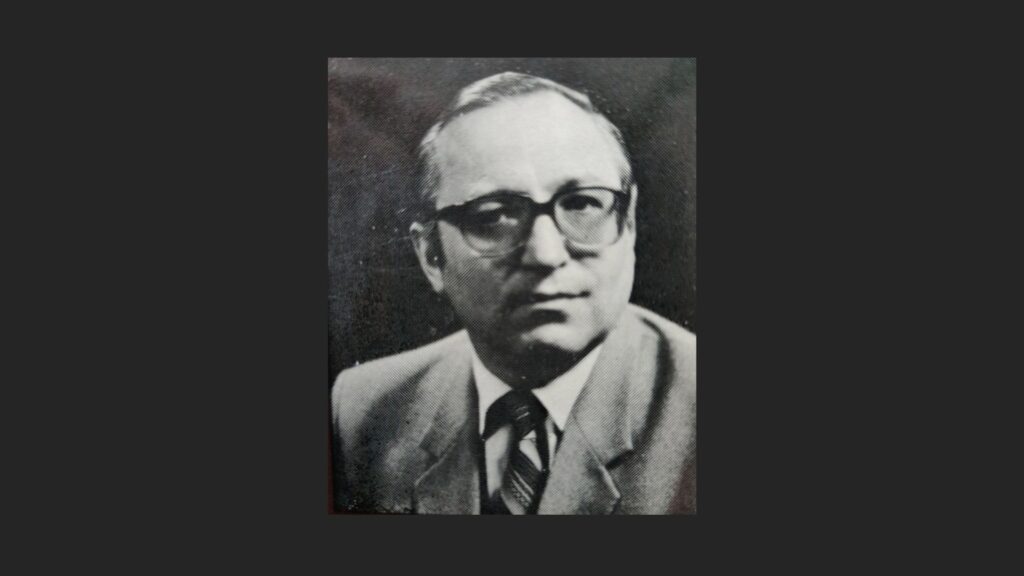
Adolf Bibič (1933-1996) was born in Bizeljsko and studied in Ljubljana, the Soviet Union, the United States, France and Germany. He completed his PhD thesis on Hegel and Marx in the field of political and legal studies, but still within the Law School of the University of Ljubljana in 1970, while he got a job as a teaching assistant and later professor at the newly established Higher School of Political Science (later renamed Faculty of Sociology, Political Science and Journalism, today Faculty of Social Sciences).
One of his main occupations of Bibič was the legitimation of the necessity of establishing a new field of study: political science as an independent study, not part of social sciences, specifically sociology, nor equal with legal studies. He was one of the crucial figures who established the independent study of political science at the newly established Higher School of Political Science. He was the editor-in-chief of the journal Teorija in praksa (Theory and Practice) from 1973 until 1986, the first president of the Slovenian Political Science Association and also a member of the Executive Committee of the International Political Science Association.
In his research and writings, he focused on different topics, that were all interrelated. Primarily, he was a devoted Marxist scholar, interested in Marxist political thought and Marxist concepts, which were relevant for the Yugoslav self-management practice. He conceptualised politics in relation to the crucial Marxist political theoreticians while devoting himself to the Hegelian-Marxist tradition, despite the structuralist and culturalist tendencies dominant in Marxism in the 1960s. His main inspirations and references were Marx, Antonio Gramsci, Rosa Luxemburg and Edvard Kardelj. He also developed different important insights into understanding the functioning of socialist self-management and the relationship between socialist self-management and political state. In what follows, I sketch the crucial topics and insights that Bibič developed in his most important books.
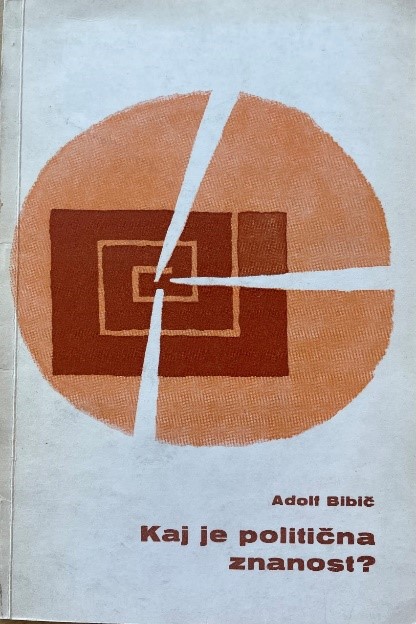
Bibič’s first book was published in 1969 entitled Kaj je politična znanost (What Is Political Science). In it, he proposed a new understanding of politics, a much broader definition of politics as the subject of research of political science. He argued that political science ought to focus on politics, and especially on the class characteristics of political rule. He defined politics as
social activity based on the social division of labour, the social structure based on it – in a class society, primarily classes – an activity that relates to the regulation of the position of man and the structural elements of society – in a class society, primarily classes – in their fundamental production relations and in work in general, as well as to decision-making on general matters of a given society or international community. To the extent that this activity is (directly or indirectly) realised or attempts to be realised through the state, we speak of politics in the narrow sense of the word: but if the subjects of this activity are arbitrary, we mean politics in the broader sense. (Bibič 1969/2021: 35).
He was against the reduction of politics to the state and claimed that there are four basic elements of politics: 1) the social division of labour and class relations; 2) subjects, who act within a national or international community; 3) political ideologies; 4) political action. In the book, he already refuted and refused the two dominant theories in the Western world at the time in political science: elitism and pluralism (elitism as an aristocratic anachronism, and pluralism as a liberal ideological camera obscura, which does not and cannot explain the realities of capitalist societies and states). He claimed that there is no instrumental relationship between classes and politics, but that social classes are the elements and the basis for political action. He situated the classes in the broader perspective of civil society and the dialectical relationship between the civil society and the state, which was from then on the crucial topic of his research.

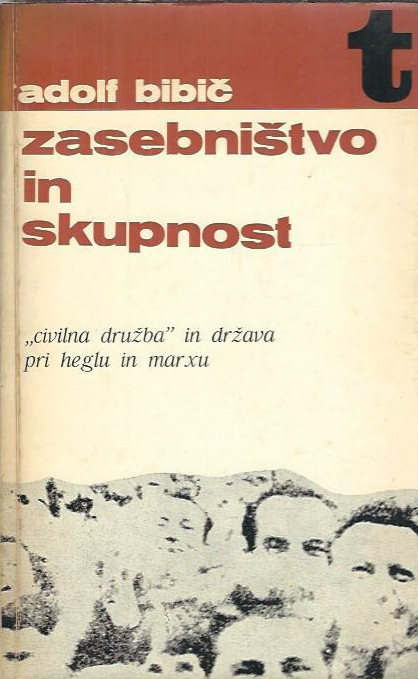
In 1972, Bibič’s most important book was published entitled Zasebništvo in skupnost: »civilna družba« in država pri Heglu in Marxu (Privacy and Community: “Civil Society” and the State in Hegel and Marx). This book was republished in 1984 (on the centenary of Marx’s death, with an added chapter about the relevance of Marx for political science as such). In this book, he focused on the relationship and conceptions of the civil society and state in Hegel and Marx, while especially drawing on Marx’s youthful works. Bibič refused a class-deterministic and instrumentalist perspective on the state but did not refuse the basic Marxist elements of the analysis of the relationship between class and the state. Instead, he followed Marx and situated the class question in the wider civil society, while also understanding the relationship between the state and civil society in a dialectical way. The book is into two parts: the first one deals with Hegel, and the second one with Marx and his understanding of the relationship between class, civil society and the state. Bibič shows to what extent Marx followed Hegel and what were his new insights within the framework of class exploitation while criticising Hegel for being devoted to bureaucratic reason.
His next book predominantly focused on the concept of interest, which has been one of the most crucial in political science. The book was entitled Interesi in politika: od kritike politične države k samoupravnemu pluralizmu (Interests and Politics: From Criticism of the Political State to Self-Managing Pluralism, published in 1981). In this book, he initially offered an overview of the different conceptions of the relationship between state and the society since the 18th century onwards, with a special focus on Hegel, Marx, Lenin and Kardelj. Bibič focused especially on the concept of “self-managing pluralism” and the Yugoslav-specific socialist political development and the aggregation and conflict of individual and general interests within a pluralist, but class-rooted socialist democracy.
The same year, in 1981, Bibič published his next book in which he focused on Edvard Kardelj (Kardelj was one of the most prominent politicians of socialist Yugoslavia as well as the father of the socialist self-management as implemented in Yugoslavia) entitled Moč ljudskih množic: Kardeljeva koncepcija socialistične demokracije (The Power of the Popular Masses: Kardelj’s Conception of Socialist Democracy). In the book, Bibič focused on the crucial elements of the political thought and democratic elements of Kardelj’s socialist thought. He went into detail to analyse the crucial works of Kardelj from the 1930s until his death, focusing on the national question and the crucial aspects of the socialist Yugoslavia. He explored the specific conception of socialist self-management, not focusing on the political sphere as such but also on the social and economic sphere, involving the concept of workers’ democracy, social ownership and empowering the working masses against bureaucratic centralism.
In 1990, Bibič published a new book in Zagreb entitled Civilno društvo I politički pluralizam (Civil society and political pluralism). In this book Bibič provides an overview of his older works but also introduces some new features in his conceptualisation of the state and especially civil society. Although this was a time, when sticking to Marxist or any other non-classical liberal theory was becoming increasingly unpopular, Bibič still devoted important space to Hegel, Marx, Rosa Luxemburg and Gramsci. He introduced here the concept of associational pluralism where he was buidling on the insights of Gramsci and Robert Dahl, who went a long way from being a classical pluralist to actually stressing the necessity of surpassing capitalism and market relations, albeit not within Marxist political theory. Bibič still referred to the necessity of enhancing the civil society and socialist self-management, but also saw the importance of introducing some sort of political democracy and pluralism. However, and this is important, he claimed that “the establishment and consolidation of socialist and democratic political associations is the first task, and the determination of new rules of the political game is a condition for a new political pluralism” (Bibič 1990: 211). Crucially, Bibič claimed that associational pluralism “presupposes and demands a broader concept of politics and democracy. Unlike the mono-archic principle, it advocates a ‘polyarchic’ conceptualisation of politics. Unlike the elitist-pluralistic conception of politics … associational pluralism, in addition to competition, advocates for the widest possible participation of people in politics” (Bibič 1990: 209). Bibič was convinced that witin this new framework of politics and associational pluralism, “socialism would not only or primarily be a demand for greater equality, but also a demand for greater freedom of man and the community” (Bibič 1990: 212).
Moreover, Bibič also collected, translated (some parts) and edited collections of works of Rosa Luxemburg and Antonio Gramsci. The collection of Rosa Luxemburg’s writings was published in 1977. Bibič focused in the foreword on the relationship between Lenin and Rosa Luxemburg, and the reception of her work within the Marxist circles in the 1920s until the 1950s and 1960s, especially the question of political organisation and the disqualification due to the spontaneity allegedly present in her work, stressing that the focus on spontaneity was primarily “an expression of efforts to assert a greater direct role for the masses in the socialist movement, in contrast to German Social Democracy and especially the unions, which fetishised organisation and underestimated the role of the unorganised masses (and the masses in general)” (Bibič 1977: XXXII).
In 1987, Bibič edited a collection of Gramsci’s political writings and also wrote an extensive introduction, which was one of the most thorough analysis of Gramsci’s political thought ever published in Yugoslavia, while positioning the civil society-state dialectics in the forefront. He pointed out the crucial differences between Marx and Gramsci when it comes to understanding the place of civil society (Marx understood it as part of the economic base, while Gramsci positioned it as part of the superstructure). He discussed the importance of hegemony and its importance in civil society and the state; Gramsci’s focus on the political parties etc. Bibič especially stressed the importance of the relationship between the state and civil society after the revolution, as envisioned by Gramsci in his famous conception of the regulated society and the ethical state (this was especially important for Bibič in his understanding of the role of the rising civil society in Slovenia at the time).
In his works of the 1990s, Bibič slowly abandoned his exclusively Marxist orientation, but remained critical of the fundamental features of pluralist political theory. This was best demonstrated in his translation of some Federalist Papers, particularly important are his commentaries on Federalist Paper No. 10, where he emphasised the class inequalities that the Federalists wanted to preserve through the construction of the Union (Bibič 1992a). He was extremely sceptical of Fukuyama’s thesis of the end of history (Bibič 1992b) and, at the same time, emphasised the need not only for political democracy in the new system, but also for sub-national, regional and functional democracy (Bibič 1992c; 1997).
Bibič’s legacy is still very important for the broader development of political science and especially political theory and philosophy in the post-Yugoslav region. In Slovenia, his influence is still very visible and tangible, as most academics of the older generation worked with him and were introduced to political theory through the Hegelian-Marxist lens. His insights on the possible ways to transform socialism in the 1980s towards more equality and freedom and away from bureaucratic domination are still relevant today when it comes to conceptualising and theorising the possible abolition of capitalist relations in a world where there seems to be “no alternative”.
References
Bibič, Adolf 1969/2021, Kaj je politična znanost, Ljubljana: Fakulteta za družbene vede.
Bibič, Adolf 1972, Zasebništvo in skupnost: »Civilna družba« in država pri Heglu in Marxu, Ljubljana: Mladinska knjiga.
Bibič, Adolf 1977, “Politična teorija aktivne (proletarske) množice” in Rosa Luxemburg: Izbrani spis, Adolf Bibič (ed.), V-VLIX. Ljubljana: Cankarjeva založba.
Bibič, Adolf 1978, Politična znanost, ideologija, politika, Ljubljana: Komunist.
Bibič, Adolf 1981, Interesi in politika: Od kritike politične države k samoupravnemu pluralizmu, Ljubljana: Delavska enotnost.
Bibič, Adolf 1981, Moč ljudskih množic: Kardeljeva koncepcija socialistične demokracije, Ljubljana: Komunist.
Bibič, Adolf 1987, “Civilna družba in država pri Gramsciju”, in Gramsci, civilna družba in država: izbor Gramscijevih besedil in zapisov o njem, Adolf Bibič (ed.), 19–47. Ljubljana. Komunist.
Bibič, Adolf 1990, Civilno društvo i politički pluralizam, Zagreb: Cekade.
Bibič, Adolf 1992a, “Politična misel federalistov (posebej glede na Madisonov esej št. 10)”, Teorija in praksa 29 (5/6): 585–94.
Bibič, Adolf 1992c, “Konec zgodovine?”, Teorija in praksa 29 (5/6): 525–529.
Bibič, Adolf 1992c, “Nekateri vidiki pluralizacije družbe in države na Slovenskem”, Teorija in praksa 29 (7/8): 703–713
Bibič, Adolf 1993, “Civilna družba in demokracija”, Teorija in praksa 30 (7/8): 769–779.
Bibič, Adolf 1997, Politološki preseki. Civilna družba in politični pluralizem. Ljubljana: Založba FDV, Znanstvena knjižnica.