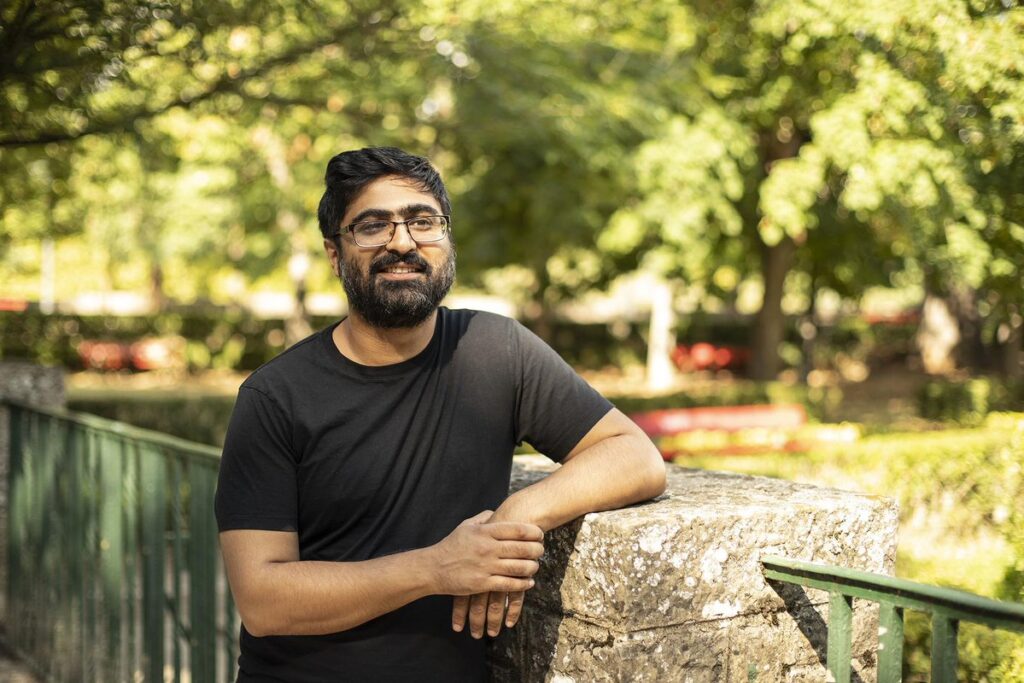
‘Our subjective horizon is the optimism of the intellect; our objective, structuring condition is pessimism of the will. Without optimism of the intellect, we have the party without the people. Without pessimism of the will, we have the illusion of power. Until we recognize this there is no path for action.’[1]
Asad Haider
It is with great sadness that we heard the news that Asad Haider had passed away on 4 December 2025. One of the most brilliant Marxist theorists of his generation and, along with Salar Mohandesi, the driving force behind Viewpoint – one of the most exciting and energetic online projects in the anglophone Marxist universe –, he managed to leave a deep mark in contemporary debates.
By means of a creative combination of traditions, that ranged from Althusser and Badiou, to Tronti, to Stuart Hall and Gramsci, an insistence on an intransigent communist perspective for the social and political dynamics that emerged after 2011, a critical Marxist perspective on questions of identity and race, and constant engagement with strategic questions, he attempted to think through what it means for theory to be politically pertinent.
For us in Historical Materialism, he was an invaluable comrade and a friend. He had a lot more to give, and he will be deeply missed.
To his family, his friends and his comrades we extend our sincerest condolences, and we promise that we will make all that is necessary for his work to be read and discussed as an indispensable starting point for the questions we are facing.
Asad Haider completed his Ph.D in the History of Consciousness Department at UC Santa Cruz in 2018. He also held a degree in Cultural Criticism and Theory from Cornell University. Asad was the Mellon Postdoctoral Fellow in the Department of Philosophy at Penn State University and then Visiting Assistant Professor of Philosophy at the New School for Social Research before he started his position as an Assistant Professor of Politics at York University. He was the founding editor of Viewpoint Magazine and the author of Mistaken Identity: Race and Class in the Age of Trump, which was published by Verso in May 2018, and of many important essays and articles.
To honour his memory, we reproduce tributes that have appeared online.
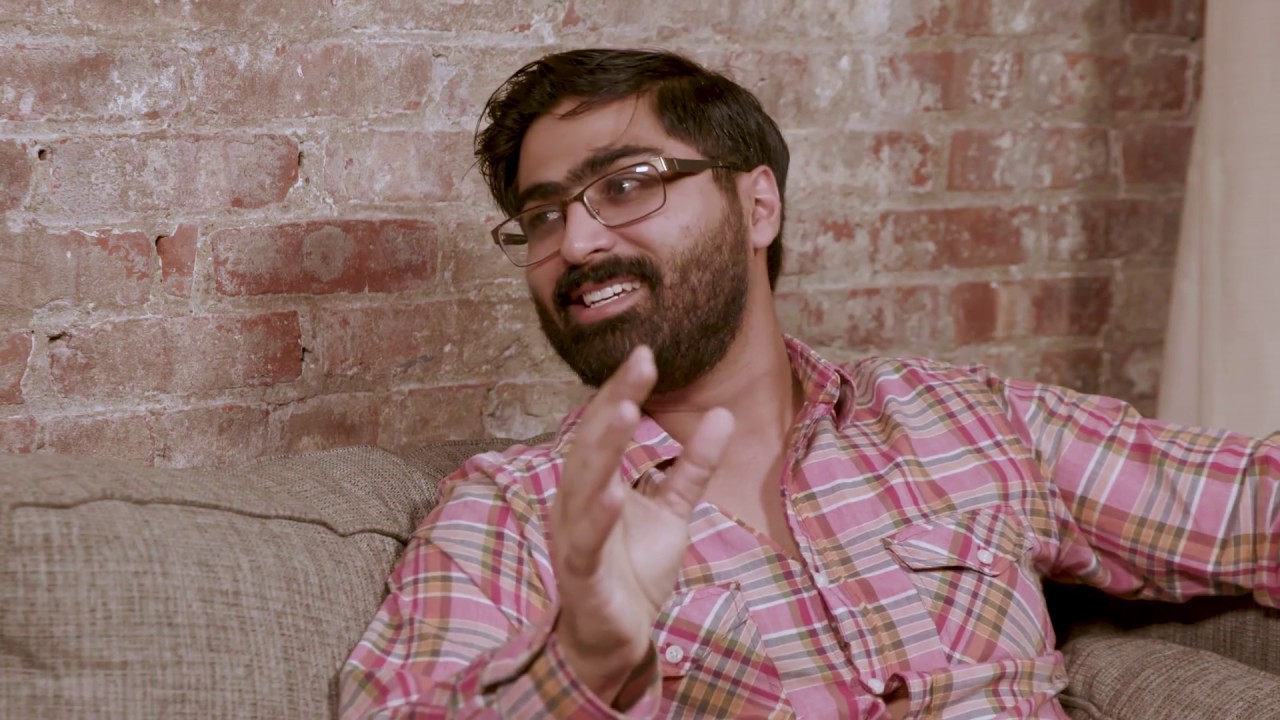 We begin by the obituary that was posted at legacy.com by Asad’s family
Asad Haider Obituary
“The man’s age has no importance,” the French Marxist theorist Louis Althusser wrote in his 1986 essay “Portrait of a Materialist Philosopher.” “He could be very old or very young. The important thing is that he doesn’t know where he is and wants to go somewhere.” Asad Haider, born on June 2nd, 1987, in State College, PA, was a materialist philosopher from an early age, first by becoming a voracious reader and a stimulating conversationalist, and later by making his mark on his chosen field of study, political theory. He knew that not knowing was the first step in finding out. The philosopher “always catches a moving train, like in American Westerns,” Althusser said, “without knowing where it comes from (origin) nor where it goes (end).” Asad died unexpectedly on December 4th, after a lifelong pursuit of truth.
Having rejected conventional wisdom in all its forms, Asad did not perform particularly well in high school. But his intellectual path had already started in his childhood, when his mother read to him and his brother, Shuja, who became his first interlocutor. In an unforeseen turn of events, Asad was accepted at Cornell University, where he began graduate-level course work in theory as a freshman. He graduated summa cum laude in 2009, submitting a thesis he described as “an underground history of popular culture.” He entered the History of Consciousness program at the University of California, Santa Cruz, in 2011, and received his doctorate in 2018. His dissertation, on 20th-century French and Italian revolutionary movements, was a statement of purpose, laying out and putting into practice the method he would follow throughout his career. Revolutions and revolutionary movements of the 20th and 21st centuries – up to and including Occupy Wall Street and the George Floyd uprising – were, for him, the crucibles in which thought took place. But, in the present, he saw a rise of what Spinoza called the “sad passions,” generated by disenfranchisement and disillusionment and now magnified by social media, and he argued that theorists had to grapple with current events.
That’s just what he did in 2011, when, along with the historian Salar Mohandesi, he founded the online journal Viewpoint. Its emergence coincided with the energy and sense of possibility represented by the Occupy movement, and it quickly became essential reading not only for academics but also for activists and organizers. Along with original analyses of present-day politics, Viewpoint published translations, reprints of lost or neglected texts from revolutionary or movement history, and introductions to thinkers who were still relatively new to Anglophone audiences. The journal’s independence from academia brought a new community of working-class theorists into being, leading to lifelong friendships among its contributors. Asad’s own pioneering work at Viewpoint and elsewhere was characterized by its unpredictable detours, through historical and etymological discoveries that led to revealing insights. His contributions have had a lasting impact on the reception of the work of both Louis Althusser and the Jamaican-born British sociologist Stuart Hall.
It was Hall, a founding figure of the discipline of cultural studies in mid-century Britain, who most inspired Asad’s 2018 book, Mistaken Identity, which also drew on the work of figures as disparate as W.E.B. Du Bois and Philip Roth. Viewpoint always gave prominent space to the Black radical tradition, including neglected voices from early 20th-century movements, and Mistaken Identity articulated Asad’s judicious approach to understanding – and combatting – racial injustice. With its graceful prose, the strength of its convictions, and its sometimes mischievous detours into memoir and cultural criticism, Mistaken Identity, like all of Asad’s published work, stood apart from the morass of scholarly literature. He reveled in hiding Easter eggs in his writing, hoping to reward the careful reader with little treasures: references, callbacks, and unexpected connections.
Mistaken Identity was reviewed and debated not only in the academic press, but in the likes of The Guardian and The New Statesman, and has been translated into Spanish, Italian, Portuguese, and Korean. It was lauded by luminaries like the philosopher Judith Butler and the novelist Zadie Smith, who called it an “inspiration to a new generation of activists.” More important than that, to Asad, was the way the book put him in dialogue with movements all over the world. In Brazil, for example, where social patterns around race take a different form than in the United States, readers nonetheless considered it a crucial intervention. Most meaningfully of all, Asad’s father, Jawaid Haider, who was battling cancer while the book was being written, had a chance to read it before he died late in the year of its publication.
After receiving his doctorate, Asad held a Mellon postdoctoral fellowship in philosophy at Penn State, and was then a visiting assistant professor of philosophy at the New School for Social Research in New York. In 2021, Asad was appointed assistant professor of politics at York University in Toronto, and was granted tenure, along with a promotion to associate professor, in 2024. He published widely in peer-reviewed academic journals like Radical Philosophy as well as magazines aimed at a general audience, like The Baffler, n+1, Slate, and Salon. He made popular appearances on podcasts like The Dig, The Majority Report, Behind the News, Time to Say Goodbye, and The Katie Halper Show, and was invited to speak in countries including Germany, Brazil, China, and Russia.
But, like his father, who was a professor of architecture at Penn State for decades, Asad considered teaching his highest calling. He cultivated an egalitarian classroom, where ideas were arrived at through dialogue, and believed he had a duty of care to the young minds in his charge. In one of the many tributes to him that circulated on social media after news of his death became public, a former student remarked that Asad seemed uncertain, at the start of his academic career, of how to teach undergraduates, so he treated them as though they were graduate students – engaging them at the highest level, without condescension, just the way he preferred to be treated as a young student twenty years earlier. The student wrote that Asad “would sit and twist a beard hair as he would gaze at the ceiling” before getting up to draw elaborate diagrams.
In this way, Asad was disarmingly consistent, knowing no other way of being than his own. He was known to those who loved him not only for his quick wit but his generosity with his own, always genuine laughter, and his willingness to discuss any topic. When he got interested in something, he set out to master it through research; as another social media tribute put it, “nothing he did was half-assed.” In his youth, Asad was a capable close-up magician, and while studying abroad in Paris as an undergraduate, he quickly became a seasoned French cook. In his adult life, he was an amateur powerlifter and a mixer of obscure tiki drinks, along with being an at first tentative but later wholehearted metalhead. After the death of Brian Wilson in June, he developed a sudden interest in the late music of the Beach Boys, when the subject matter shifted from cars and girls to Wilson’s interior life.
“All our biographies are unfinished,” Asad wrote in a 2021 essay on Stuart Hall, “and will remain so long after we are gone.” Because of the ripple effect he created-through his brilliant writing, through his impassioned teaching, and through his loyalty to his friends and family – Asad’s biography is still being written.
Asad will be laid to rest beside his first and most important mentor, his father Jawaid Haider. He is survived by his mother, Talat Azhar, and his brother, Shuja Haider. The burial will take place on December 20th at Spring Creek Cemetery, on 228 Country Club Road in State College, PA 16801, at 11:30 a.m. It will be followed by a reception in the Senate Suite at the Penn Stater Hotel and Conference Center, on 215 Innovation Blvd, State College, PA 16803, at 12:30 p.m.
To plant trees in memory, please visit the Sympathy Store.
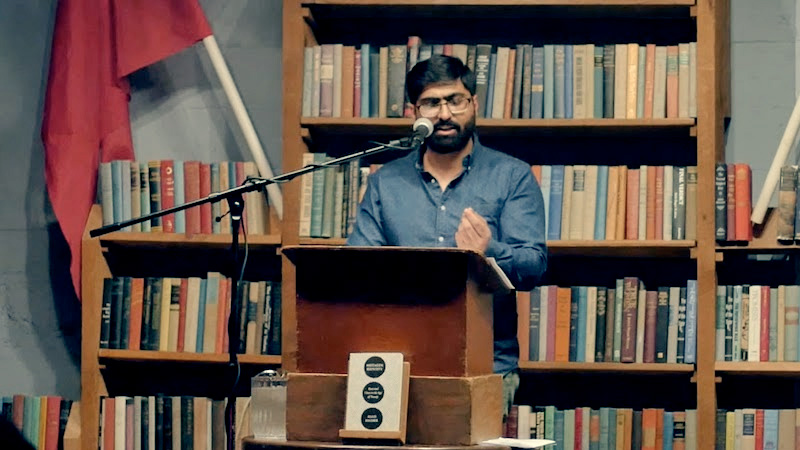
Remembering Asad Haider
Jeffrey R. Webber
(Professor York University, Editorial Board Member Historical Materialism)
It wasn’t Paris in the late 1960s, and I wasn’t Michel Lӧwy. Asad wasn’t Nicos Poulantzas. There were maybe 15 people in the graduate seminar at York University, not hundreds in a lecture hall with overflowing isles. But there were some spiritual parallels that we both recognised. I preferred Lukács, whereas Asad favoured Althusser. We had both independently come upon Lӧwy’s recently published interview on the Verso blog, involving moving reminiscences of the time he had spent as a graduate student co-teaching classes with Poulantzas – on the Third International, the national question, state theory, Lenin, and Gramsci. Lӧwy, a Lukáscian Trotskyist, and Poulantzas, an Althusserian semi-Maoist and later Eurocommunist, “got along marvelously well.” Lӧwy remembers a relationship full of mutual warmth, humor, respect, and affection, despite all of the important intellectual and political differences between them.
Asad’s graduate seminar was mostly animated by readings of Althusser, Badiou, and Sylvain Lazarus, as far as I can tell. But he welcomed me in for a guest-sessional dose of socialist humanism and post-Trotskyist left-opposition. We had a great time, and the students loved it. Asad noted afterwards that there must be some meaning to the fact that the building we were in was named after the Canadian Communist surgeon, Norman Bethune, famous for his medical work during the Spanish Civil War and the lead up to the Chinese Revolution. I remember sending Asad a text with a photo of Bethune’s childhood home and the plaque outside it during a trip to Gravenhurst, Ontario, after an interval in which we hadn’t been very frequently in touch. Shortly after his arrival to Toronto, Asad quipped that he moved to Canada knowing of only two figures in the country: Neil Young and David Cronenberg. I think Bethune was probably a third.
Asad was the real deal. One of the most serious Marxist intellectuals of his generation. The writing, editorial work, and translations he did alongside Salar Mohandesi for Viewpoint Magazine (which he co-founded) were without serious rival in the Anglosphere of that period. And they were still graduate students! Then his book Mistaken Identity provoked debates internationally and was translated so widely. Its thin size a lesson in the frequent deception of surface appearances. In the short time he was in York’s department of politics he had an outsized influence on an important cohort of graduate students. Asad had an insatiable curiosity and seemed to have read everything. When he found heavy metal puzzling, he decided to educate himself by listening systematically to the history of metal music so as to properly train his ear and adjudicate the genre seriously. Nothing he did was half-assed. He was also fucking hilarious.
It’s a tragic loss in so many ways.
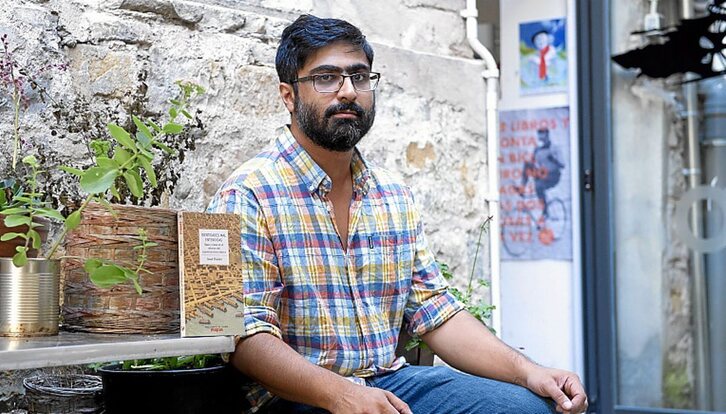
Bue Rübner Hansen
(co-founder of Common Ecologies, a research fellow at the University of Southern Denmark and a former member of the Vewpoint Collective)
Long before I met Asad, I knew he was one of the best of our generation. Now we have lost him.
Last Asad and I spoke we engaged in comradely disagreements too big to fight out; Viewpoint Magazine was closing, or as Asad would say: the sequence had been exhausted. Asad was confident but not combative, and I was too eager to convince. Today, I’m listening through podcast interviews with him, and more than I did on that day, I realise how much he had to offer and how much he gave.
Asad was, first of all, a thinker of emancipation. As he would insist after writing Mistaken Identity, he had to come to understand that he, as he insisted we often do, had tried to answer a question he had not fully formulated for himself. That question was the question of emancipation. He now saw that the categories of race and class were only partial answers to this question, and answers that could hold back the struggle for liberation itself. Because he saw that pre-established sociological categories such as class and race, let alone the ideological notion of identity, provided neither political guarantees nor adequate signposts.
Asad’s starting point was no longer the question of class composition, which had been so central to Viewpoint, but the more fundamental affirmation that people think. What people think, he wrote, “is not just determined by the characteristics of production, or the collective consciousness of an objectively constituted group. Instead, we have to find out what they think. We have to have the humility to ask and learn, instead of going out knowing in advance what their consciousness should be.”[2]
With these sentences, Asad reaffirmed his commitment to the method of inquiry, which he and Salar Mohandisi had so powerfully put back on the agenda in collaboration with multiple comrades and contributors at Viewpoint.[3] This was before I was invited to join the magazine, where Asad always, as a true communist militant, offered his thoughts for free and in dialogue with the movements of the time, rather than behind the paywalls that could further his academic career. It is a testament to his obvious intellectual capacities, rather than any soft edges or opportunistic maneuvering, that he still managed to land a job first at the New School and then at York University, if not without serious difficulties connected to his refusal to embrace either the class-reductionist or the identity-political camp.
Asad and Salar launched Viewpoint towards the end of the year of events and breakthroughs, 2011. Only a month into Occupy Wall Street, and they had a full issue: this is the speed and capacity you gain from a true political event. Viewpoint did what no other publication in those years really tried to do. It was something that few would have expected we needed: a serious, non-partisan communist magazine that brought together translations and archival texts, theoretical interventions and conjunctural analyses, contributions from movement activists and materialist cultural critique. In effect, Viewpoint connected the struggles and communist theory of the 20th century with the present, and the present with a past that was never a source of nostalgia or veneration, but a spur to militant thought. As Asad himself, Viewpoint was a radical, creative, and always thoughtful return to the past, in search of tools and weapons. It established a dialogue with the past, while subtly and without oedipal ill-will, ignoring its immediate processors: the alter-globalisation movement and the professors who in the absence of communist practice, had held open communist thought in the winter years of the 1990s and 2000s (Badiou, Negri, Zizek, Ranciere…).
In those years before Mistaken Identity, Asad’s writing[4] was focused on class, questions of organisation and the party, on social movements and riots, and on the topics around which Viewpoint, driven by Asad and Salar’s immense commitment and capacity for work, published six massive issues on: 1. occupy, 2. theory and practice, 3. workers’ inquiry, 4. the state, 5. social reproduction, and 6. Imperialism,[5]
Apart from a few personal meetings – HM in New York in April 2017 springs vividly to mind – I always knew Asad online, via the physical distance bridged by transatlantic fibre optic cables. From this distant vantage point, it seemed to me that 2011 may have been an even more formative event for Asad than for most in our generation. None of us ever mythologised the year, but, for Asad, it seemed like the kind of event that marked, as 1968 had for Badiou, an eruption of new possibilities and a sequence with a possible, exhausted end.
At least to me, it is no coincidence that the end of Viewpoint coincided with Asad coming, in a certain sense, to the end of his Marxism, and that both coincided with the end of the cycle that opened in 2011. As Covid lingered, Bernie faltered, and the George Floyd Uprising failed to produce the kinds of organisational consistencies that could make the radical horizon it opened durable, Asad came to question old presuppositions: Without repudiating Marxism proper, he now definitively put it second to Badiou/Lazarus, and their insistence that no true revolutionary theory can be derived from an analysis of class, capital, crisis, or, for that matter, from categories such as race and oppression. In those meetings, when I last spoke to Asad, it seemed as if his strong sense of the sequence starting in 2011 provoked an equally strong sense of closure. As if all that was left was the communist invariant, general decomposition, and a deep faith in the people.
In the final meeting, I tried to sway Asad with talk of class recomposition and the irruption of the ecosystem crisis as an opening for transformative politics. Asad did not take the bait: he had followed, with his usual uncompromising consistency, his own line of thought, and that was clearly it. Had I been of a different generation and disposition I would have called him a renegade and regretted it. Instead, I mourned Viewpoint and what I thought was the end of my journey of learning from Asad.
But now, listening to interviews with Asad[6] I am not only immensely sad, but enlivened. Once again, he is, as he had been throughout the Viewpoint years, someone I am eager to learn from and think with. Asad insisted, with utmost lucidity, on rejecting the fallacy that disaster and suffering will provoke change on their own, and on affirming the basic truth of any emancipatory movement:
We must organise around joyful affects and start from the fact that people – we! – think. Not because we already have the answers – no one knew this better than Asad who kept rethinking and engaged in admirably open self-critique – but because we must start with what moves us and others, and with what in us and others is not reducible to the current state of things.
[1] Asad Haider, ‘Pessimism of the Will’, 2020, https://viewpointmag.com/2020/05/28/pessimism-of-the-will/
[2] https://viewpointmag.com/2018/09/24/socialists-think/
[3] https://viewpointmag.com/2013/09/30/issue-3-workers-inquiry/
[4] https://viewpointmag.com/author/asad-haider/
[5] https://viewpointmag.com/category/issue-contents/
[6] I was listening to the long interview with Bryan Cooke in Philosophy can Ruin your Life and the shorter conversation he had with Below the Radar.