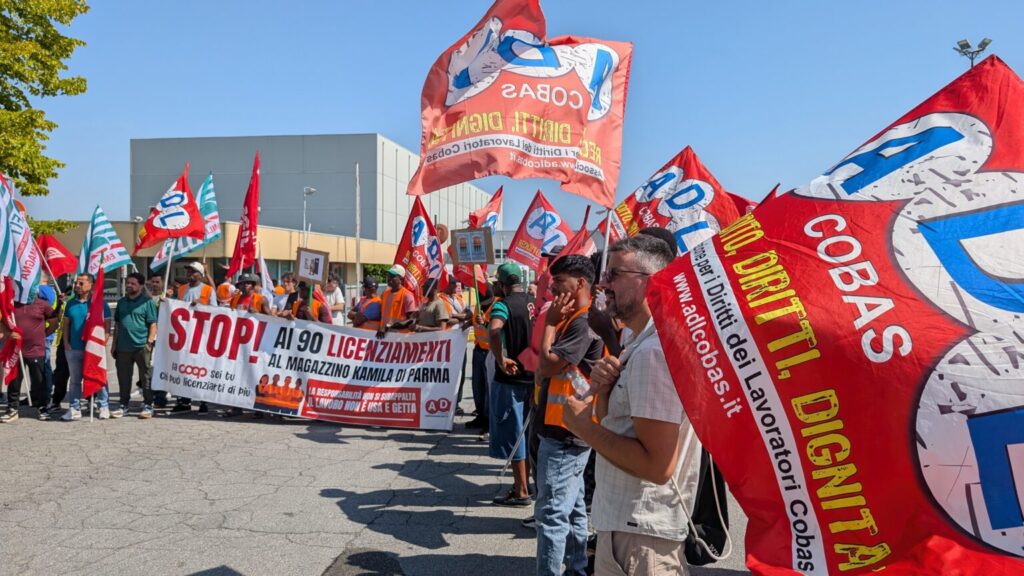
Sergio Zulian from ADL-Cobas interviewed by Maurizio Atzeni
Introduction
The text below is an interview with Sergio Zulian a union militant from the grassroots union ADL-Cobas (Associazione Diritti dei Lavoratori-Comitati di Base – Association for the Rights of the Workers – Grassroots Union), based in the Veneto region of Italy. It is part of a series of militant/academic interventions on working-class strategy and tactics that have recently been published in different journals.[1]These publications are part of a general attempt to create knowledge relevant to workers’ action and organisation, as promoted by different streams of research oriented to co-produce knowledge with workers,[2] through ethnography and workers’ enquiry methods,[3]and by regular forums and training schools which aim to transfer and exchange knowledge between academics and activists.[4]
These kinds of interventions can also be seen as inscribed in Burawoy’s call for a ‘Public Sociology.’ This is a call for a sociology that is a partisan discipline, that asks the questions ‘knowledge for whom?’ and ‘knowledge for what?’.[5] To take this up today, we need to develop lines of research that are meaningful for workers, find ways to communicate with workers, and transfer the results of that research in ways that empower workers. To achieve this, we need to grow a community of researchers that are committed to the labour movement. We need research that engages with both union and non-union forms, in different and new emerging sectors.
Sergio Zulian’s testimony is particularly linked to studies focused on the experiences of migrant workers. The entry of migrants into the labour market has often reshaped both forms of struggle and organisation, with traditional unions either ignoring migrants or fighting defensive struggles. Sergio’s interview, however, allows us to go beyond organising migrants and interrogate the complexity of building working-class unity and action amid increasing social and class divisions. There are many challenges. For example, local trade-union members may justify migrants’ low salary levels and poor working conditions based on racist prejudices. In Italy, cooperatives are systematically and artificially misused as a legal form of exploitation. Migrant identity and belonging can support life, but can also become an obstacle in moments of struggle. There is also the difficulty of creating an organisation to fight for rights rather than provide services. Finally, there are the challenges of navigating complex political and economic relations, as well as the difficulty of building broader alliances.
The interview asks how ADL-Cobas has dealt with all these differences and difficulties. In a world of work that is increasingly precarious and where the satisfaction of basic rights, such as housing, is under threat, Sergio’s story of ADL-Cobas reminds us of the construction of collective organisation in and through communities of struggle and solidarity, typical of the pre-industrial unions era of mutual societies and cooperatives[6] and also common to contemporary experiences of migrants organising in different contexts.[7]
ADL-Cobas started as a social organisation rooted in the territory and dedicated to providing legal advice to workers, as part of a broader political action inspired by Italian autonomism. Only later, and with the huge increase in migrants and neoliberal labour reforms, did it start to represent workers within workplaces. However, the expansion of ADL-COBAS’s sphere of action and the scaling up of the organisation were not the result of union-led recruitment campaigns. Still, it largely stemmed from the organisation’s insertion within the local “social factory”, both as a political reference for a range of struggles concerning the working class as a whole and as a union representing workers. This double identity has always been a characteristic of the organisation. It has been reinforced at different junctions, such as the threat of house eviction, or when struggles for work and for living overlapped. More recently, it can be seen with the protests against the genocide of the Palestinians, co-organised by ADL-Cobas and other social centres.
The growth of grassroots unionism in Italy over the recent decades represents the need for a different type of unionism that is less attached to the respect of rules and the institutional framework. Instead, it needs to be connected to the everyday reality of workers in impoverished communities. The difficulties are always huge, as capital and the right-wing governments in power across the world never stop using and exploiting differences to weaken class interests.
Building organising power through economic and political struggles
Sergio Zulian: ADL-COBAS was born around 30 years ago. At that time, it was a very small association, established mainly to support legal cases brought by workers against companies. So, at the beginning, it was a very instrumental association, created to help workers defend themselves, starting from an individual-claim position. This is because of the political tradition we came from, based mainly on the 70s Italian autonomia operaia (workers’ autonomy).
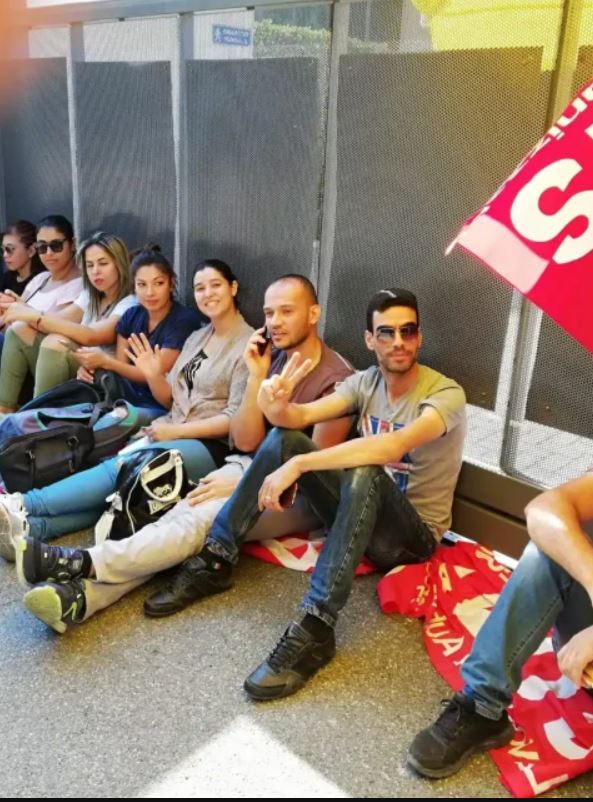
In the 70s, we didn’t need to build formal organisations such as unions because we thought workers could fight for their rights on their own. And we didn’t want to separate economic struggles from political struggles. We always thought the two were the same: the economic struggle was immediately a political struggle because it concerned how you live, how you work, the hours you work, your salary, your living conditions. And so that was immediately political. But of course, what happened in the late 90s and the beginning of 2000 in Italy changed the social composition, the social scenario, because the labour laws changed. There was a very big increase in migrant workers, and the working class, workers in general, suffered a complete change in the way in which their work was exploited. So, ADL started to take shape as a political and social organisation to support these migrant workers. And, of course, at the beginning, their struggles were not union struggles or labour struggles, but were mainly for two things. They needed documentation, because they were undocumented migrants, and housing. At that time, mainly here in the northeast of Italy, the economy was very strong and demanded lots of migrant workers, but they had no documents and no housing.
At the beginning of the 2000s, we faced a major struggle around housing, with many people squatting in empty houses in the neighbourhoods. Being present in the neighbourhoods and cities is a characteristic we still maintain as an organisation. It’s how ADL, as it is now, was created. Because, even if, as a union organisation, you need to deal with the precariousness of contracts, with unemployment, with redundancies, with all that stuff, many times you do mainly work in the territories, outside rather than inside workplaces. So, we didn’t organise those workers by going into their workplaces. We organised them outside, struggling for rights in general, such as with housing, documents and all this stuff, but also supporting a football team called Socrates, created by workers and young people of the neighbourhood with the idea that sport can send anti-racist messages, not just go to the stadium and support the big multinational teams. We do many things in this sense, always with the idea of building communities that are self-helping and struggling, taking care of each other.
Then, in a very few years, we met the same people, the same composition, the same groups of migrants, as workers employed in the many factories that needed workers here in the north of Italy. They were employed in factories, in warehouses, in all sectors, mainly at what we still call the working poor level. And, so, we decided that we needed to start a fight for organising these workers, to start fighting inside the workplaces against the companies, and against the cooperatives that were employing them.
We discovered that even the way they were employed was completely different from what we were used to seeing in the classical working class. That is, you have a permanent contract, you have some rights, you know, the social deal resulting from the struggle between classes after the Second World War. That is, “okay, you work, I exploit you, but I give you something in exchange”, such as the welfare state or some rights that have now disappeared completely.
The main instrument of recruitment was through cooperatives. So, in cleaning, logistics, sports, and even in tourism, hotels, and many other sectors, these workers were employed through subcontracts, which were mainly given at the end of the 90s and the beginning of the 2000s to social cooperatives. The cooperative was the form in which the Left, the Communist Party, used to organise: “we don’t want a boss, so we do a cooperative, a social company”. But the worst of the bosses understood that, instead of opening a normal company, they would better open a cooperative. So, they forced the workers to become members of the cooperatives. And, in this way, they had no rights at all. They didn’t have sick leave. They didn’t have the right not to be sacked. They didn’t even have the right to work, because the cooperative could say, “Tomorrow there’s no job to do. You stay home. We don’t pay you.” It was extreme exploitation. Many times, these cooperatives were run by representatives of the same institutional unions. Very often they had a paternalistic and deeply racist attitude. This involved claims like: “they are migrants to which at least we grant a job” or “they’re not paid the same or have the same conditions as the rest, but they don’t care, they just want to send money back home in Africa”, or even “they sleep outside, they have lower wages, but okay, it’s much better than what they have in Africa, in South America, so why not?” I have heard discourses like these even from some official union members, like “it’s normal that they have different conditions because they’re migrants”. So, all this stuff was very explosive, and, around this issue 20 years ago, ADL started to become a bigger union.
In some sectors, like cleaning, logistics and transport mainly, but even in other places, now we are well known. Workers often come directly to us when they are sick and tired of the other official unions. Because you must understand that workers, when they come to us, they don’t come individually. They come as a group. They have normally organised themselves inside the workplaces; they are, in a way, already self-organised as a group. They try the CGIL first, a so-called centre-left union. But, then, when they are disillusioned with them, they move to us. That was at the beginning. There were workplaces where we suddenly went from no members to 200. And, of course, it’s not because I convinced them one by one, but because they were already organised and decided to leave a corrupt or institutional union to move with us. Now we are much better known than we were previously. This situation now means that, above all, inside the logistics sector, grassroots unions are the most important organisations. Many workers want to organise directly with us. This is not propaganda, but the strength of the organisation and the achievements we pursued through struggle that are strengthening our grassroots union.
We always try to have an important intervention in society, beyond the workplace. For example, last year in my city, some workers, only a few of whom were members of our union, called us because a hedge fund or something like that bought a big palace and wanted to evict something like 80 families from the houses. Hundreds of people were involved. They came to us for support, and we went there in front of the houses to block the police’s eviction attempt. We always do this, even if it’s not a union struggle. We organise demonstrations for migrants’ documentation or to support refugees, issues that are not intended as negotiation or struggle against an employer. But I think this is the same thing because we live in a city, we live in a neighbourhood, in an environment in which working people’s lives are shaped not only by employment in a company, but also by apartment owners, or by many other things.
We still have this approach, which also gives us a reference for the problems existing in the communities. When there is a problem, they can come to us. We have an office that is open almost every day, and this is very important, especially with the migrant component. Because you have to think that although the migrant component is huge, they don’t have that network of mutual help that the family represents. In Italy, the role of the family can hold back precarious workers’ struggles, because in the end, “okay… I don’t have money, I don’t have housing, but at least I have my family, my whole family”. Older family members’ pensions provide housing for their children, even if they are 30 or older. But for migrants, there’s nothing for them. They have nobody helping them. When they lose a house, for instance, it immediately becomes a problem. They have nowhere to go.
Although migrants have communities that can be helpful, these can also be an obstacle because sometimes the communities of migrants are an instrument of control, particularly over women. Still, even as workers, migrants are often also employers of other migrants from the same communities, and employers in general try to make agreements with the communities. Sometimes there are even struggles among the different communities, people from Bangladesh against people from Romania, or Nigerians against Moroccans. This can further deepen division. However, living in this social environment is very important for us because we can enter into these kinds of dynamics that produce contradictions when organising as a union in workplaces. Because capital uses differences to create different levels, statuses, and employment contracts, working class unity becomes difficult.
Because of these difficulties, I have experimented and found that, in reality, the better way to change ourselves and to make other people change is to struggle together. This is the way, because if you only discuss, nothing changes. When you organise a strike, there is no halfway. This is what I always say to workers: “When you strike, you either stand with the workers or with the company.” So, if I am from Morocco and I am picketing the company, and you are from the same city in Morocco, but you go inside, then there’s no community anymore. It is you against me, and I am against you. This is what you see when you strike: you see who is your friend and who is not. The “old” community disappears, but a new one is rising, based on the struggle that we are making. I can use the same example about me. I was born in Italy, in Veneto. Meloni is Italian, but she’s not my friend. My friend is the one who struggles with me. And the more we are, the stronger we are.
And you have to stay there in the struggle. You must listen and discuss what to do. I always say to workers, “We have nothing to sell you”. This is normally the first thing. I have nothing to sell you. I’m not saying: “You come with us, we solve all your problems.” We must do it together. The world is one, and we’re all brothers and sisters.
This is how we normally do it, and we have had some interesting struggles and developments. But it’s not easy at all, because companies are always trying to create divisions. They can decide who’s working, who’s not working, who’s doing shitty jobs, who’s not doing shitty jobs, and they can favour your friends over others. So, they try to implement this kind of division, this kind of stuff, this corruption.
Asking for things without struggling is like begging. We are not begging; we are claiming our rights. So, we must be disposed to struggle. This is very interesting right now, because our COBAS method is becoming very popular. Workers know that we have achieved victories. So, they come to us sick and tired of negotiation with no result and are thus disposed to do something a little bigger, something more. This is often what is happening, but it is never disconnected from our presence within the network of the communities that we are building in the city and the neighbourhoods. When I am called to an assembly in a factory, I often know people from previous struggles for housing, for documents, or something else. I already knew them, and they already knew me. This gives you the idea that you are living in the same environment and fighting for rights in general.
The network of delegates represents another important element of our organisation. In Italy there are two ways of official union representation. One is through the RSU (Rappresentanze Sindacali Unitarie). That is, you hold elections in the workplaces, presenting a list that all workers, unionised or not, can vote for. The other is the RSA (Rappresentanze Sindacali Aziendali), voted on by union members only, on a list officially nominated by the union. One is a form of representative electoral democracy, and the other is democracy only through participation and struggle. Because if you don’t participate in the struggles, you can’t be part of the union. Then you can’t vote in the delegate elections. We take part in both elections. But I personally like the second more, because that is when the decision is taken directly by the workers who are struggling, participating, and active. Shop-floor delegates are really the skeleton of the union, because they are the workers on the front line when you strike. They report back to the workers what we discussed and decided, and they report back to us what they discussed on the shop floor.
In general, we don’t care much about the formal side of things. We must use formalities and all this legal stuff because otherwise it would be impossible to negotiate with the companies. But in real life, we give minimal importance to formal things. We want to build something based on substance, even if it’s not formally right. So, who is struggling and who is participating can decide. And you decide, and you get some benefits only when you do participate.
When you are organised, when you learn to strike, when you learn to struggle, then you understand. Workers understand that this is a powerful way to win rights. And sometimes we also strike not for economic reasons, but because of the way workers are treated. We can call this dignity or something like that. There are situations where salaries are not bad, but people work under stress. Normally, 95% of the workers coming to us want more money. This is a basic issue. They need more money. But I also saw a counter effect: winning and getting more money can make you realise you can work less for more money. Now they’re valuing staying home on Saturdays and Sundays and that this is good for your life.
What we do is political work: to be active, to participate, to organise is, broadly speaking, what political work means, and we do this also by building alliances. We try to build many relationships, mainly within different territories, with other groups and associations fighting for climate justice, feminist groups, social centres, housing committees, organisations working on migrant issues, against racism, and all this stuff. This is what we try to do with the idea of building an organisation among differences, and even among different social compositions, I would say, because this empowers all of us. So, trans feminist movements in which mainly young people participate, who are teachers and Italians, must be brought into the workplaces with migrant women; or climate change activists must understand what the closure of a polluting factory means for workers. And it’s not that easy. It’s not so direct.
This is our way of doing politics, and in fact we were promoting the general strike in Venice on the 22nd of September together with Social Centres. ADL-Cobas and the Social Centres also promoted the blocking of the port in Venice. We are also entirely involved in this movement of protests and strikes against the Palestine genocide and so on. This is the way. This is what I believe doing politics means.
Of course, we have relationships with political parties and other institutional unions, though relations with the unions are sometimes difficult. Sometimes we do negotiations and demonstrations together, especially now with a very right-wing government, like we have today. The “centre-left” unions oppose this right-wing government, but they never did the same with centre-left governments, even if very often the worst “counter/reforms” of labour laws have been made by so-called “centre-left governments”.
Sometimes we need to do things, but we also need to listen. This is what I’ve learned in the last twenty years of organising. Every day I learn from the good and the bad things. Now we have this very huge movement against the genocide of the Palestinians, a movement we never saw before. But we don’t know which direction it’s going. The worst thing would be to work not on spreading and empowering this movement, but to use it in the interest of your organisation, to make my union a little bit bigger even if the movement dies. This might sound crazy, but some organisations think like that. They just want to affiliate more members!
We also know that organisational forms change. Many years ago, we were against the union. Then, we created a union. Who knows about the future? Because the form of organisation depends on social and historical conditions, forms differ because conditions are different. So maybe there will be new forms of organisation that young people, workers and everybody involved in the movement today must discuss.
What the Palestinian movement in Italy has shown us is that history makes leaps. It’s unexpected, not gradual. It happens suddenly, in a leap. It’s like what happened twenty years ago with the logistics sector, when all of a sudden, all these migrant workers started to struggle. And when there’s something like that, you stay in the wave, or the wave is going to pass you by. So, we must be both a union and a social movement and, most importantly, perceive ourselves and our organisational form also as a limit.
References
Atzeni, M., and Parra, V. 2025, ‘Between “Organisational Pragmatism” and Agro-Ecology: A Feminist and Left-Wing View of Militancy, Power-Building and Collective Action by Workers in Argentina Over the Last Two Decades’, Capital & Class, https://doi.org/10.1177/03098168251342955
Armano, E. 2025,Inquiry and Co-research Today: Contemporary Practices and Perspectives, Buenos Aires: Teseo Press.
Azzellini, D., and Vieta, M. 2025,Commoning Labour and Democracy at Work: When Workers Take Over, Abingdon: Taylor & Francis.
Burawoy, M. 2005, ‘For Public Sociology’,American Sociological Review, 70(1), 4-28.
Dinler, D.Ş. 2025, ‘Building Subaltern Hegemony From Below: Strategic Lessons From a Turkish Labour-Organising Experiment’, Historical Materialism, 33(1): 3-48.
Evans, D., and Jones, K. 2025, ‘Change and Resistance in the Royal Mail: Dispatches from the 2022/2023 Postal Workers’ Strike’,Work, Employment and Society, 39(5): 1269-1279
Jiang, Z., and Korczynski, M. 2016, ‘When the “Unorganizable” Organize: The Collective Mobilization of Migrant Domestic Workers in London’, Human Relations, 69(3): 813-838.
Las Heras, J. 2025, ‘Dialectics of Dissent in/against Capitalism: From Methodological Positivism to Dialectical Materialism’, Globalizations, 23(3): 408-417.
Però, D. 2020, ‘Indie Unions, Organizing and Labour Renewal: Learning from Precarious Migrant Workers’, Work, Employment and Society, 34(5): 900-918.
Woodcock, J. 2021,The Fight Against Platform Capitalism: An Inquiry into the Global Struggles of the Gig Economy, London: University of Westminster Press.
[1]Atzeni and Parra 2025; Dinler 2025; Evans and Jones 2025; Las Heras 2025.
[2]Armano 2025.
[3]Woodcock 2021.
[4] See, for example, the Ella Baker School of organising, Labor Notes conference, LabourTransfer, StreikKonference.
[5]Burawoy 2005, p. 11.
[6]Azzellini and Vieta 2025.
[7]Jiang and Korczynski 2016; Però 2020.